Rising Star דָּרַך כוכב

Please scroll down for English
 
דָּרַך כוכב שנפתחה לפני שבועות אחדים במוזיאון הרצליה היא הזדמנות להרהר, ולשמוח, בכוחה של אמנות       . 
התערוכה היא מקבץ עבודות של שלושים ושבעה בוגרי בתי ספר לאמנות בישראל מהשנים האחרונות, בסיס מקומם לתערוכה מקיפה במוזיאון ציבורי. ממוסד שכזה  אפשר לצפות לתערוכות מחקריות יותר מאשר מצעד כישרונות צעירים שכבר בשמו נקשרות אסוציאציות לתוכניות ריאליטי נוסח “כוכב נולד” ודומותיה, אף שהכותרת לקוחה מפרשת בלק בספר במדבר.                                
        מידת העיסוק בתערוכות הבוגרים בעת הצגתן מידי קיץ יצאה מכלל פרופורציות וניזונה מיחסי ציבור נמרצים שמשקיעות האקדמיות לאמנות בתקווה למשוך סטודנטים רבים (ומשלמים). כך נוצרה הילה לא ברורה סביב אמנים צעירים שלעיתים קרובות יוצרים אמנות לא מעניינת שנהינת מהתואר “רעננה” רק כי נוצרה על ידי בוגרים. הרעיון שהפסטיבל היח”צני יקבל מאין שידור חוזר במוזיאון, חצי שנה אחרי שחלפו תערוכות הבוגרים, בהחלט לא משמח.  
      למרות זאת “דרך כוכב” היא תערוכה מצוינת עם שורת עבודות מרתקות (לצד מספר מצומצם של מיותרות) . לא נכתב בה מאין  בגרו האמנים, וחבל, כי היא בהחלט מראה את ניצני התפוגגות ההגמוניה של בצלאל והמדרשה אף כי הם עדיין הגופים הדומיננטיים. 
     הצילומים של עופר בסודו, בוגר “מנשר”, נהדרים. קבוצת העבודות שמוצגת בהרצליה היא הוצגה ב” מנשר” ואפשר רק לקוות שאין מדובר בהברקה חד פעמית אלא בראשיתו של פרויקט יצירה מתמשך. בסודו מצלם בשחור לב, בחשיפות ארוכות יחסית של פילם (כלומר צילום אנאלוגי) סביבות מגורים ישראליות עירוניות: מרפסות שחלקן מאין מחסנים, תריסים וחלונות פתוחים, חללים מחוספסים ואנושיים שהלילה מסתיר את כעורם ופורש עליהם צעיף של מסתורין. החשיפות הארוכות גורמות לכך שרק אוביקטיים שנותרו במקומם די זמן מופיעים בעבודות. סימני הקיום מתעדנים אפוא והצילום יותר משהוא מגלה הוא מעוור, מניח למציאות להליט פניה, מותיר על כנם את קווי המתאר של אדריכלות ספוגת זיכרונות מודרניזם, אסוציאציה שמתחזקת עם ההצגה על קיר הבטון החשוף בכניסה למוזיאון .

        במרכז אולם הכניסה שני פסלים, אפפל (שאריות), של נאוה ברג ואותו לעזאזל, של ישעיהו רבינוביץ  שיחד יוצרים רגע מרהיב. ברג יצרה מה שניתן
ישעיהו רבינוביץ

ישעיהו רבינוביץ

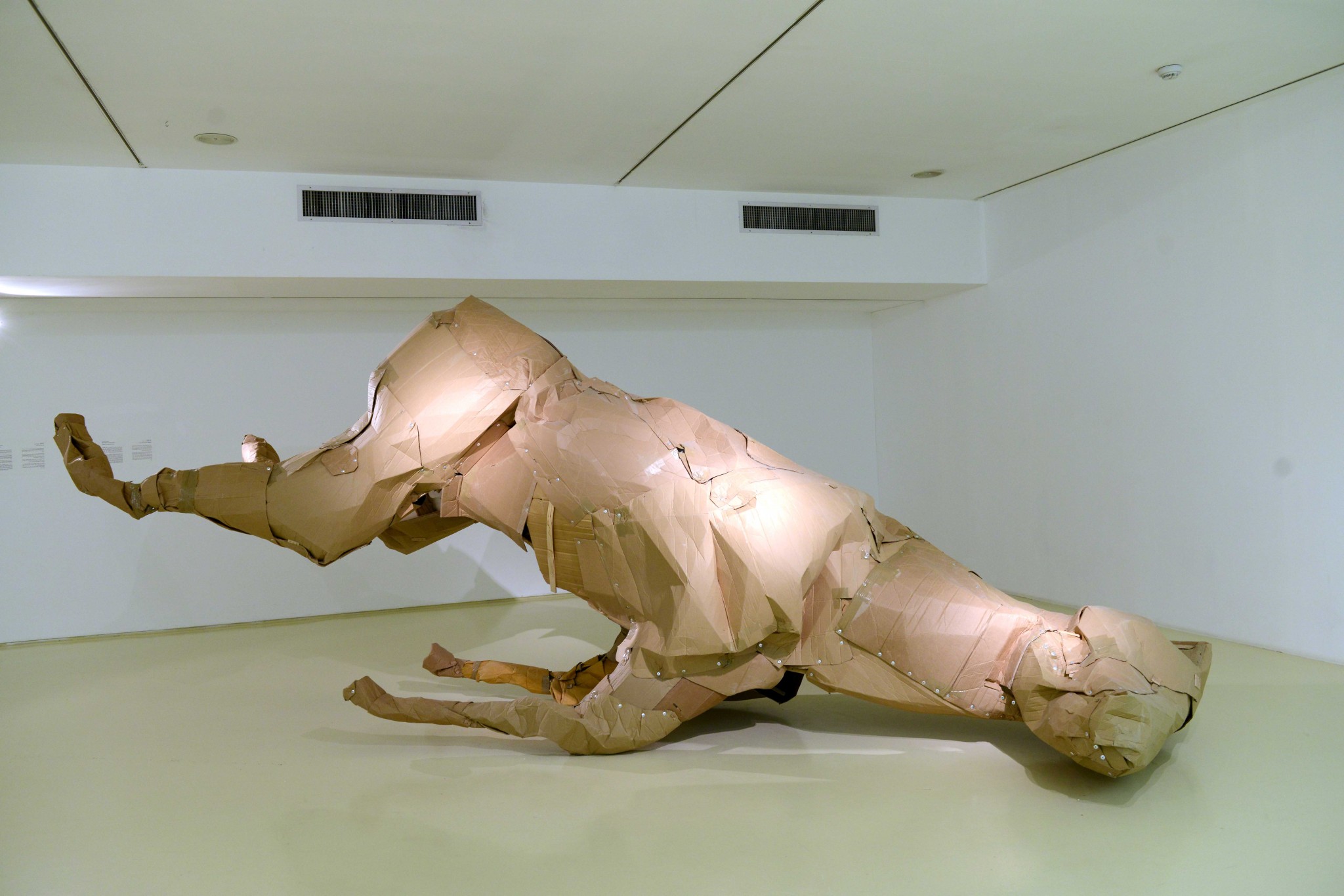
לתאר כאין קופסה, או מזוודה שעלתה על גדותיה ותכולתה, צרור ענק של בדים, מזכירה חבילות שנושאם איתם פליטים במנוסה . רבינוביץ יצר סוס קרטון ענק בתנוחת נפליה -קרסיה כשראשו נחבט ברצפה. היחס בין הפסלים, הוא כשל השלמה – הצבעונית הכאילו עממית לעומת צחיחות הקרטו, ההצטנפות של בדים שיש בה כאמור הרגשה של פליטות מקבלת איכויות של פופ בגלל קנה המידה הגדול  של העבודה. הסוס מתקשר לפיסול קלאסי כמו הסוסים במלחמות הלאפיתים והקנטאורים בגמלוני מקדשים  יוונים, רב כוח אבל מת. יחד נןצרת תחושה של שיירה אבסורדית של כישלון החוצה את המוזיאון כמו תזכורת לחוסר סלחנות החוץ .

המיצב הקשה של שי רטנר טרה פונטאנה, מוצב כמו בשולי התערוכה, בחלל בו מוצג בדרך כלל אוסף קבוע, מאחורי אולם הכניסה . העבודה מדברת בשפה בוטה שונה מזו של שאר העבודות כאשר היא פונה לעיסוק בבזוי  ובדחוי  הנכרך עם הרליגיוזי. שני התחומים, קביעת מהו דחוי ובזוי (בעיקר בהקשר גופני) ןיצירת דת היו חיוניות להפרדת האדם, את עצמו מהטבע.  רטנר בנה מה שנראה כשירותי כריעה ציבוריים,מהסוג שאינו מקובל במערב, שנחשפו כביכול מאחורי קיר במוזיאון. שם העבודה טרה פונטאנה,”שלוש מזרקות” באיטלקית,צופן הבטחה למזרקות יפיפיות כברומא אך הוא מרמז  לסיפור המרטיריום של פאולוס שעל פי המיתוס, ראשו המותז נגע בקרקע שלוש פעמים טרם נעצר ובכל מקום בו נגע  פרץ מעיין. הערבוב של קודש וחול שיצר רטנר מתיחס גם למוזאונים שמכונים לא פעם כמקדשים המודרניים כך שהוא מכניס מאין צלם להיכל, את הנמוך מכל. תקדים מוכר בתולדות אמנות ישראלית הוא העיסוק של סיגלית לנדאו בבזוי בשלבים מוקדמים בקרירה שלה. את ההכלאה דמות נשית ושירותים יצרה כבר בעבודה שהציגה ב 1997 והוצגה בביתן הישראלי בוניציה (היום בפתח התערוכה הקבועה במוזיאון תל-אביב)ובמיצב בשירותים של מוזיאון המחתרות בארטפוקוס 2003. באמנות הבינלאומית נחרט המיצב “שרותים” של איליה קאבקוב הרוסי מהדוקומנטה ב 1992. ממש תוך התפרקות בברה”מ, קאבקוב יצר דימוי של בית בשירותים ודיבר על העוני המנוון שהיה לנחלת רבים מאז הפרסטרויקה  ועל שינוי היחס בין הציבורי (שרותים ציבוריים) לפרטי . רטנר אינו מספר סיפור אלא השאיר את האנושי כמסומן רק על ידי צרכיו, כמו סימון טריטוריה על ידי בע”ח, במלוא עליבותו וכיעורו קורע את אשליית ההגנה שיוצר חלל מוזיאלי. 

       להצלחת התערוכה  מסייע הפרוש הרחב במיוחד שניתן למונח “בוגרים” כאשר גם אמיר יציב ,שסיים את בצלאל לפני שש שנים נכלל בין המציגים. יציב
אמיר יציב

אמיר יציב

שפועל בברלין מתבלט כאחד מיוצרי הוידיאו הישראלים המענינים ביותר. ההתיחסויות שלו לנושאים  לאומים ופוליטיים אינו נופל לקלישאות והאמירות שלו רחוקות מלהיות סובטיליות . בוידיאו Superstition in the Pigeon , מ 2013,הוא דן במושג הטעון של ירושלים, וירושלים כבית .

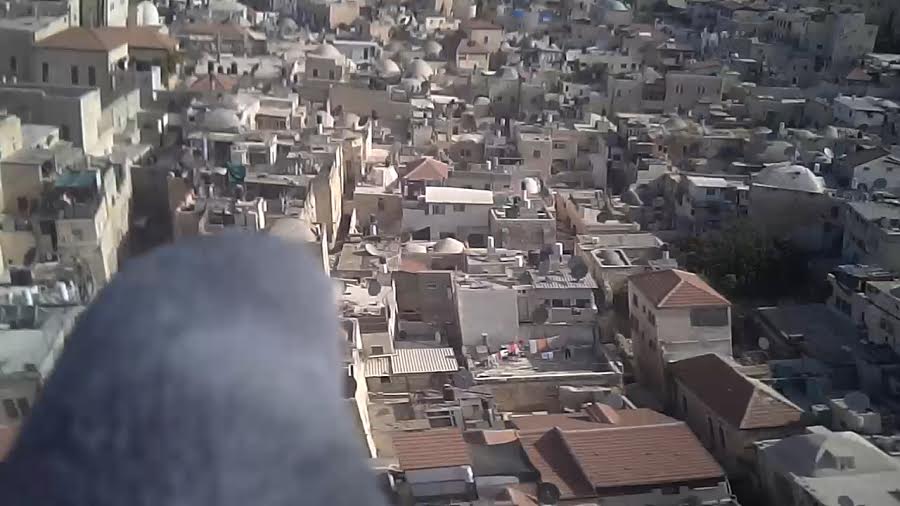
     על גבה של יונה הורכבה מצלמה זעירא (שלדברי מנהלת המוזיאון לא הזיקה ליונה), כך הפכה היונה העפה בדרכה לביתה למתעדת הנוף היפה המצולק הטעון של ירושלים במקצב וזווית בלתי רגלים. מלמעלה ירושלים הופכת לבליל ונופים ושכבות, ההפרדות  הפוליטיות נמחות. כמטאפורה פוליטית העבודה אקספליסיטת :מנגנון טבעי מנחה יונים לחזור הביתה למקום היוולדן מכל מקום בו יהיו, כלומר בכל מחיר. דומה שכל הטוענים לירושלים יאמצו ברצון דימוי  זה של שיבה של סמל השלום לביתה. המורכבות גדלה כשמסתבר שהשם לקוח ממחקר שפורסם ב 1947 ומצא שיונים יכולות לפתח דפוסים של אמונה באמנות טפלות, הערה אירונית על כל עניין הלאומיות והדבקות במקום.
 עוד עבודות וידיאו בולטות הן של גילי לביא ושל ציון אברהם חזן.

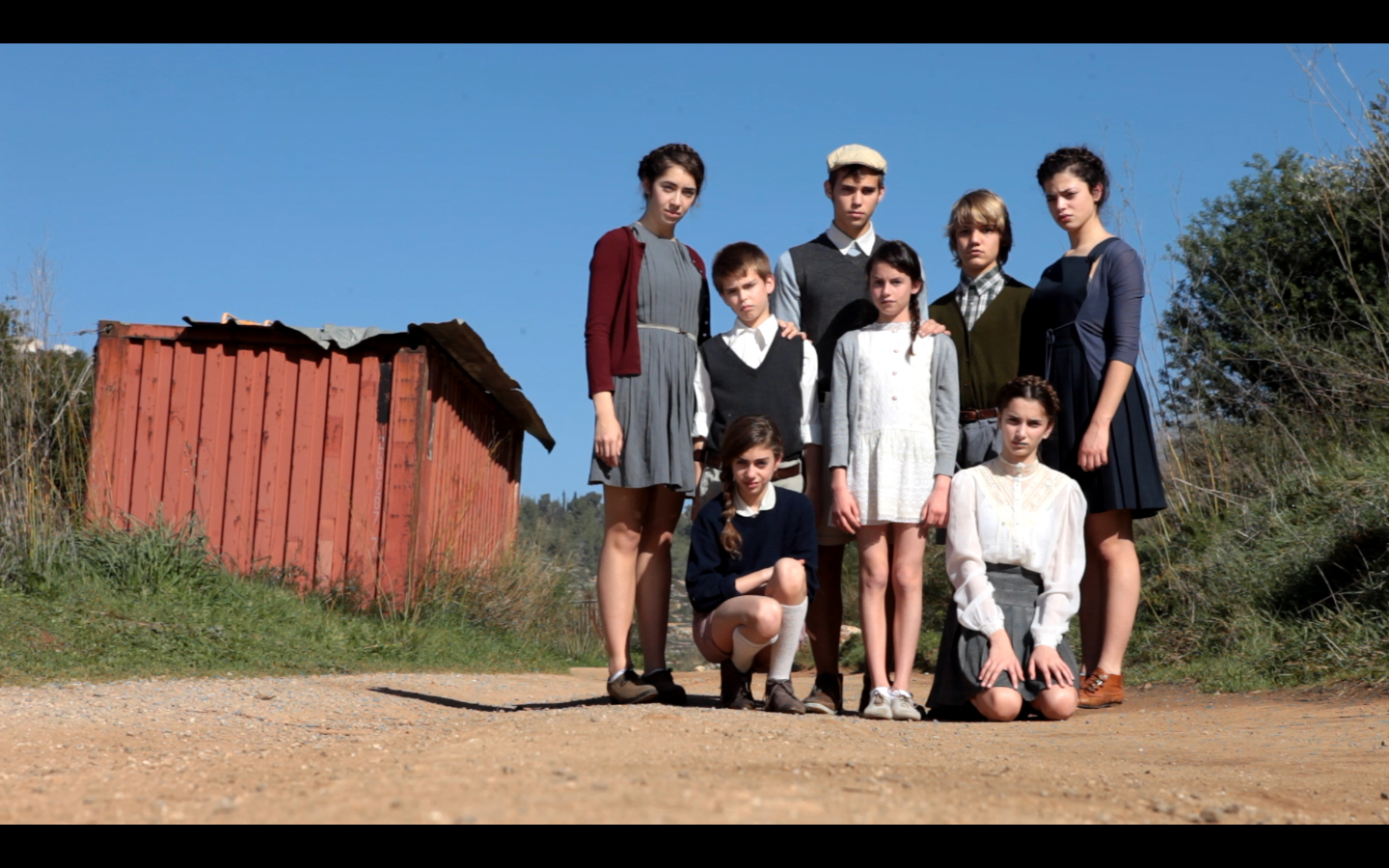
הווידיאו ענני סתיו, 2012 שלביא הציגה בתערוכת הבוגרים של בצלאל ביולי היה אחת  העבודות שהצדיקו את הביקור בתערוכה ונחרטו בזיכרון. בוידיאו
גילי לביא

גילי לביא

שמוקרן כאן שוב נראית קבוצת ילדים ונערים שמתנהלת לבד באזור כפרי  מזרח אירופאי. נוצר מתח בין היופי הרב של הילדים והטבע לבין תחושה של יתמות, אובדן ותלישות. עיצוב התלבושות והאביזרים ממקם אותם בשנות ה ארבעים או החמישים של המאה הקודמת כך שהקשרי מלחמת העולם השנייה ברורים ומעיקים.לביא אינה יוצרת קתרזיס עבור הצופים – אין ישועה למשתתפים או רגע בו המצב הלא ברור מתבהר. 

איכות העבודה משובחת ומפתיעה כסרט של בוגרת. התחושה היא של עשייה קלאסית במובן של בניית סצנה ותמונה תוך הישענות מרשימה על תולדות קולנוע ותולדות אמנות.
        העבודה של לביא יורדת לשורשים של מוגלה רגשית תוך יצירת מרחק, לעיתים אפילו נתק בין העיצוב היפה לתוכן. ציון אברהם חזן מייצג כיוון עשייה שונה, העסוק במידי, בעכשווי, בפוליטי  במובן הראשוני ביותר של מנגנוני כוח חשופים.
   סמוך מאד לסיום לימודיו של חזן במדרשה ב 2013 הוצגה העבודה “מרגנית”, אותה הציג בתערוכת הבוגרים, בתערוכת יחיד במוזיאון תל-אביב (יחד עם עבודה נוספת בשם “סלית”). העבודה שעסקה בבסיס המטכ”ל בקריה בת”א ונראו בה מגדל “מרגנית” בית המשפט וגופים ממלכתיים אחרים דיברה על כוח וחשאיות והתקבלה בהתלהבות על ידי עולם האמנות .
העבודה הנוכחית היא מיצב וידיאו. סוללת מקרינה ל קיר שלם גבר צעיר הרוקד לבד כשסביבו מעגל אנשים המצלמים אותו במכשירים סלולרים. הדימוי מחוספס ומטושטש כמו סוג צילום וידיאו חובבני באירועים. חזן מצליח להפוך את הצופים למשתתפים: צילם חוצה את אור המקרנים והם כאילו מצטרפים לאותו מעגל צופים המקיף את הגבר. התחושה שנוצרת מעיקה כשל צפיה והשתתפות בטקס עינוי כלשהו ,כאילו ידוע מראש שהגבר ירקוד עד מותו ושרשרת האסוסיאציות נעה בין הרומן  “הם יורים גם בסוסים” של הוראס מקקוי (שעובד לסרט והצגה) על תחרויות ריקוד בעת השפל הגדול בארה”ב ועד אסוציאציות מחרידות מהשואה. ההתייחסות הישירה היא לתוכניות ריאליטי למיניהן בהן הגבול בין בידור להשפלה והתעמרות היטשטש ולעיתים נעלם. המראה שחזן מעמיד לצופים מגלה את הכעור בהתבוננותם, את האלימות שבמבט. הבחירה בגבר רוקד ולא אישה מכוונת לסוג של התבוננות באלימות שאפשר לכנות  ככלית יותר.
   

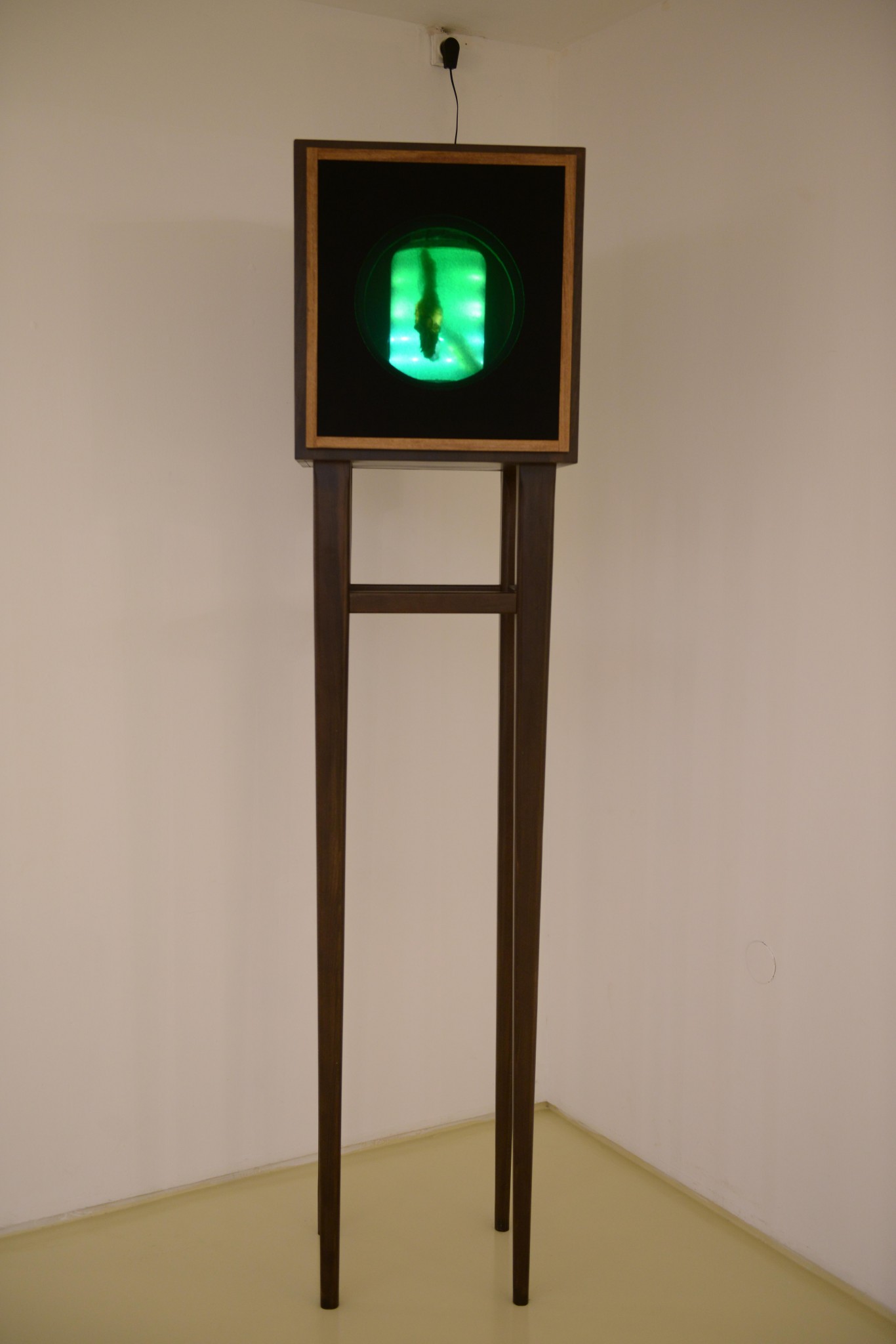
מגדל אור , מיצב קול  של יונתן גולדמן  היא עבודה מקסימה. באמצעות מחשב זעיר מועבר
יונתן גולדמן

יונתן גולדמן

 למוזיאון שידור של הקולות משפת הים של הרצליה, קול הגלים והאנשים, למבנה עץ שבו עיגול מאיר. האור, שהיה בעת שביקרתי בכחול ויורק,נובע מאנרגיית הקול כך שעוצמתו תלויה בעוצמת הסאונד בחוף.  ההקרנה של חוץ לפנים כבר נעשתה פעמים רבות בעבר (גם בארץ, כך למשל עבודה של אירית בצרי שהוצגה בבית מני בתל-אביב במסגרת הביאנלה בהרצליה  לפני כשנתיים) . יש יופי רב בתרגום קולות החוף לעבודה אבסטרקטית במהותה למרות שמגדל העץ מזכיר מגדלי שמירה.  החוף הופך לכמעט רעיון אבסטרקטי אבל גם למחולל מרחוק של עבודה קונקרטית. 

          יפות הן גם העבודות של זוודיתו יוסף סוגרת מכללת ספיר השנה. יוסף מציגה עבודות שהתפתחו
(זוודיתו יוסף (צילום חיים יפים

(זוודיתו יוסף (צילום חיים יפים

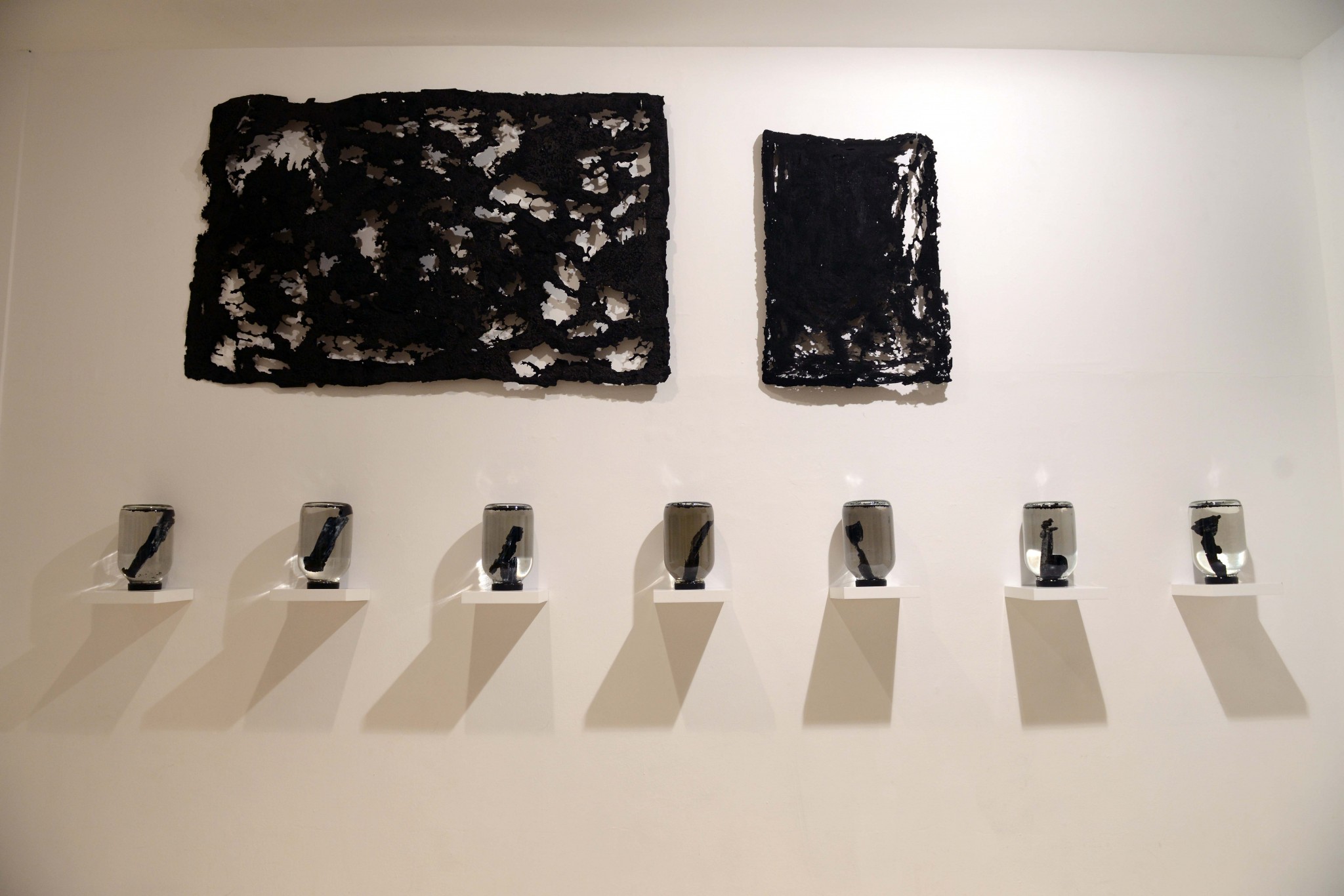
מתוך פרויקט הסיום שלה . בעוד כוחו של פרויקט הסיום היה בהתייחסות להיסטוריה האישית שלה כעולה מאתיופיה העבודות החדשות תחרות פחם ו מונומנטים מכילות טווח רגישויות נרחב בהרבה. הפחם, חומר שטמון בו סיפור של שינוי, שרפה, ולחץ משמש אותה ליצור עבודות שבירות ,פריכות אבסטרקטיות שנראות כהכלאה בלתי אפשרית בין ציור של פרנץ קליין ועבודות הסילואט של קארה ווקר. המונומנטים, פיסות פחם משומרות במיכלי זכוכית מסקרנים במיוחד. יוסף מבודדת אותם כך שהם מזכירים שימור מוצגים ביולוגים או רליקוויות, אסטטיקה של מוזאוני טבע וגם באופן מעניין את קִפסוּל תערוכתה הנוכחית של אילנה סלמה אורתר המדברת על עקירה פליטות וזהות נזילה. 

לא ניתן לדבר על נוכחות גוברת של אמנים יוצאי אתיופיה אבל שני הקולות של יוצאות אתיופיה, יוסף ואור טסמה (שהציגה את תערוכתה “כתם” ב 2012 ) מבטיחים. 
עוד בולטות העבודות של אבינועם שטרנהיים, מג’ד עמורי, אורית ישי,להלי פריילינג ומרגריטה פרלין.
אוצרות: דליה לוין, גילה לימון, טל בכלר
מוזיאון הרצליה לאמנות עכשווית
רח’ הבנים 4, הרצליה
 
בימים: ג’, ה’ בין השעות 20:00 – 16:00
ב’, ד’, שישי, שבת בין השעות 14:00 – 10:00
א’ – סגור

Rising Star

“Rising Star,” the exhibition which opened recently at the Herzliya Museum of Contemporary Art, is an opportunity to think about and celebrate the power of art.
The exhibition is a collection of works by 37 graduates of art schools in Israel, forming a shaky basis for an exhibition in a public museum. A parade of young talents is much less then what is expected from such an institution, an exhibition whose very title sounds like a name of one more reality show in the genre of “A Star is Born” (although the Hebrew title comes from the biblical portion “Balak,” from the Book of Numbers).
The extent to which we engage in graduation exhibitions each July is blown out of all proportion, nurtured by aggressive public relations campaigns paid for by the various arts academies, hoping to attract many new (paying) students. This is the way vague halos are formed around young artists who often create uninteresting art benefiting from the title “fresh” art, because it was made by freshly graduated artists. The idea that this PR festival has a “re-run” in a museum about six months later is not a very happy notion.
Nevertheless, “Rising Star” is an excellent exhibition with a long line of fascinating works (alongside some unneeded ones). A pity the labels fail to mention each artist’s alma mater, because they would definitely show the signs of the lessening hegemony of the Bezalel Academy of Art and Design, Jerusalem, and the Midrasha College of Art, Beit Berl, although these schools still predominate.
The photographs by Ofer Bessudo (a Minshar School of Art graduate) are wonderful. The works on exhibit were shown at the school, and we can only hope that this is not one-time brilliance but the beginning of an extended, creative project. Bessudo works in black and white analog photography, using relatively long film exposures of Israeli cityscapes and its buildings: their balconies, some of which are like storerooms, shuttered and open windows, rough human spaces whose ugliness is concealed by night which draws a veil of mystery across them. Due to the long exposures, only objects remaining still for a long period of time appear in the works. The signs of existence thereby become refined, as the photograph blinds more than it reveals, allowing reality to cover its face, leaving the architectural contour lines, suffused with memories of modernism. The association to modernism is reinforced by concrete wall on which the works are exhibited.

Yeshaiahu Rabinowitz צילום חיים יפים

Yeshaiahu Rabinowitz
צילום חיים יפים

Two sculptures at the entrance, Appel (Remnants) by Nava Berg, and That One to Azazel by Yeshaiahu Rabinowitz, create a breathtaking moment. Berg created a kind of box or a suitcase overflowing with a huge bundle of fabric, reminiscent of parcels refugees carry. Rabinowitz created a huge cardboard horse falling or collapsing, its head crashing against the floor. The sculptures are in a complementary relationship, with what seems to be folk-like colorfulness vis à vis the pristine blankness of the cardboard. The cluster of cloth with associations of refugees takes on Pop Art qualities because of the large scale. The horse resonates with classical sculpture, such as the horses in the war between the Lapiths and the Centaurs on the pediments of Greek temples, intensely powerful but dead. Together they form a feeling of an absurd chain of failures crossing the Museum, a reminder of the lack of forgiveness from the outside.
The painful installation by Shai Ratner, Tre Fontana, whose placement seems to be on the margins of the show, is installed where the permanent collection is usually placed, behind the entrance hall. The work speaks in crude language, differing from the other artworks, engaging in what is scorned and rejected wrapped up in the religious. Both spheres – the determination of what is to be rejected and considered base (mainly as associated with the body), and the creation of religion – were vital to separate the human being from Nature. Ratner built what seems as public squat toilet, unacceptable in the West, exposed as it were behind the Museum wall. The title, which means “Three Fountains” in Italian, implies the promise of beautiful fountains, hinting at the story of St. Paul’s martyrdom. According to the myth, Paul’s severed head touched the ground three times before stopping and each place it touched, a spring burst forth. The mixture of sacred and mundane which Ratner created refers to the status of museums, crowned as “modern temples.” By bringing the abject into the sacred, Ratner is bringing an idol into the sacred precincts. A precedent in Israeli art is Sigalit Landau’s engagement with the debased at the early stages of her career. She created a hybrid from a female figure and a toilet as early as 1997, exhibited at the Israeli Pavilion at Venice (now in the permanent exhibition of the Tel Aviv Museum of Art) and in the bathroom installation at the Museum of the Underground at Art Focus 2003.
A noted international precedent is Ilya Kabakov’s installation “Toilet” shown at Documenta 1992. As the USSR fell apart, Kabakov created an image of a home inside a public toilet to speak of the degrading poverty which became the lot of many since Perestroika, and about the changed attitude of the public (public toilets) and the private. Ratner does not tell a story, but portrays the human, signified only excretions, like an animal marking out its territory, in the full intensity of his miserableness and ugliness ripping the illusions of protectiveness which created museum space.

Amir Yatziv

Amir Yatziv

The exceptionally broad interpretation given to the term “graduates” helped the success of this exhibit, allowing the inclusion of Amir Yatziv, who graduated from the Bezalel Academy of Art and Design, Jerusalem, six years ago. Yatziv, who works in Berlin, stands out as one of the most interesting Israeli video artists. He avoids clichés when engaging in national and political subjects, but his statements are far from subtle. His video art, “Superstition in the Pigeon” (2013), discusses the complex issue of Jerusalem, and of Jerusalem as home.
A miniature camera was attached to the back of a pigeon (with no harm done to the pigeon, as the Museum’s director told me). In this way, the pigeon, flying homeward, has become a documentarian of the lovely, scarred, burdened Jerusalem landscape, filming in an unusual pace and angle. From above, Jerusalem turns into a mixture of landscapes and layers, its political divisions erased. As a political metaphor, the work is explicit: a natural mechanism directs pigeons to make every effort to return home to their birthplace from wherever they are. Similar to all those who claim Jerusalem would willingly adopt this image of return of the symbol of peace for its home. It became more complex when it turned out that the name was taken from a 1947 study which found that pigeons can develop patterns of superstitious belief, an ironic comment on the entire issue of nationalism and cleaving to the place.

Gili Lavy,

Gili Lavy,

Other outstanding video works are by Gili Lavy and Tzion Abraham Hazan. Autumn Clouds, 2012, which Lavy exhibited at the Bezalel graduate show last July, is one of the works that justifies the visit to Herzliya and is memorable. The video portrays a group of children and adolescents alone in a rural area of Eastern Europe. The video creates tension between the great beauty of the children and of nature, and the feeling of orphanhood, loss and alienation. Their clothes and objects place them in the 1940s or 50s, creating clear and oppressive associations to World War II. Lavy does not create a catharsis for viewers, and provides no relief for participants, nor does the unclear situation become clear. The quality of the work is superb. This is classical filmmaking, as the director builds a scene and frames with impressive dependence on the history of cinema and on art history. Lavy delves down to the roots of the emotional infection while creating distance or even a disconnection, between shaping what is beautiful into content.
Tzion Abraham Hazan represents a different direction of making art. He engages in what is immediate, contemporary, and political in the most primary sense of the exposed power structures. Very close to his graduation from the Midrasha in 2013, his work Marganit was exhibited in the graduates’ show and in a one-person show at the Tel Aviv Museum of Art. The work referring to the military compound in Tel Aviv, with the Marganit Tower, speaks about power and secrecy, and garnered an enthusiastic response. The current work is a video installation, screening a young man dancing alone, surrounded by people photographing him with their cellular phones. Projected onto a rough wall, the granular image seems like a type of amateur videography. Hazan succeeds in transforming viewers into participants: viewers who cross the beams of the projectors seem to join into the same circle of viewers surrounding the man. The ensuing feeling is repressive, as the dance becomes like a torture ritual, as if everyone knows the man will dance to death, the chain of associations moves between Horace McCoy’s novel “They Shoot Horses, Don’t They?” (portraying a dance marathon contest during the Depression in the USA, on which a film and play were based), and between horrifying associations to the Holocaust and to the many reality programs which blur and sometimes erase the border between entertainment and humiliation and cruelty. The choice of a dancing man instead of a woman points to a type of looking at violence that can be called more “disposable.”

Jonathan Goldman צילום חיים יפים

Jonathan Goldman
צילום חיים יפים

Lighthouse, a sound installation by Jonathan Goldman, is a charming work. A miniature computer transmits sounds from the Herzliya beach to the Museum, sounds of waves and people, conveyed to a wooden structure with a round window The light, which was blue and green during my visit, depends on the intensity of the sounds at the shore. The projection from the outside to inside has already been done many times in the past, in Israel as well, (as for example, in Israel in the piece by Irit Batzri shown at Beit Mani, Tel Aviv, as part of the Herzliya Biennale about two years ago). There is a great beauty in the translation of the seaside sounds into an essentially abstract work, despite the wooden lighthouse being reminiscent of guard towers.

Zaudito Yosef ילום חיים יפים

Zaudito Yosef
ילום חיים יפ====ים

Zaudito Yosef graduated from Sapir Academic College. The works exhibited developed from her graduation project, which addressed her history as an immigrant from Ethiopia. Yosef’s new works Coal Contest and Monuments contain broader range of sensitivities. She uses coal, a material embodying a narrative of change, burning, and pressure, to create fragile, brittle abstractions which look like an impossible graft between Franz Klein paintings and Kara Walker silhouettes. The Monuments, pieces of coal preserved in glass containers, are especially intriguing. Yosef isolates them in a way reminiscent of biology exhibits or reliquaries, the aesthetic of nature museums, and interestingly, it is reminiscent of Capsule by Ilana Selma Orthar with its references to political relocation and fluid identity. A discussion of the increasing presence of artists from the Ethiopian community is beyond the scope of this article, but the two voices from this community – Yosef and Or Temasa (who exhibited Stain in 2012) – are promising.
Other outstanding artworks are by Avinoam Sternheim, Majd Amori, Orit Ishay, Lali Fruheling and Margarita Perlin.

Curators: Dalia Levin, Ghila Limon, Tal Bechler

Herzliya Museum of Contemporary Art
4 Habanim Street, Herzliya
Open: Tues., Thurs., 4 – 8 p.m.
Mon., Wed., Fri., Sat. 10 a.m.- 2 p.m.
Sun. closed


Posted in וידיאו, פיסול ומיצב, צילום | Comments Off on Rising Star דָּרַך כוכב

יונתן הירשפלד Foramen Magnum Jonathan Hirschfeld

Please scroll down for English
יונתן הירשפלד פועל כאלכימאי של ציור, כמי שמחפש את הרגע בו הצבעים והצורות הופכים לקסם, ברזל לזהב, את אבן החכמים. ב-Foramen
Magnum, תערוכת היחיד שלו בגלריה רו-ארט, שביל החיפוש נע בין תחנות היסטוריות; ואן אייק ורובנס, רנסנס צפוני ובארוק, זריצקי וקופפרמן, דמויות מפתח בתולדות האמנות הישראלית.
בסדרת ציורי נברשות, סדרה של רישומי שמשון ודלילה על פי רובנס, ציורים של “פורמן מגנום”, הוא מחיש לעיתים את תנועות המברשת עד תזזית ואז מתרכז בנימים הדקים של ציור עלה או קו אחד, מתיך יחד זיכרונות ושפות ציור. הציורים, שתכניהם הכלאות לכאורה בלתי אפשריות, הופכים לכדור בדולח שהירשפלד מציע לנו, הצופים, לראות דרכו בצלילות את העולם, על המורכבויות האינסופיות של יחסי שליטה וכוחות שמרשתים את הקיום ומעכירים תדיר את הזגוגית.
 
***
שם התערוכה,  Foramen Magnum(לטינית: הנקב הגדול), מתייחס לנקב בו עובר גזע המוח ומתחבר לחוט השדרה. מיקום הנקב קובע את זווית

Foramen-Magnum-I-mixed-media-on-canvas-60X30cm-2013

Foramen-Magnum-I-mixed-media-on-canvas-60X30cm-2013

הראש ואיתה את שדה הראיה. באדם הקדמון ומשפחות קופי אדם הנקב היה גבוה ולכן הראש נטה לפנים ומעלה לעבר השמים. במהלך האבולוציה האנושית, ככל שההליכה נעשתה זקופה יותר ומקום הכניסה של עמוד השדרה לגולגולת, עבר לחלק נמוך יותר בבסיס הגולגולת, כך הראש הוחזק בזווית ישרה יותר והמבט הפך למבט ישר, קדימה.

 
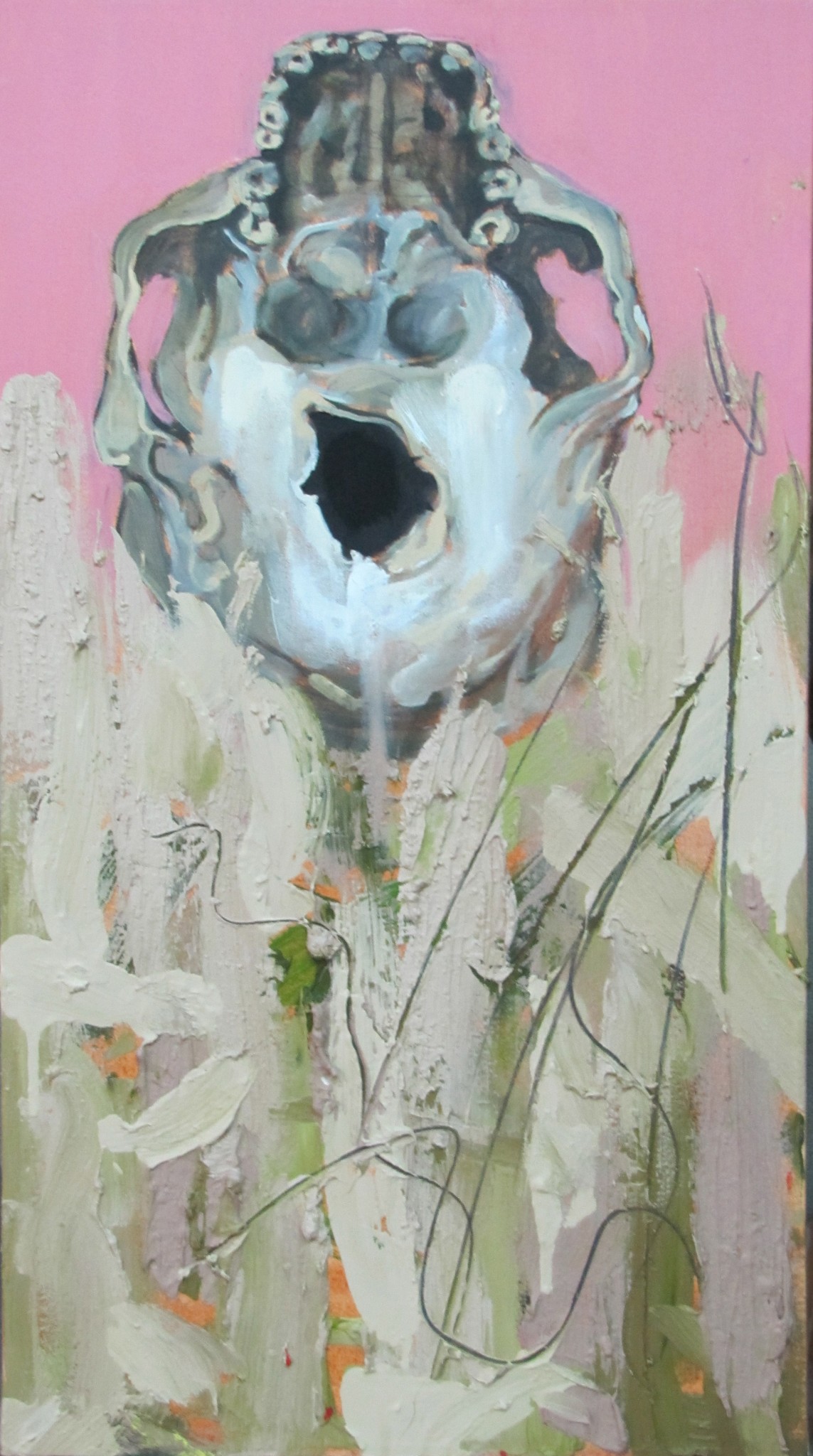
בשתי עבודות שכותרתן כשם התערוכה מצייר הירשפלד גולגולת מלמטה. אנו רואים חצי לסת, את בסיס הראש ואת הנקב הגדול. ההקצרה הדרמטית מצוירת על רקע ורוד מסטיק (ורוד רפי לביא?), בחלקו העליון של הבד, כשהחלק התחתון עשוי משיחות רחבות עמוסות צבע בלבן ירוק וכתום. קו מתפתל, חריטה בקצה המכחול מתפתלת ופוצעת את השכבות, מזכירה את תנועות השרבוט של אריה ארוך.
הדימוי הוא קשר שמבקשים להתיר והוא הולך ומסתבך. במבט ראשון נראית הגולגולת, מהזוית הבלתי רגילה הזו כמו פרח גדול, מעוות, מוכה ומרוקן, המעלה על הדעת את המונח הרעיל והמושחז “פרחי הרע” (Les Fleurs du Mal), ספר השירה של בודלר מ-1857. כשמתברר שמדובר בגולגולת חצויה, דימוי טעון אלימות, הורוד נראה חולה יותר, סכריני. בהקשר של התערוכה, על סידרת רישומי שמשון המצויים בה, עולה זיכרון לחי החמור שמצא שמשון בשדה והפך לכלי נשק בו הרג את הפלישתים. הנקב, הForamen Magnum- כמעט עיגול שחור, נראה כפה פעור, מפרכס, שפולט צעקה גדולה על חוסר תוחלת. העבודות בוחנות את החוקיות הפנימית של הציור שנע על הלהב שבין יפה לאלים ולמפורק.
 
***
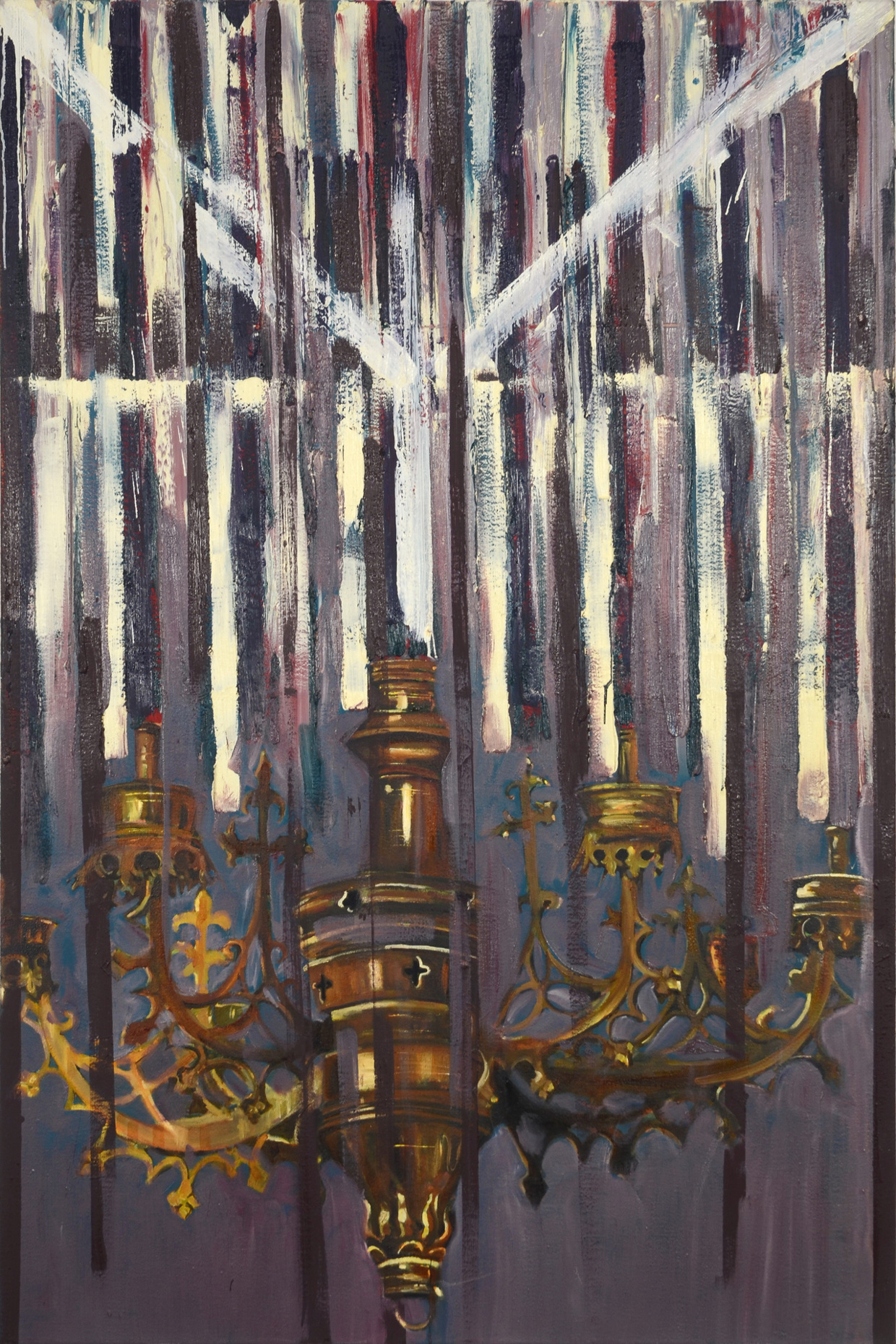
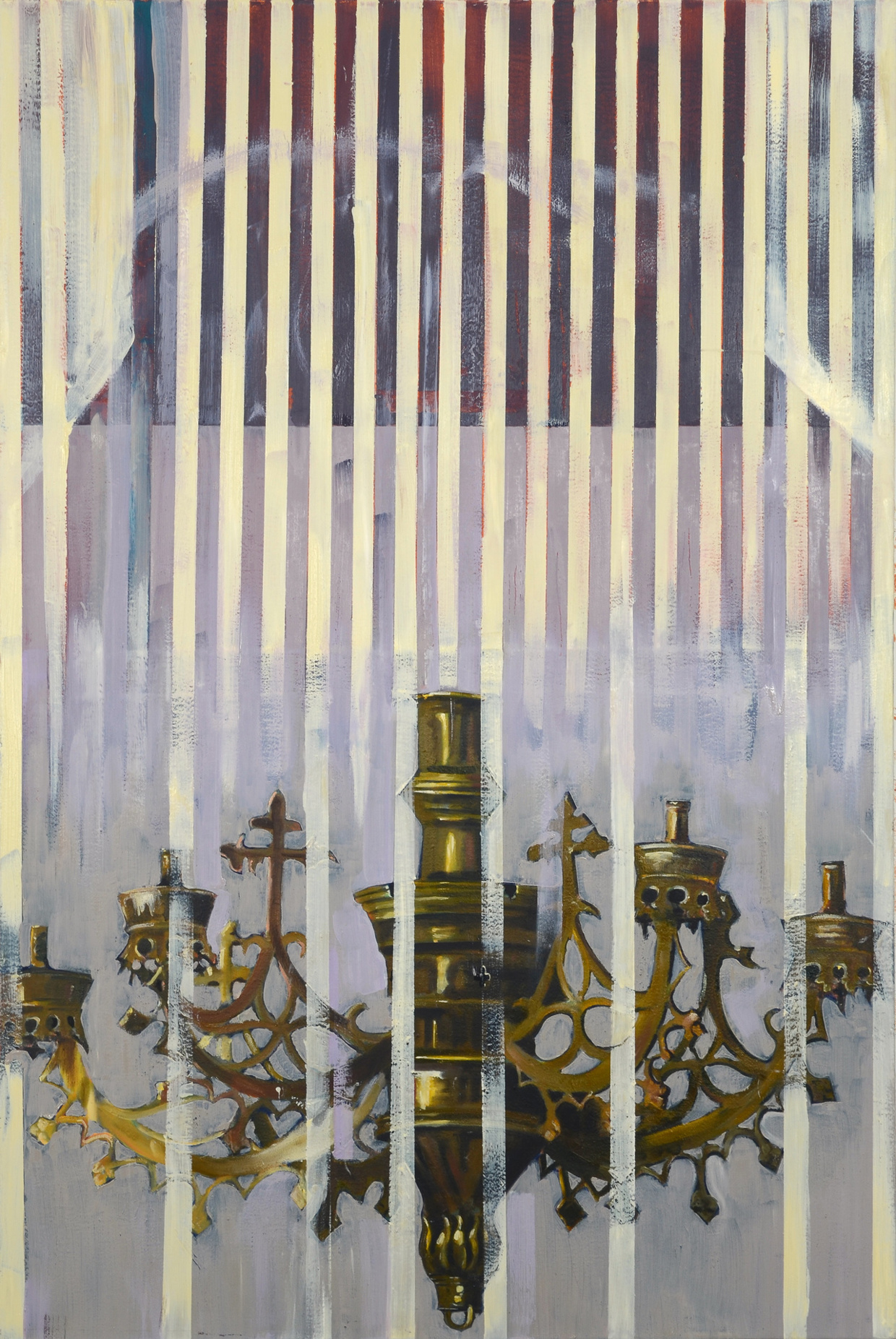
סדרת הנברשות נחלקת לציורים גדולים וקטנים יותר. בכולן מופיעה נברשת נחושת בוהקת במרכז,

Chandelier-I-oil-on-canvas-160X100cm-2012

Chandelier-I-oil-on-canvas-160X100cm-2012

סמל לאירופאיות ולהידור, צופנת בחובה אסוציאציות דתיות של אור וחסד.

נברשות אינן דימוי שכיח באמנות ישראלית אך בהחלט חוזר. שוקי בורקובסקי ויהושע נוישטיין הם שניים מהאמנים שעושים שימוש בהן כבר שנים. הירשפלד בחר נברשת ספציפית – הנברשת שנמצאת במרכז החלק העליון של הציור נישואי בני הזוג ארנולפיני מ-1434 של יוהנס ואן אייק הפלמי (1441-1390). הציור, יצירת מופת, אחד הציורים המוקדמים בצבעי שמן, זוכה לקריאות חדשות ללא הרף (בדומה ללאס מנינאס של ולסקז, 1656).
גודלה של הנברשת בציור הוא כעשרה סנטימטרים בלבד, ומתחתיה חתם ואן אייק כפי שנהגו לחתום אמנים בכנסיות: Johannes de eyck fuit hic (יוהנס ואן אייק היה כאן). נברשת הנחושת היא מניפסטציה של עושר חומרי של מושאי הציור, אך העובדה שדולק בה נר אחד, מעל ג’ובאני ארנולפיני, מפורש כרמיזה לזמניות החיים. הנר נקרא בפרשנויות אחרות כמרמז לנוכחות רוח הקודש או עינה הפקוחה של ההשגחה. בשני הציורים הגדולים מצייר הירשפלד את הנברשת המפוארת במה שניתן לתאר כאחורי מסך, המתייחס לציוריו של משה קופפרמן (2003-1926). קופפרמן יצר לאורך שנות ה-90 ועד מותו עבודות רבות עם קווים ישרים והתרחשות ציורית של סגולים חלומיים-מסויטים וצבעי אפור עשן וחלב מלוכלך. החלב השחור של פאול צלאן מפוגת המוות מהדהד בזיכרון הציורים של הירשפלד את עבודותיו של קופפרמן, ושער הזהב של מרגריטה משירו של צלאן מנצנץ כנחושת הנברשת
הגדולה, המפוארת, שהוא מצטט ומרמזת למוות:
חלב שחור של שחר אנחנו שותים עם ערב
שותים צהרים ובוקר שותים עם לילה
שותים ושותים
כורים בור קבר ברוח שם שוכבים לא צפוף
איש גר בבית והוא מנגן בנחשים הוא כותב
כותב לגרמניה בשעת דמדומים זהב שערך מרגריטה*
 
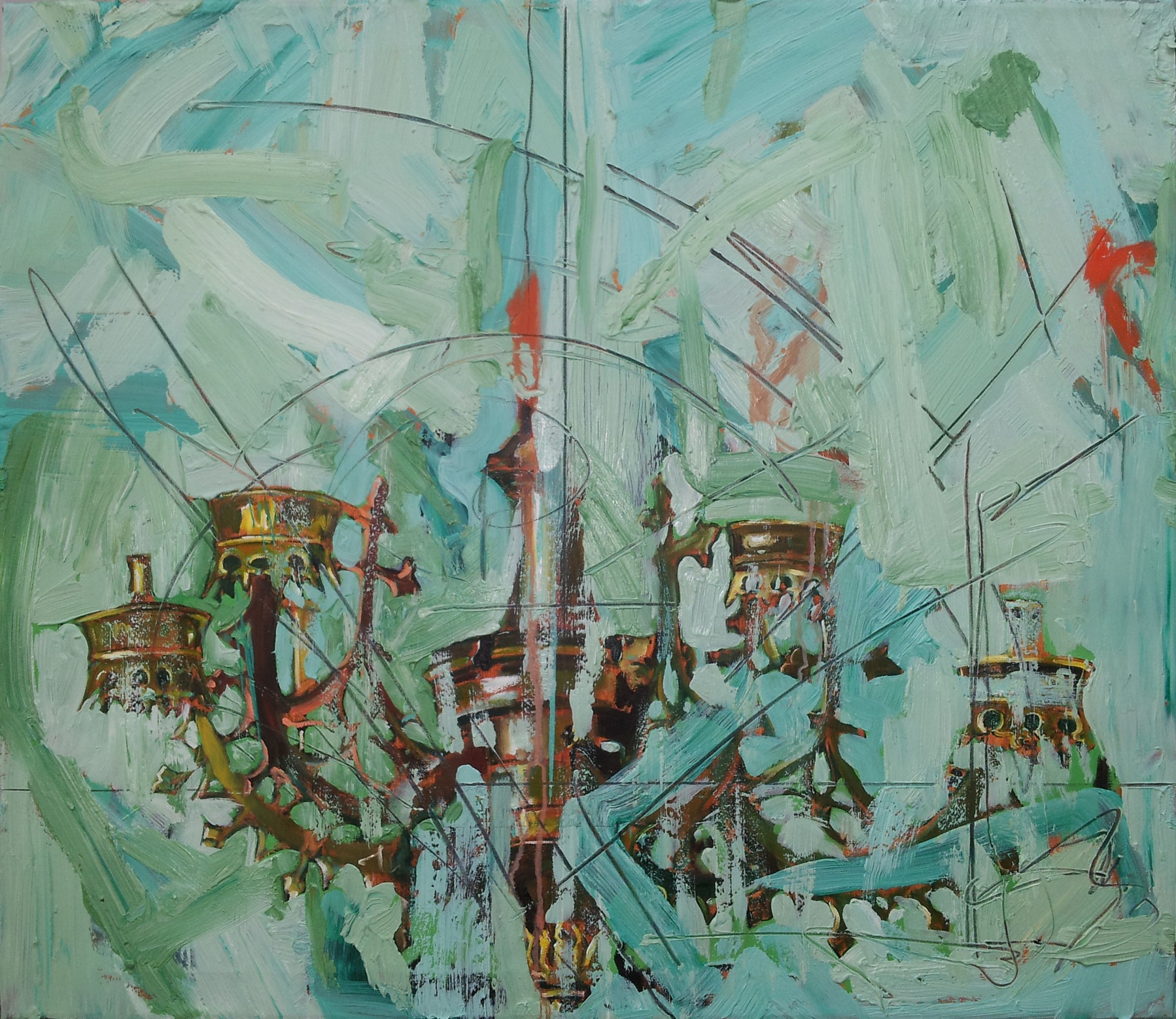
בסדרת הנברשות הקטנות, צבעי תכלת ירוק קרירים מכסים, מסתירים ומערפלים נברשות שהן כירח חם, המזהיר

Small chandelier I

Small chandelier I

מבעד למשיחות רוויות זיכרון מעבודות של זריצקי, אולי לא אמן מזהיר, אבל מעצב פרק בתולדות האמנות המקומית. האבסטרקט המתון שיצר, שזכה לשם הפרדוקסלי “אבסטרקט לירי” מניע, כשהוא מתורגם לציור של הירשפלד, געש של יקום שנפצע, של זמן שביר. המשיחות החזקות, הקצביות של צבעים חיוורים שלפעמים כמעט מסמאים, נתפס בזרועות הנברשת כמו קווי מתאר של חיה פצועה.

 
***
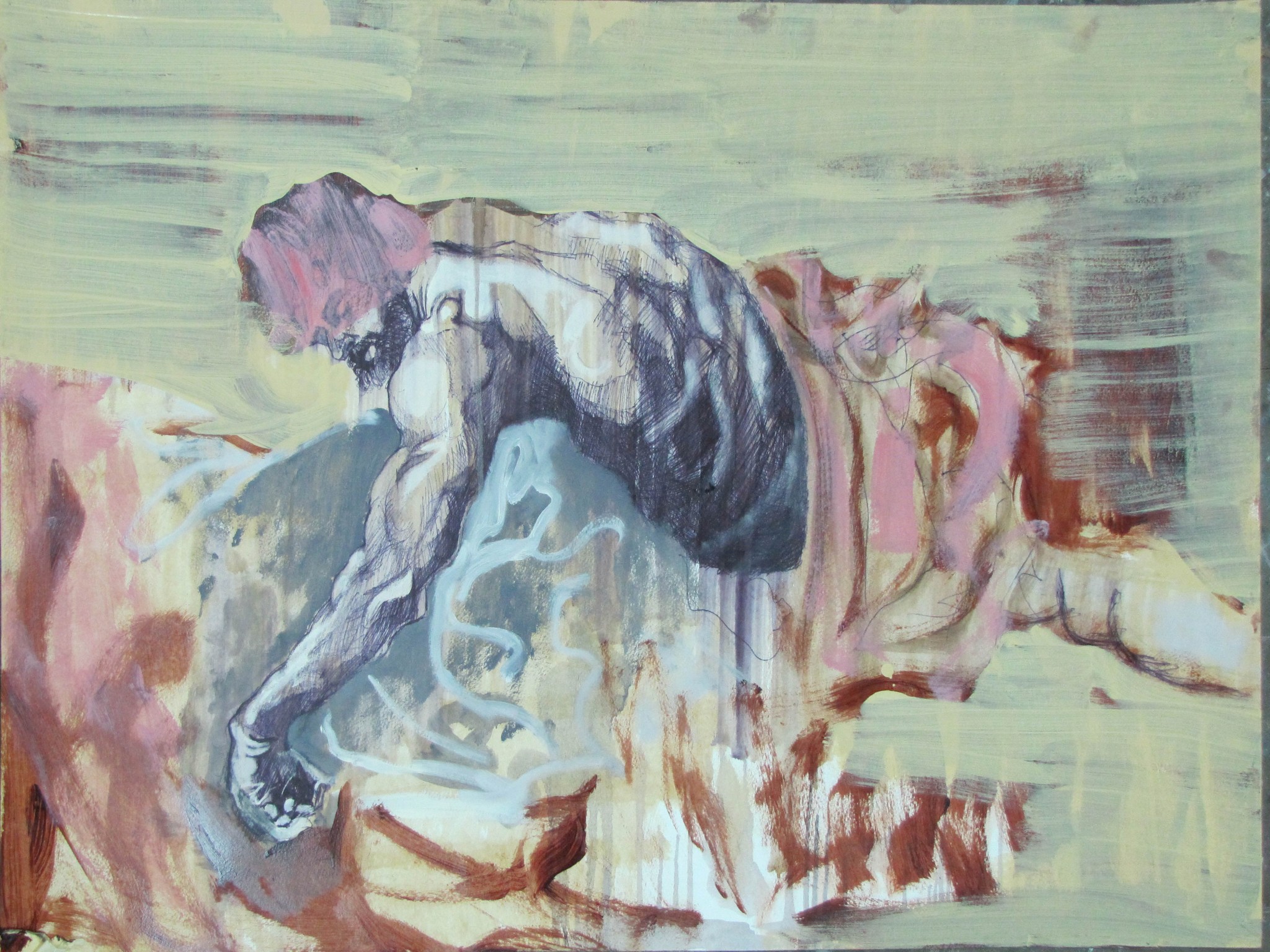
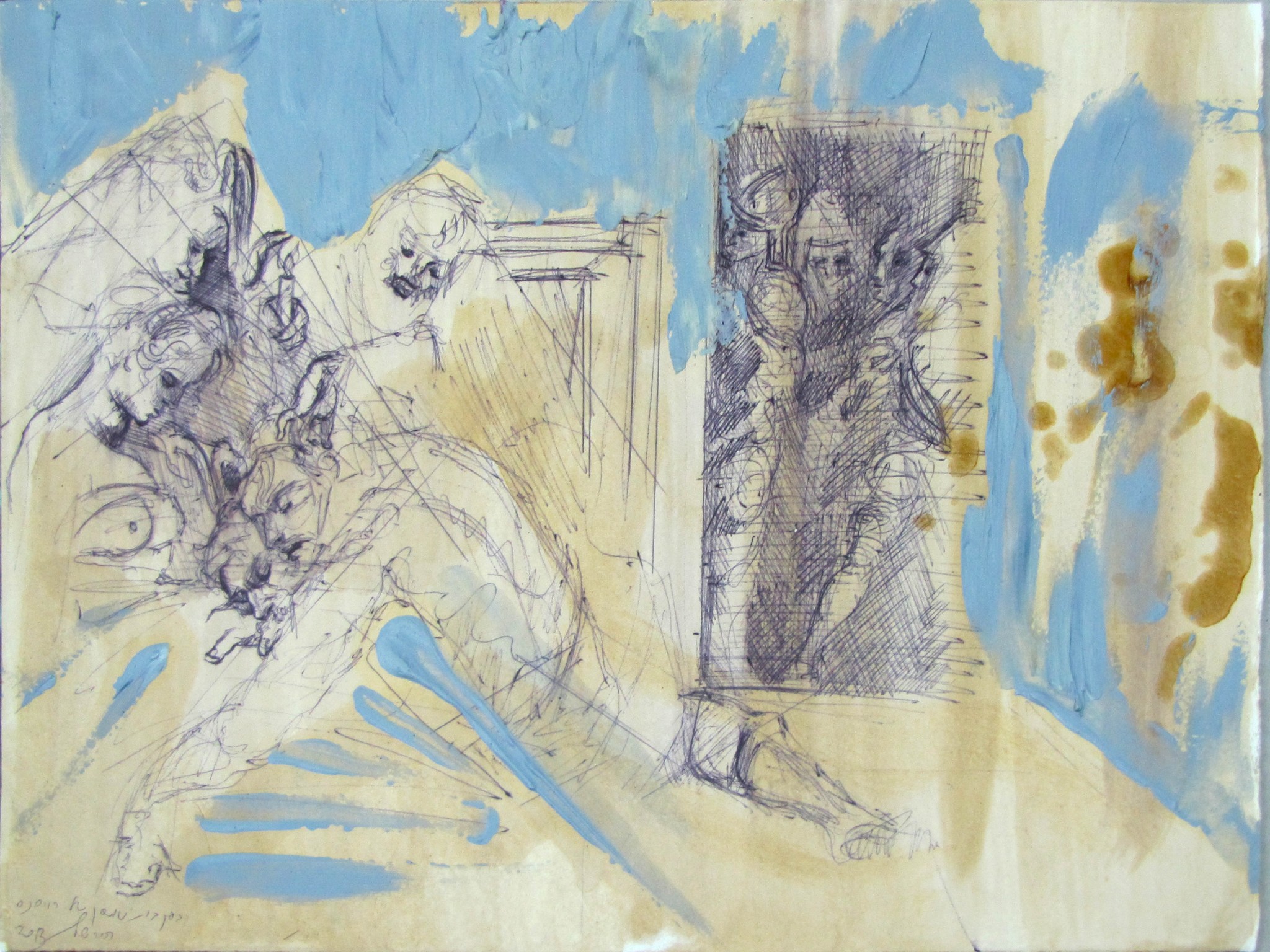
הירשפלד רושם רישומים על פי שמשון ודלילה (1610-1609) של פטר פאול רובנס. זהו ציור עתיר
צבע וסיפורי משנה, דשן בציטוטים ציורים אך בעל טון מאופק כלפי הרגע הגורלי שמתואר בו: שמשון, נם בחיק אהובתו דלילה, מסופר בידי אחד הפלישתים כשמשרתת מחזיקה עבורו נר כדי שיטיב לראות. הצורך המשווע של שמשון באהבתה של דלילה גרם לו לגלות לה שבשערו טמון הכוח.
ברישומים-ציורים של הירשפלד (המושג טכניקה מעורבת נכון, אך מחטיא) הציור של רובנס מפורק לחלקיו, ומתגלה ההערכה של הירשפלד לרובנס וגם רגע ההכרה בשבר, בבקע העמוק, הטקטוני, המפריד בין דרכי ההתבוננות בנושא. הירשפלד ברישום מצוין, נפחי, מתדיין עם רובנס, עם הזמן שחלף ועם

Samson- after Rubens-I-mixed-media-on-paper-100X70cm-2013-1.jpg

Samson- after Rubens-I-mixed-media-on-paper-100X70cm-2013-1.jpg

אוקיינוס התרבות השונה שביניהם.

רובנס צייר את זרועו של שמשון הישן כציטוט מזרועו של ישוע המת, המוסר מן הצלב בפייטה הפלורנטינית (1553-1547) מאת מיכלאנג’לו, אחד מפסליו המאוחרים והמרגשים עד דמעות. הזרוע העצומה, הגדולה ללא פרופורציה, מסמנת בשני המקרים חוסר אונים ואולי ויתור.
ברישום הראשון בסדרה שמשון (רובנס) I רשום שמשון בדיו אך שאר הדמויות בציור נעלמו. הבד הורוד הבוהק העשיר של שמלתה של דלילה הפך לשמיכה בורוד דליל שמכסה את שמשון, ועליה כבר מפציעים כתמים אדומים, כתמי הדם החותמים את הסיפור
ברישום /ציור נוסף מתרכז הירשפלד בדרמת הידיים – ידי הפלישתי המספר את מחלפות שמשון ואוחז בעדינות קצוות שיער כאילו היה זה קצוות שער אהובה שגוזרים לזיכרון, ידה הלבנה של דלילה המונחת על שכמו של שמשון הישן במה שנראה כרכות אין סופית. סביב הנר קפוצה יד המשרתת. הרישום מאיר את התקשורת המורכבת שאפשרית דרך ידיים וההתמקדות בהן מדגישה את האיכויות הפיסוליות שלהן. הן הופכות לתמצית של הנרטיב.
 
בשמשון (רובנס) V, עוקב הירשפלד אחר המבנה של רובנס אבל משנה אותו, בוחן ומגשש אחר הסובייקטיביות החדשה, אחר מה שאפשר לתאר כמחוז החפץ ואזור הסכנה של הקו. פניו של שמשון, הדמות המרכזית, מוכפלות והוא נראה צעיר ותמים מאשר בציור. פני הפלישתי הגוזז מחלפותיו גלויות ומרוחקות יותר, ואילו דלילה שבציור נראית כאילו נדדו מחשבותיה הרחק, או שגם היא עומדת להירדם והיא מביטה מרוכזת, מעל חזה החשוף, בשמשון הנבגד. מתוארים גם את החיילים המחכים מעבר

Samson  after Rubens-V-mixed-media-on-paper-30X20cm-2013

Samson after Rubens-V-mixed-media-on-paper-30X20cm-2013

למפתן, לרגע שכוחו של שמשון יתפוגג עם המחלפות הגזוזות.

רובנס הדגיש את ההקבלות שמשון וישוע – החיילים הפלישתים נראים כחיילים הרומים הבאים לעצור את ישוע, דלילה מזכירה את דמותה של מריה מגדלנה ושמשון את ישוע המת, שכאמור מדמותו ביצירה של מיכלאנג’לו מצוטטת יד הענקים.
העין של הירשפלד טבולה בהשלמה, הוא מביט בדרמה כרגע טרגי, בלתי נמנע ,כתוב מראש.
***
Foramen Magnum בוחנת להיכן זז המבט האמנותי, כאילו בעקבות
הנקב הקובע את זווית הראש. כמה נטוע המבט  במקומי, מקום שאין לו את החלוציות ששימשה לו משענת בעבר, וכמה הוא נטוע בתולדות אמנות לא ישראלית, במקרה זה רנסנס ובארוק השפיעו עליו. בין ציור לרישום, בין זיכרון להתרפקות משורטט כאן מהלך רחב. מרהיב.
 
 
* תרגום מגרמנית: שמעון זנדבנק
 
גלריה RAWART , תל-אביב 
16.01- 15.02.2014
 
Foramen Magnum:  Jonathan Hirschfeld
Jonathan Hirschfeld works like an alchemist of painting, searches for the moment colors and forms turn to magic, iron turns to gold, for the philosopher’s stone. In Foramen Magnum, his solo exhibition in Raw Art gallery, he journeys through historical moments: van Eyck and Rubens, Northern Renaissance and Baroque, Zaritsky and Kupferman, pivotal figures in Israeli Art History. 
   
In a series of chandelier paintings, drawings after Rubens’s Samson and Delilah, and the paintings “Foramen Magnum”, his brushstrokes occasionally hasten to near agitation and then engage in the fine veins of a leaf or a single line, melding together signs and languages of painting.  The paintings, their substance consisting of seemingly unfeasible hybrids, are a crystal ball, offering the viewer, through art, a clear vision, despite the never ending complexities and power struggles that encircle the world and blur the vision in the glass.  
 
***
Foramen-Magnum-I-mixed-media-on-canvas-60X30cm-2013

Foramen-Magnum-I-mixed-media-on-canvas-60X30cm-2013

Foramen Magnum (Latin: “great hole”), the name of the exhibition, refers to a hole in the brainstem through which the spinal cord connects to the base of the skull. The location of the Foramen Magnum determines the angle of the head, along with the field of vision. In Pre-historic man and primates it was located at a high point in the head, making them face upwards to the sky. Throughout human evolution, as man’s posture gradually erected, the spinal cord progressively inserted the skull at a lower position, holding the head vertically and thus making the eye view turn straight, forward. 

 
The two works that share the title of the exhibition depict skulls from below. We see half of the jaw, the base of the head and the Foramen Magnum. The dramatic foreshortening is painted on a bubblegum- pink background (a Raffi Lavie pink?) on the top part of the canvas, while the bottom abounds with broad brushstrokes in green, white and orange. A serpentine line engraved with the tip of a paintbrush in the paint layers, recalls the scribbles of Arie Aroch.  
       The image is like a knot that refuses to disentangle. At first glance, the irregular angle of the skull makes it look like a large, distorted, battered and depleted flower, bringing to mind the wonderfully venomous term “Flowers of Evil” (Les Fleurs du Mal) Baudelaire’s 1857 poetry book. After deciphering it to be a skull, the violent image makes the pink color look even more sickly and saccharine. In relation to the series of Samson drawings in the exhibition, one is reminded of the story of the donkey’s jawbone that Samson found and used as a weapon to kill the Philistines. The Foramen Magnum, a near black hole, looks like an open, screaming mouth, releasing a great wail of despair. The works study the inner logic of beauty and violent deformation.
 
***
The Chandelier series is composed of larger and smaller paintings. Their epicenter is a bright brass

Chandelier-II-oil-on-canvas-160X100cm-2012

Chandelier-II-oil-on-canvas-160X100cm-2012

chandelier, a symbol of European culture and grandeur, an embodiment of religious attributes of light and mercy. 

Chandeliers are not a common image in Israeli Art, though they are certainly recurring. Shuky Borkovsky and Joshua Neustein are two artists that have been using the image for years. Hirschfeld chose a particular chandelier- the chandelier that appears in the upper part of The Arnolfini Portrait 1434 by the Flemish Johannes Jan van Eyck, one of the earliest paintings in oil colors. The paintings iconography and iconology are constantly revisited and challenged (similarly to another masterpiece Las Meninas by Velázquez, 1656). 
     
The size of the chandelier in the original painting is approximately ten centimeters.  Van Eyck signed below it, as artists often signed their work in churches: Johannes de Eyck fuit hic (Johannes van Eyck was here). The chandelier signifies the portrayed couples’ material wealth, however the fact there is only a single burning candle, above the head of Giovanni Arnolfini, is perceived to be a symbol of mortality. In other interpretations, the candle symbolizes the Holy Ghost or the watchful eye of divine providence. The two large paintings by Hirschfeld present the chandelier in what may be described as the backstage, in reference to the paintings of Moshe Kupferman (1926-2003). Kupferman created throughout the 1990’s and until his death many works with straight lines and a pictorial scenario of dreamy- nightmarish purples and smoky grays that bring to mind contaminated milk. The reference to Kupferman in the Hirschfeld paintings, juxtaposed with the grand brass chandelier reminds one of the contrasts in Paul Celan’s “Death Fugue”, black milk and the gleaming golden hair of Margareta. 
 
Black milk of daybreak we drink it at evening
we drink it at midday and morning we drink it at night
we drink and we drink
we shovel a grave in the air where you won’t lie too cramped
A man lives in the house he plays with his vipers he writes
he writes when it grows dark to Deutschland your golden hair Margareta   
 
In the smaller chandelier series, a clouding effect in cold colors of greens and blues nearly cover and conceal

Small chandelier I

Small chandelier I

the chandeliers. As they float like a warm moon, they radiate through brushstrokes referring to Zaritsky’s manner of work, an artist who played a crucial role in local art history. The version of abstract he created, paradoxically named “Lyrical Abstract” becomes in Hirschfeld’s interpretation an eruption of pale, almost blinding colors and light, clasping at the arms of the chandelier like an injured beast.     

 
***
Hirschfeld draws after Peter Paul Rubens’ Samson and Delilah (1609-1610). The painting is rich with color and subplots, abundant in quotes from art history but nevertheless keeps a reserved stance toward the crucial moment it enacts: Samson, resting in his beloved Delilah’s lap, his hair cut by a Philistine, while a maid is holding a candle to better his sight. Samson’s desperate need for Delilah’s love made him reveal that his power lies in his hair.  

Samson-Rubens-VII-mixed-media-on-paper-30X20cm-2013

Samson-Rubens-VII-mixed-media-on-paper-30X20cm-2013

Hirschfeld, in his drawing – paintings (the term mixed technique is correct, but imprecise) explores parts in Rubens’ painting, thus revealing his appreciation for Rubens, but also the moment when he realized the deep, tectonic rift that has grown between the artist and the subject. With a skillful, boisterous hand, Hirschfeld deliberates with Rubens on the time that has passed and on the cultural ocean that lies between them. 
 
Rubens painted the sleeping Samson’s arm as a quote of the lifeless Jesus taken down from the cross in the Florence Pietà (1553-1547) by Michelangelo, one of his late and extremely moving sculptures. The enormously disproportionate arm stands for helplessness and surrender in both cases.                                                                                
In the first drawing in the series, Samson (Rubens) I, Samson is drawn in ink while the other characters are omitted. The bright pink rich material of Delilah’s dress has turned to a diluted pink blanket covering Samson, with the red blood stains from the end of the story, already there.  
 
In another drawing – painting, Hirschfeld concentrates on the dramatic quality of hand gestures- the hand of the Philistine cutting Samson’s locks, gently holds his hair like it was a lover’s ringlet taken for memory; Delilah’s white hand resting on the sleeping Samson’s shoulder in never ending tenderness; the maid’s clenched hand around the candle. The drawing elucidates the complex communication achieved with hands, while the focus on them emphasizes their sculptural qualities. They become the summary of the story.  
 
Samson  after Rubens-V-mixed-media-on-paper-30X20cm-2013

Samson after Rubens-V-mixed-media-on-paper-30X20cm-2013

In Samson (Rubens) V, Hirschfeld follows Rubens’ structure but changes it in search of a new form of subjectivity, of what may be described as the destination point, the crossing line. The main character’s face, Samson, is multiplied and he looks younger than in the original painting. The Philistine’s face is more visible, and Delilah seems detached, or as if about to fall asleep gazing, over her bare chest, on the betrayed Samson. In the background the soldiers wait behind the door, for Samson to lose his power along with his shorn tresses.  Rubens accentuated the comparisons between Samson and Jesus- the Philistine soldiers are like the Roman soldiers coming for Jesus, Delilah resembles Maria Magdalena and Samson Jesus, whose giant arm is quoted, as aforesaid, from Michelangelo. 

Hirschfeld’s eye is immersed in reconciliation; he sees the drama as a momentary, inevitably doomed tragedy. 
 
***
In Foramen Magnum Hirschfeld explores the angles of observation: his immediate history in local Israeli art and his cultural roots in European renaissance and baroque. In painting and drawing, memory and yearning he offers a dramatic confrontation between contemporary painting practices and art historical precedents.

Selected Poems and Prose of Paul Celan ,Translated by JOHN FELSTINER, W. W. Norton

RAWART GALLERY , Tel – Aviv, 16.01- 15.02.2014

Posted in ציור | Comments Off on יונתן הירשפלד Foramen Magnum Jonathan Hirschfeld

אֶל-קַצְוֵי עַד, אֶל-אַחֲרִית יָם? Beat Nation: Art, Hip Hop and Aboriginal Culture

Please scroll down for English

עתיד קרוב, קצת עבר, גם הוא קרוב , ממש לפני ש 2013 הופכת לתאריך בארכיון הזמן.

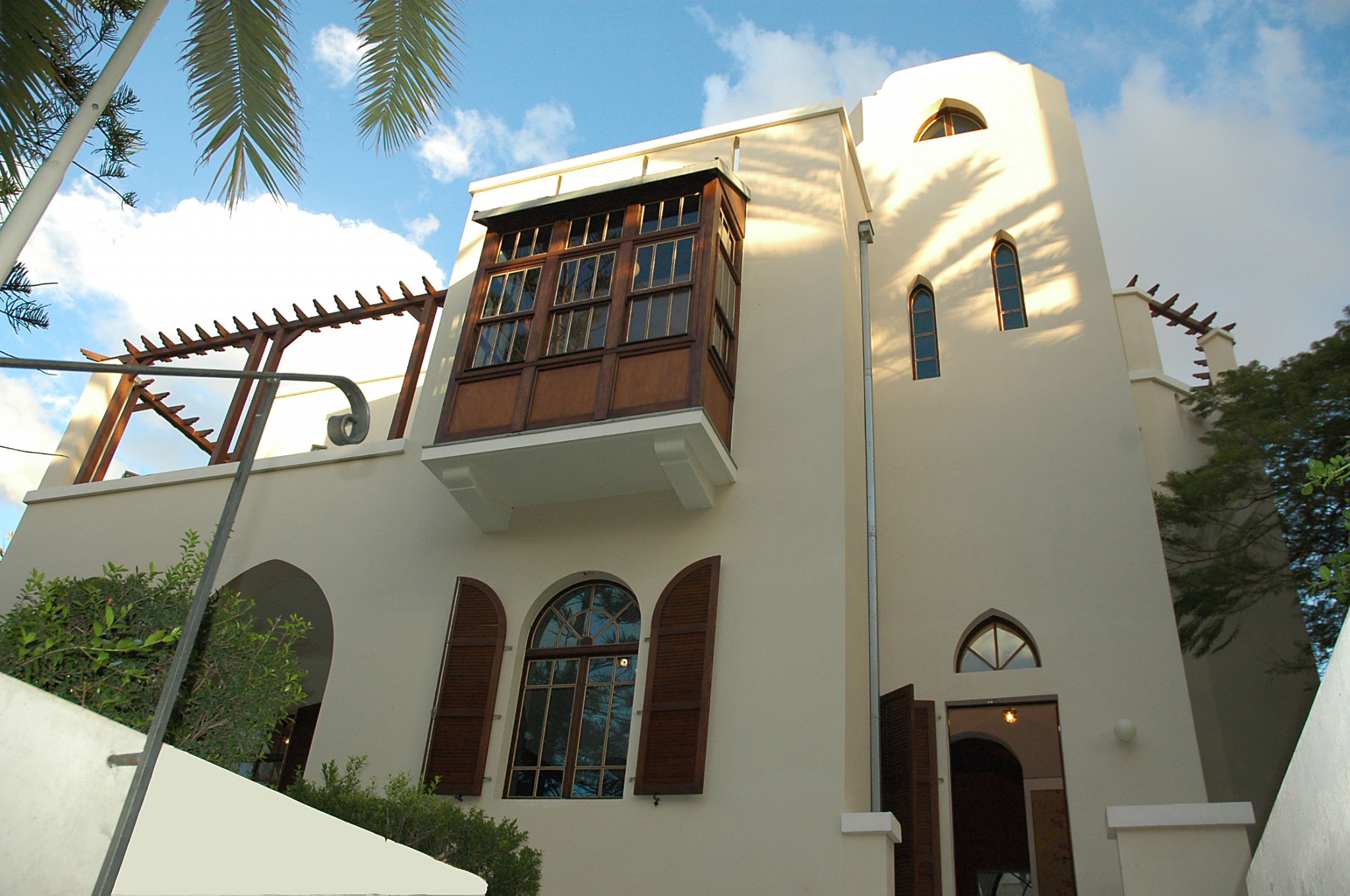
 אֶל-קַצְוֵי עַד, אֶל-אַחֲרִית יָם?* , תערוכה שאני אוצרת בבית ביאליק תפתח ב 26 לדצמבר.מרגש לאצור במבנה שהוא סמל תרבות ומתגלה, ככל שההיכרות איתו מעמיקה, כמקום שקוי משמעות מתפתלים ומצטלבים בו לכל הכיוונים, ספירלת תכנים  שהולכת ומתפשטת לתוך העיר שמשנה פניה סביבו. הבית, על החדרים, התקרות הגבוהות וצבעי הקיר העזים, והויסטות פנימה והחוצה משמרים, לא פחות מעבר וממשות, גם פנטזיה על מה שרצו אבות העיר, ואולי יכול היה להיות דמות העיר.

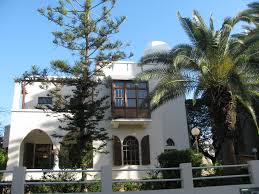
Bialik House בית ביאליק

Bialik House בית ביאליק

ארבעה האמנים שעבודותיהם בפרויקט האמנות הראשון שלי בבית ביאליק  ניר אדוני, אריק בוקובזה, ציבי גבע וחיה רוקין הם אמנים שרגישויות מסוימות ביצירתם נוגעות בנביעה – זליגה של עבר לתוך הווה,  במקום בו נדמה שמתגלה לנו עבר שלא ידענו אודותיו, או שהודחק או השתכח. בעבודות האמנות שהם מציבים בבית יש  הד לספק ולגעגוע שצפונים בבית היפה, השלו לכאורה. העבודות מצטרפות לעבודות של ראובן רובין, ש. עובדיהו, פ. ליטבינובסקי ורבים נוספים , שהיו תלויות בבית בשנים בהן התגוררו בו ח”נ ביאליק ומשפחתו. אם נרצה להרחיק לכת נחשוב עליהן כחלק ממה שיכול היה להיות באוסף ביאליק לו היה איתנו כיום.

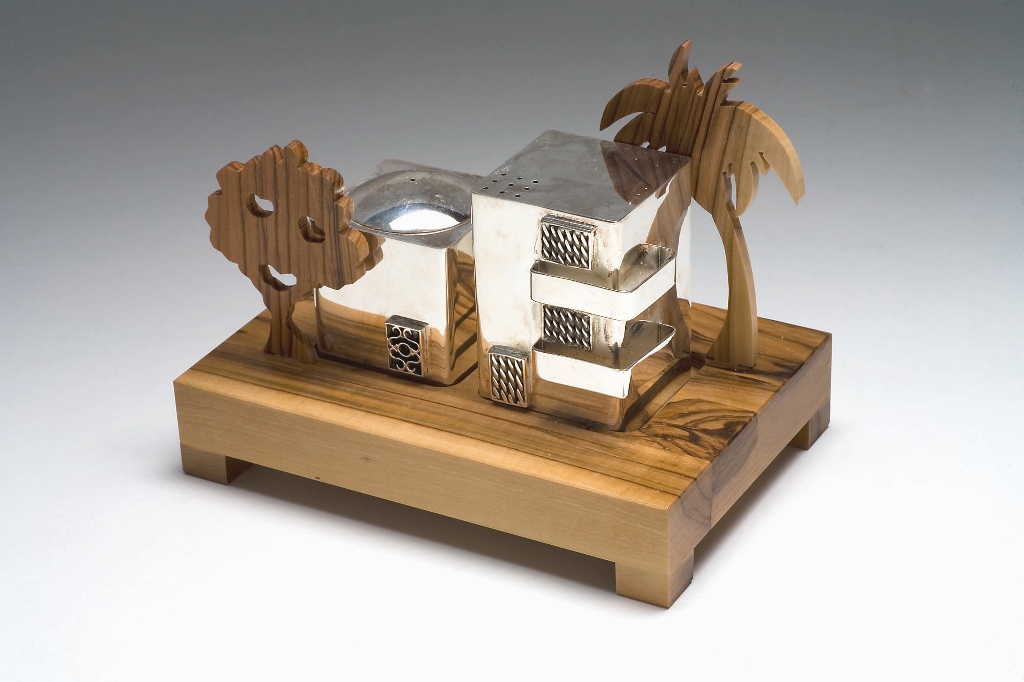
Eliahou Eric Bokobza S&P

Eliahou Eric Bokobza S&P

על האח, בחדר ההסבה בכניסה לבית- מוצבים ליד פסלון אבן של קבר רחל – מיכלי מלח ופלפל עשויים כסף על מגש עץ זית של אריק בוקובזה. המיכלים מעוצבים כשני מבנים ז’אנריים  בנוף הישראלי: הפלפל- השחור, כקבר שייח עם כיפה; המלח- הלבן, כבניין בסגנון הבינלאומי.למבנים המיניאטוריים – על האח שמקפל בתוכו געגועים לאירופה – ניצב עולם דימויים שלם: קבר רחל שיהודי התפוצות התרפקו על זכרו ומאידך קברי שייחים שנתפסו בעיניים אוריינטליסטיות כמייצגים את המזרח בו עצר הזמן מלכת . בעשורים האחרונים זיהו בהם זרמים יהודים קברי צדיקים או דמויות מקראיות. הבניין המיניאטורי עשוי בסגנון הבינלאומי הנתפס כמיצג את חזון המודרניזם שהביאו המתיישבים היהודים ממערב אירופה למזרח. בוקובזה יוצר רגע אוטופי של קיום משותף, שוויוני, של  מזרח ומערב, חזון נוסח הרצל וביאליק שמתומצת – מזוקק  לפלפל ומלח.
בחדר האוכל מתחת לשלושת החלונות הפונים לחצר בית ביאליק, ערוך השולחן הכבד המכוסה

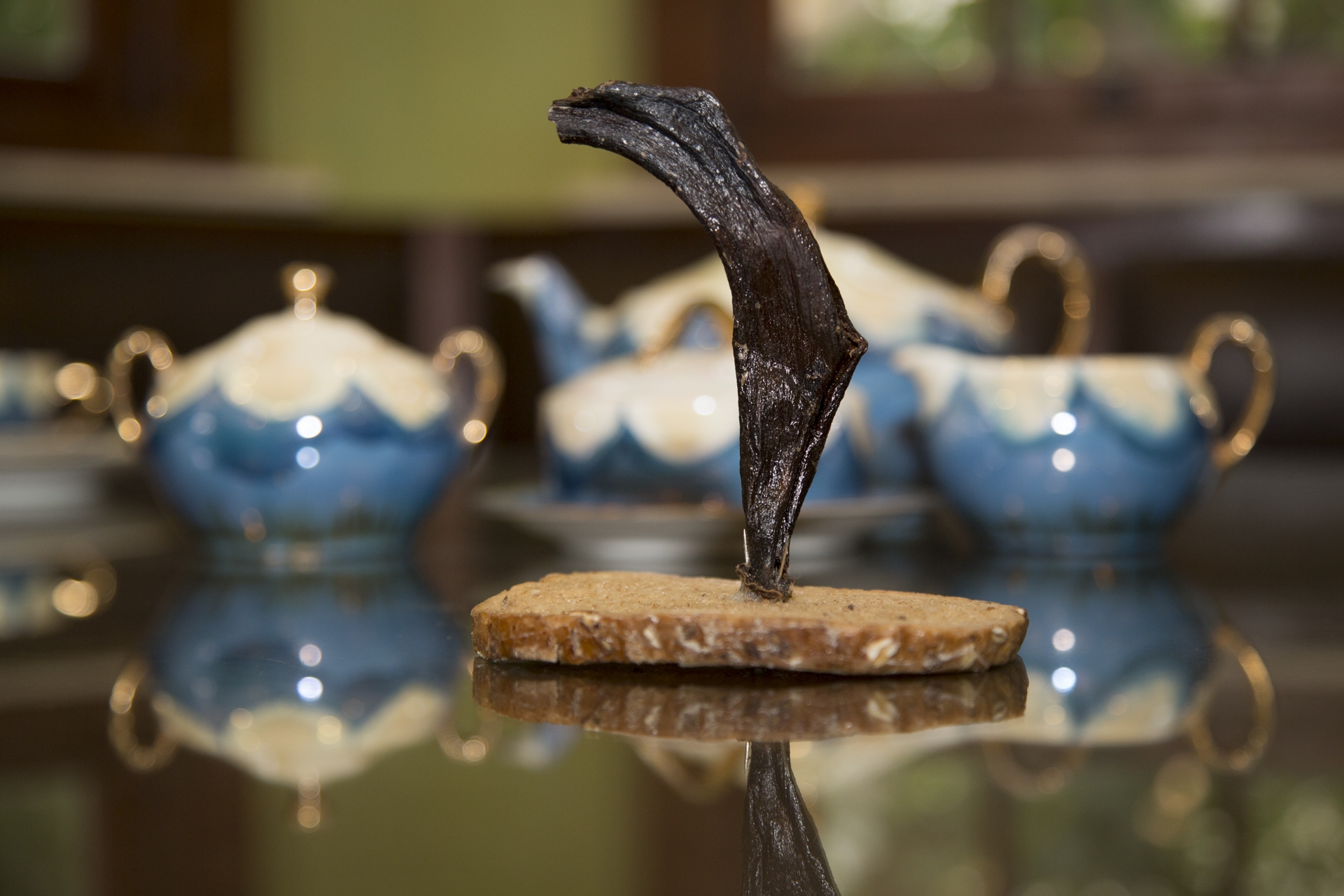
Chaya Rukin,  Bread banana boat photographer : Tom Porat

Chaya Rukin, Bread banana boat
photographer : Tom Porat

בזכוכית,  בסט תה פורצלן מעודן בצבעי כחול ולבן, ובינות לספלים הדקיקים והקומקום הכרסתני מפליגה מפרשית פת הקיבר וקליפת הבננה של חיה רוקין; עוני וקמילה בים הבורגנות המוגנת של השולחן, אך גם ספינת פיראטים שחורת דגל. בארון הסרוויסים, המלא כלים מעודנים חגיגיים – גאוות משק בית – ספונה מפרשית מיניאטורית נוספת של רוקין העשויה שבר יציקת פלסטיק לקיבוע זרוע, ומפרשה פיסת זכוכית. החיבור – חביקה של אמצעי מרפא שבור עם מה שגורם בפוטנציה לפציעה, טורד וחולה כמו הדבקות של אוהב מיואש במי שהוא מקור כאבו.  העבודות של רוקין מגרדות את קליפת השובע של בית ביאליק, מגלות כאב נוטף מבעד לסדקים דקים במראית העין של נינוחות.
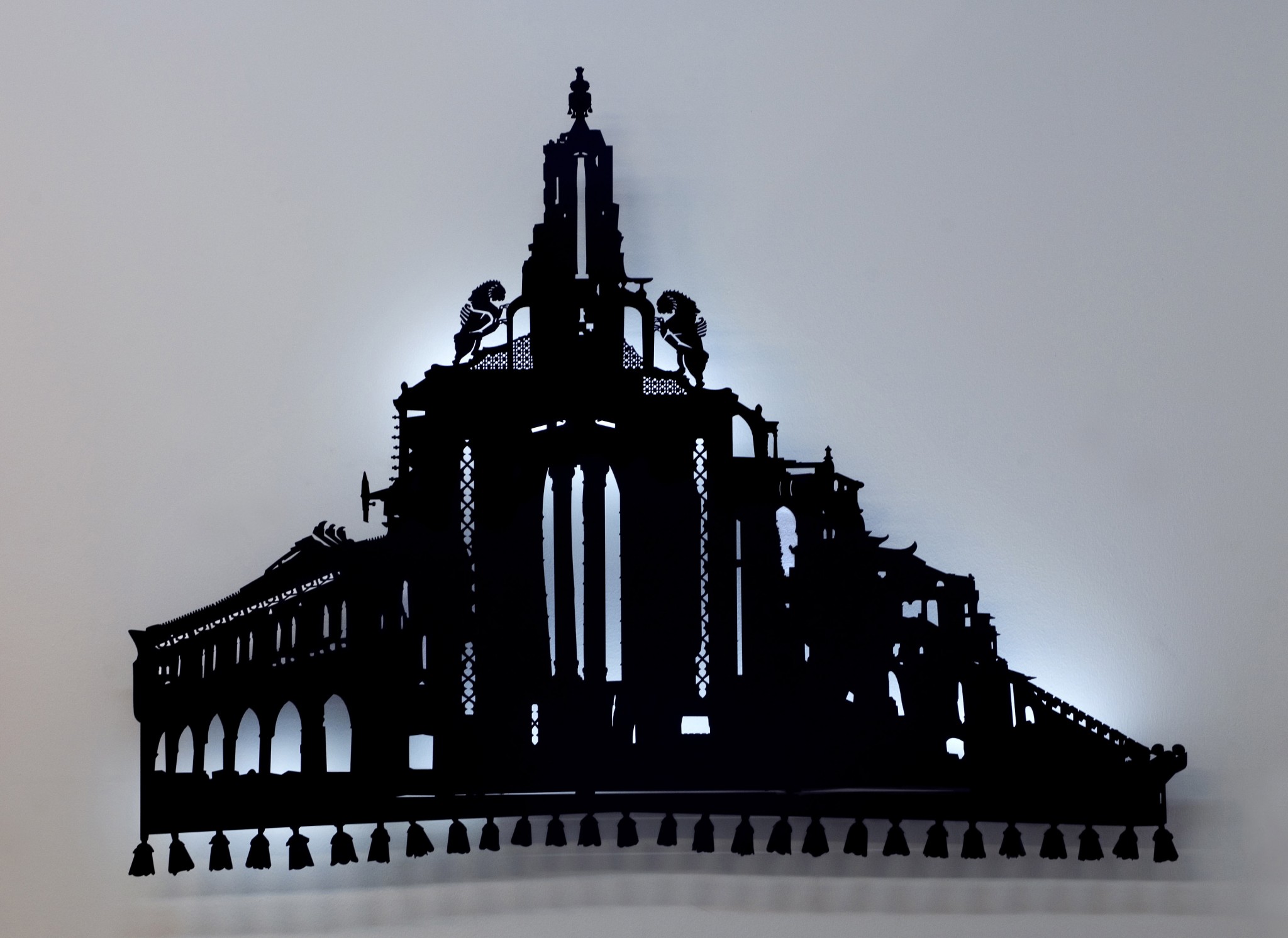
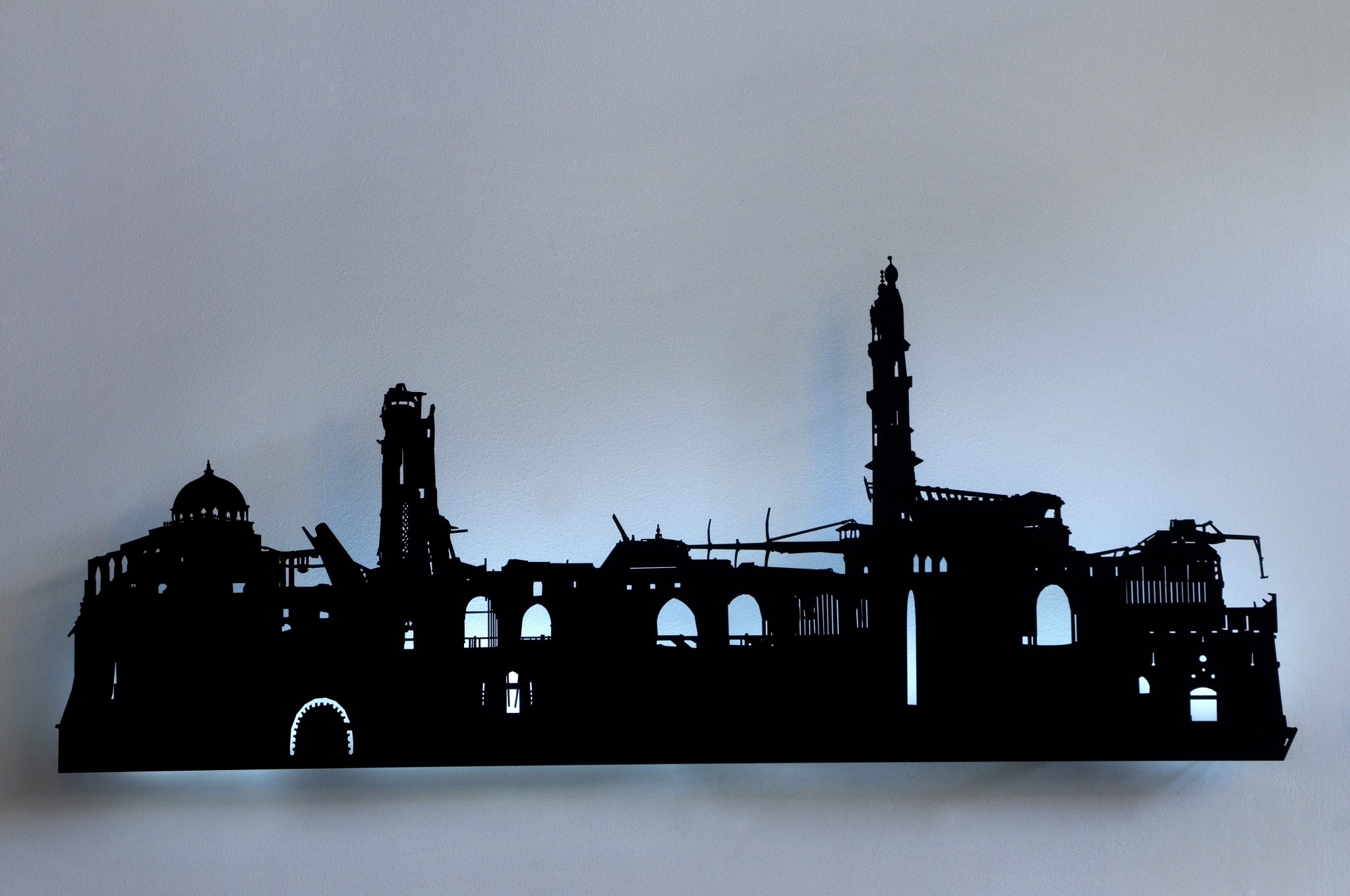
חיתוכי המתכת, של ניר אדוני הן כצלליות שחורות, כקו מתאר של עיר המתרחקת מחוף, הרגע בו

Nir Adoni ,Catedral

Nir Adoni ,Catedral

המראה הופך מפסיפס מקומות לישות אחת גדולה, כשמיכה שמחליקה את הסכסוכים והמחלוקות לשחור קטיפה. הצללית בה אפשר לחפש תשובות אֶל-קַצְוֵי עַד, אֶל-אַחֲרִית יָם? חיתוכי המתכת, מוארים מאחור נוגהים אור כאילו מוקפים הילה. צללית קתדלרה שמעולם לא היתה בתל-אביב תלויה ליד צללית מסגד חסן בק שבנייתו הושלמה שנה לפני שביאליק התיישב בתל-אביב. העבודות מרחפות בחדר הקטן ומתקשרות למסורת עבודות בצלאל, עבודות של מאיר גור-אריה שגם פיסל את ראש ביאליק ואריחים מסטודיו זאב רבן המקשטים את העמודים והאח בחדר ההסבה.

Tsibi Geva , Bird

Tsibi Geva , Bird

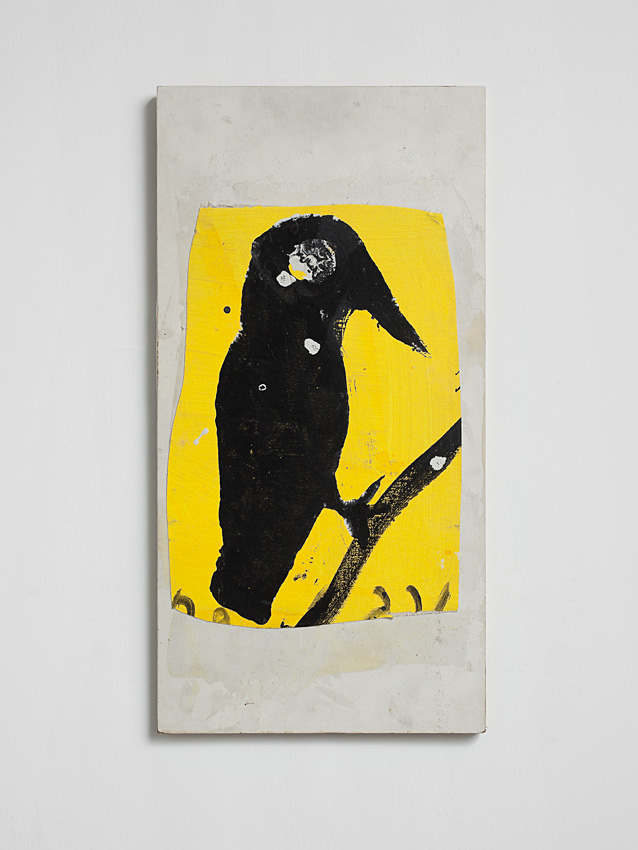
בפורמטים קטנים, על פיסות עץ מריהוט ישן, ניירות וקנווסים, צייר ציבי גבע ציפורים. הן יושבות על ענפים או חוטים, נאחזות ברגליהן הדקיקות ביציבות. הציפורים הן מסדרה חדשה שיצר גבע בשנה החולפת אך ציפורים הופיעו בעבודותיו כבר משנות ה 80 של המאה הקודמת. הציפורים הן הרהור על מקומיות, החל מזיכרון ציפורים שנלמדו בשיעורי טבע ומולדת ועד להקשרי נדידה  בשירתו של ביאליק. הן מוצבות בחדר העבודה, לב ליבה של יצירתו של ביאליק כסופר ושל זהותו כאיש רוח, כמקום מנוחה למחשבות נודדות בין הגולה לארצות החום.  הציור של גבע, על הנזילות, על הכתמים, על החספוס והמלנכוליה, מתגלה בחדר העבודה במלוא העדינות והפגיעות שלו, ציפורים נחבאות בין ספרים.
יצירות האמנות העכשווית מנכיחות ענן שקוף של געגוע שממלא את בית ביאליק, מקום שמסתיר יותר ממה שהוא מגלה. אמנות ,שלא מחויבת להתנסח במשפטים, מצטרפת לתשוקות ולמאווים שבין הקירות, רגישה לשבריריות שמאחורי ההוד.

* ח”ן ביאליק /בַּעֲרֹב הַיּוֹם, תרנ”ה

אֶל-קַצְוֵי עַד, אֶל-אַחֲרִית יָם?
פרויקט אמנות מספר I  בבית ביאליק דצמבר 2013 – מרץ 2014
אוצרת: ד”ר סמדר שפי
אוצרת ראשית ומנהלת מתחם ביאליק: איילת ביתן שלונסקי

באמצע נובמבר  הרציתי בכנס היסוד של מרכז עזריאלי ללימודי ישראל באוניברסיטת קונקורדיה במונטריאול. תחת הכותרת “Milk, Blood and Honey: Contemporary Art from Israel” עסקתי באמנות ישראלית מתחילת המילניום בדגש על השנים האחרונות. זו הייתה הזדמנות לשרטט רעיונות ומחשבות. התמונה שעולה היא של יצירה רדופת ספקות, התחבטויות בלתי פוסקות, אומץ וכורח שמביאים להתמודדות חדשה עם העבר, במיוחד השואה.
די להביט בלוח התערוכות הנוכחי בגלריות בתל-אביב: “טיפת מזל” של רועי מנחם מרקוביץ ברוארט,  עבודת הוידיאו Schwartze sking in Austria   של תמר הירשפלד ב” את[נ]יקס” בגלריה גבעון, ו”קו- תפר של יוכבד וינפלד בגורדון.
עם המחשבות האלו על אמנות, ורושמן של הרצאות בכנס שעסקו בבניה של זהות’ הגעתי לתערוכה    Beat Nation:  Art, Hip Hop and Aboriginal Culture  שמוצגת ב Musée d’art contemporain de Montréal.
בשיחות במהלך הביקור במונטריאול התוודעתי לאופן בו קנדה, או לפחות חלקים באקדמיה הקנדית,  מתמודדים עם העבר של כיבוש וטבח בעמים שישבו במקום לפני ההשתלטות האירופאית. יש דמיון וקשר להלך הרוח האמריקאי בנוגע  ל Native Americans, קבוצות העמים והשבטים שכונו שעבר “אינדיאנים” (לרוב בתוספת “פראים”) אך גם הבדלים מהותיים: בקנדה מדברים על האומות הראשונות First Nations שמורכבות בעיקר משני עמים אבורגינים (מונח שמקושר בארץ בדרך כלל רק לאוסטרליה ) ה Inuit וה Métis  .
   בעבודות האמנים בתערוכה מצטלבות תרבות אורבאנית מערבית אם תרבות ומורשת של אומות ראשונות. זו התמודדות עם שאלות זהות באופן מרהיב  חזותית ומרתק אינטלקטואלית.

Bear Witness,  Assimilate this!

Bear Witness, Assimilate this!

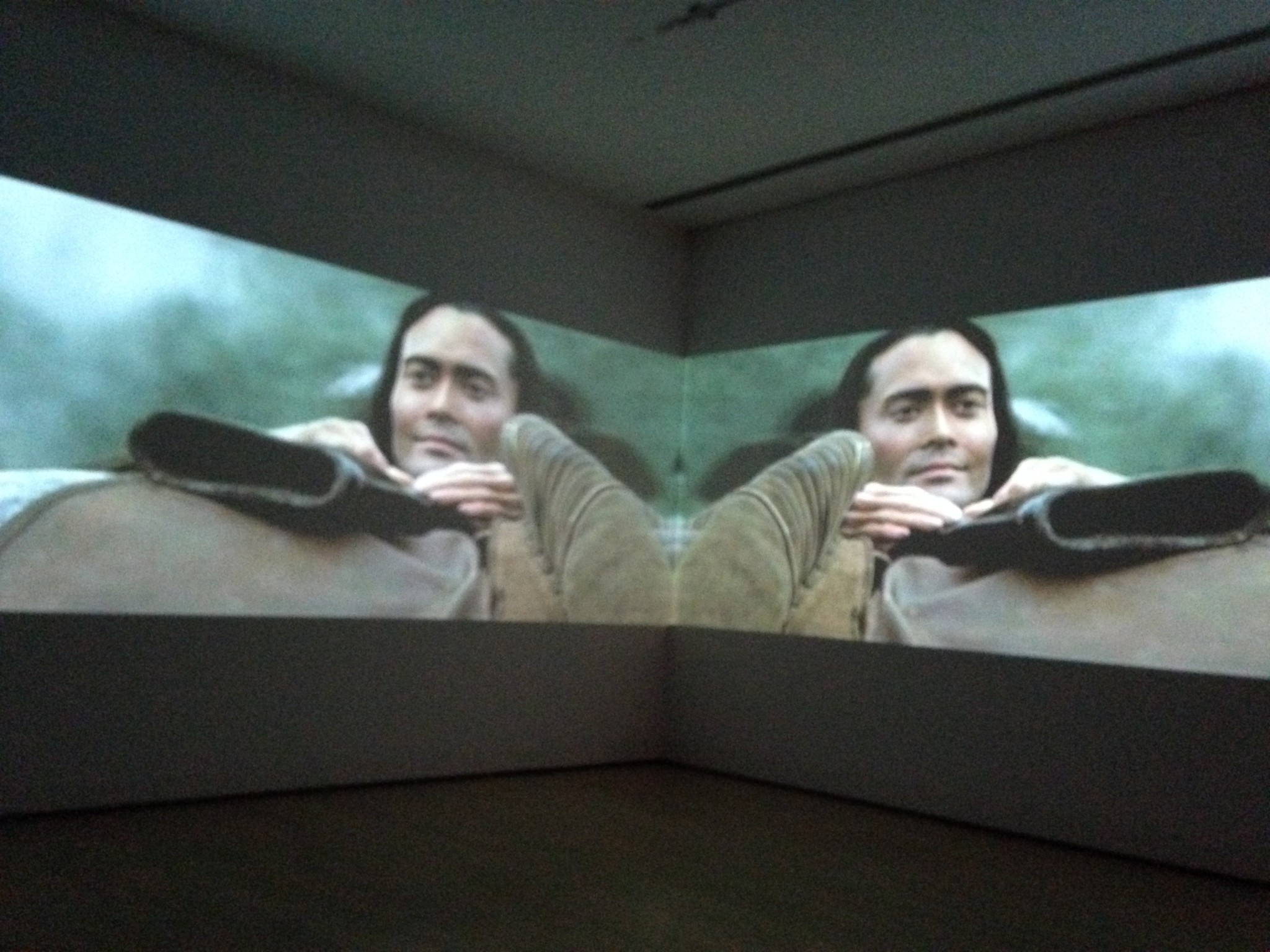
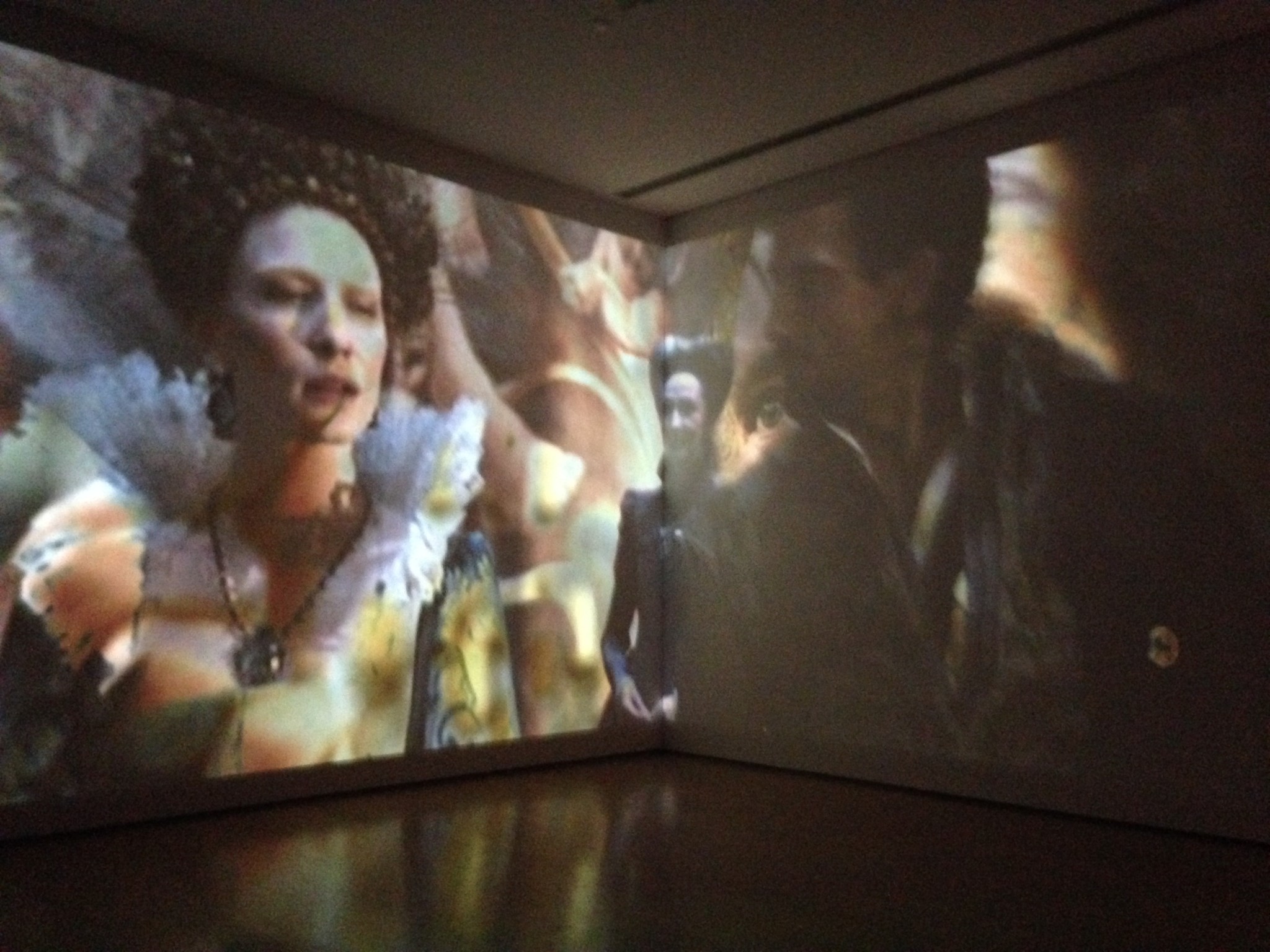
עבודת הוידיאו המצוינת ! Assimilate this של Bear Witness, אמן מולטימדיה שהציג בקנדה ובברלין, היא העבודה מרשימה ביותר בתערוכה שרובה מעולה. האמן, שמשמעות שמו “להיות עד” ,יצר עבודה שמתיחסת להבניית  זהות  באופן חכם, אירוני, מבדר ומר ומצליחה להפוך לחוויה פיזית בזכות המוסיקה הקצבית עם פס קול של תיפוף מתמשך ושירה אבורגינית .  מוקרנים בה קיטעי מערבונים, לצד קטעים מ”ממזרים חסרי כבוד” של טרנטינו ו”איש מת ” של גים גארמוש. העבודה בוחנת את האופן בו נבנית הדמות של האומות הראשונות בצפון אמריקה בעיניים מערביות באופן שנע בין הערצה לגיחוך ,בין תפיסות ה”פרא האציל” למי שיש להושיע את נפשו הלא נוצרית.
אין בתערוכה התייחסות להיבטים האלימים והקשים של קיום התרבות של האומות הראשונות בקנדה של היום למעט הקרנה של מעט מאד תיעוד הפגנות כנגד הפקעת

Dylan Miner, Native Kids Ride Bikes.

Dylan Miner, Native Kids Ride Bikes.

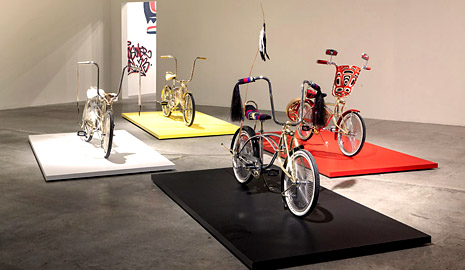
סקייטבורדס של גורדון בנט Jordan Bennett, עבודת הוידיאו Dance to Miss Chief, 2010 של  Kent Monkman בו  פנטזיה על “אינדיאניות”  שמנהלתרומן עם וואנטו, דמות של ” אינדיאני”  שהמציאקרל מאי הגרמני (שמעולם לא ביקר באמריקה) או המיצב המצוין של Dylan Miner של אופנים מקושטים  Native Kids Ride Bikes,מדברים על התרבות החזותית ההיברידית, העשירה בה יש מקום, ואפילו

Kent Monkman,Dance to Miss Chief”

Kent Monkman,Dance to Miss Chief”

החייאה, של מורשת אומות ראשונות בתוך ההקשר של תרבות אורבאנית צפון אמריקאית עכשווית. לא מדובר ב”התבוללות”, כפי שמזכירה קריאת התגר בשם העבודה !  Assimilate This אלא בבניית הגדרות זהות תרבותית חדשה.

Beat Nation:  Art, Hip Hop and Aboriginal Culture
Kathleen Ritter, Associate Curator (former), Vancouver Art Gallery, and Tania Willard
The Musée d’art contemporain de Montréal (closing 5th January 2014)

 HIGH INTENSITY:

The near future and a bit of the (recent) past – just before 2013 becomes a date in the archives of Time…     

Bialik House Photographer : Dina Guna

Bialik House
Photographer : Dina Guna

 A new exhibition of art interventions at the Bialik House, which I curated under the title “To eternity’s end, beyond the sea” (from Chaim Nachman Bialik’s poem, At Day’s End (1905), opens on December 26.  Curating at a site which is a cultural symbol is exciting.  The more I become acquainted with it, the more it reveals itself as a place with intricate layers of meaning, resonating and expanding through a changing city. With its high-ceilinged rooms painted bold colors, beautiful flooring and suites, the Bialik House preserves not only the past but the fantasy of what the founders envisioned as the future image of the “first Hebrew city.”
The four participating artists in my project Art Intervention I in the Bialik House, Nir Adoni, Eliahou Eric Bokobza, Tzibi Geva and Chaya Rukin,  share specific sensitivities of continuity and the ephemeral. The past flows into the present,  an unknown past is being revealed, a past we did not know, or one which was repressed or forgotten.
The artworks exhibited in the Bialik House respond and echo the ambiguity and yearning manifested in this beautiful edifice, so peaceful on the outside. The new works are exhibited alongside paintings by Reuven Rubin, Shmuel Ovadyahu, Pinchas Litvinovsky and other Eretz Israel artists of the early 20th century, which graced the walls when Bialik and his family resided there. If we were to imagine a contemporary Bialik collection, these works could well be part of it.

Eliahou Eric Bokobza S&P

Eliahou Eric Bokobza S&P

In the parlor, on the mantelpiece above the fireplace, near a small sculpture of Rachel’s Tomb, is the piece “Salt and Pepper” made of sterling silver salt and pepper shakers on an olive wood platform, by Eliahou Eric Bokovza. The set is designed as miniatures of generic buildings dotting the Israeli landscape: the black pepper shaker is a domed sheikh’s tomb, while the white salt shaker is an International-style building. These small-scale sculptures encompass longings for Europe and an Orientalist worldview. The representation of Rachel’s Tomb, the focus of the prayers of Diaspora Jewry, evokes Mother Rachel weeping for her children; while on the other hand, a typical sheikh’s tomb perceived through an Orientalist prism represents a time capsule of the ancient Middle East. Over recent decades, currents of Jewish piety have identified in these structures tombs of Jewish holy men and the burial places of biblical figures. The miniature International style building embodies the vision of Modernism imported from Western Europe. Bokovza creates a utopian moment of coexistence, an egalitatarian vision of East and West, in the spirit of Herzl and Bialik’s vision, distilled into essential forms as salt and pepper shakers.

Chaya Rukin,  Bread banana boat photographer : Tom Porat

Chaya Rukin, Bread banana boat
photographer : Tom Porat

In the dining room, underneath the three large windows giving onto the courtyard, a heavy glass-covered table is set with a delicate porcelain tea service in blue and white.  Chaya Rukin’s dry bread and banana peel, an icon of hardship, sets sail among thin teacups and a full-bellied teapot, like a pirate ship with a black flag, breaking through the sea of sheltered haute bourgeoisie. The glass-fronted china cabinet, full of formal tableware, the pride of the house, harbors another piece by Rukin from a shard of a plastic splint with a sail made of a piece of glass. The combination of a broken splint meant to heal and a dangerous piece of glass seems as obsessive as a despairing lover cleaving to the source of his pain. Rukin’s artworks shatter the Beit Bialik Museum’s shell of composure, exposing the pain leaking out of the slight cracks.
Metal works by Nir Adoni look like black silhouettes forming the contour of a city as it recedes into the distance, the moment in which a view is transformed

Nir  Adoni , Untitled

Nir Adoni , Untitled

from a mosaic of different sites into one large entity, like a blanket smoothing over conflicts and disagreements into velvety blackness. Perhaps this is the silhouette in which we can search for answers “To eternity’s end, beyond the sea.”  The metal cutout of a cathedral that was never built in Tel Aviv hangs near the form of the Hassan Bek mosque whose construction was completed one year before Bialik settled in Tel Aviv. The works float in the small room, reminiscent of the early Bezalel Art School style, such as works by Meir Gur-Arie, who also sculpted a bust of Bialik, and the decorative tiles from Ze’ev Raban’s studio which decorate the pillars and fireplace in the parlor.
      Tzibi Geva’s painted birds sit on branches or wires, poised with stability,

Tsibi Geva , Bird

Tsibi Geva , Bird

holding on tightly with their thin legs, on small formats of wood from old furniture, paper and canvas. The birds are from Geva’s new series created over the past year, although birds have appeared in his oeuvre since the 1980s. The birds reflect contemplations of local landscape, from the memories of the birds studied in nature and homeland lessons through the mention of wanderings in Bialik’s poems. The works are placed in the study, the haert of Bialik’s creative work as a writer and his identity as an intellectual, as a place of rest for wandering thoughts between Exile and hot Eastern lands. Geva’s paintings, with their drips, patches of color, crudeness and melancholy, are exposed in the study in all their delicacy and vulnerability, birds hiding among the books.
The contemporary artworks divulge a transparent cloud of longing and hope filling the House, a site which conceals more than it reveals. Art,  not obligated to formulate itself in literal sentences, becomes part of the passions and the desires between the walls, bringing forward fragility beyond the grandeur.

“To eternity’s end, beyond the sea…”
Beit Bialik Museum: Art Intervention I
December 2013 – March 2014
Exhibition Curator: Smadar Sheffi, PhD
Chief Curator and Director of the Bialik Complex: Ayelet Bitan Shlonsky

In mid-November, I Participated in the founding conference of the Azrieli Institute of Israel Studies at the Concordia University in Montreal, where I gave a lecture titled, “Milk, Blood and Honey: Contemporary Art from Israel.” It focused on Israeli art since the new millennium with emphasis on the past few years. This was an opportunity to crystallize my ideas and thoughts about current Israeli art, resulting in a picture of creativity haunted by doubt, constant soul-searching, courage and necessity bringing about a renewed engagement with addressing the past, especially the Holocaust. A look at the current galleries listing in Tel Aviv attests to its place in the culture sphere( “A bit of luck” by Roy Menachem Markovitch at RawArt; Tamar Hirschfeld’s video art “Schwartze skiing in Austria” in “Eth(n)ics” at the Givon Gallery, and “Jocheved Weinfeld’s Seamline,” at the Gordon Gallery).
With these thoughts and quite a few impressions from the Conference lectures on the construction of identity running through my head, I went to see the exhibition “Beat Nation: Art, Hip Hop and Aboriginal Culture” at the Musée d’art contemporain de Montréal.
Some Conversations in Montreal gave me a certain insight as to the way in which Canada –  at least parts of Canadian academia – addresses its past of conquest and slaughter of nations native to the country before the Europeans. The attitude is similar to the one in the USA towards Native Americans, groups of nations and tribes  referred to in the past as “Indians” (often coupled with the word “wild”), but there are essential differences: in Canada, the indigenous population is called “First Nations,” composed mainly of two aboriginal nations (a word usually associated, at least in Israel, with Australia) – the Inuit and the Métis.
On view in the exhibition are works by artists merging the influences of western urban culture with the culture and heritage of the First Nations to produce works addressing issues of identity which are visually and intellectually breathtaking.

 Bear Witness , Assimilate this!

Bear Witness , Assimilate this!

The excellent video “Assimilate this!” by Bear Witness, a multimedia artist who exhibited in Canada and Berlin, is an extremely impressive work in an overall outstanding exhibition. The artist created a work addressing issues of identity in an intelligent, ironic, entertaining and bitter manner, transformed into a physical experience through the soundtrack. The highly rhythmical music of continuous drumming and aboriginal chanting  accompanies visuals of clips from westerns intercut with clips from Tarantino’s Inglorious Basterds and Jim Jarmusch’s Dead Man. The video art examines the way in which the representation of the First Nations has been constructed through western eyes in North America, moving between admiration and ridicule, between the image of the Noble Savage and heathen whose souls must be saved. The exhibition avoids the violent or painful aspects of defending the First Nations’ culture in contemporary Canada, except for screening some footage of demonstrations against land confiscation.
Jordan Bennett’s “Skateboards,” Kent Monkman’s video art “Dance to Miss Chief”  a remix of contemporary and vintage footage  in which  a sexy fantasy “Miss Chief’” meets  Winnetou, a fictitious “Indian” from Karl May’s German Westerns., or Dylan Miner’s excellent installation of decorated bicycles, “Native Kids Ride Bikes,” all refer to the hybrid, rich visual culture which

Jordan Bennett, Skateboards

Jordan Bennett, Skateboards

provides space to exist and for the revival of the heritage of the First Nations in the context of contemporary North American urban culture. This is not about “assimilation,” as viewers are reminded by the challenging title of “Assimilate this!” but art engaged in defining a new cultural identity.

Beat Nation:  Art, Hip Hop and Aboriginal Culture
Kathleen Ritter, Associate Curator (former), Vancouver Art Gallery, and Tania Willard
Musée d’art contemporain de Montréal (closing January 5, 2014)

Posted in וידיאו, פיסול ומיצב, ציור | Comments Off on אֶל-קַצְוֵי עַד, אֶל-אַחֲרִית יָם? Beat Nation: Art, Hip Hop and Aboriginal Culture

סמדר שפי, החלון, אומנות ישראלית, אמנות ישראלית, Smadar Sheffi, The Window, Israeli Art