שי שאול– ENLIGHTENMENT (Gas stations)-SHAI SAUL

Please scroll down for English

 דימויים של שמונה תחנות דלק, ללא נוכחות אנושית, כמעט ללא מכוניות:הם מבליעים מימדים פוליטיים בהתייחסות לדרכים וגבולות, מימדים כלכלים ,סביבתיים ותרבותיים.Enlightenment, כותרת הסדרה מפנה לתקוות עידן ההארה, לחברה רציונאלית שוחרת טוב.הדימויים של שי שאול, מלוטשים לאיכות צילום והדפסה ללא דופי,
Enlightenment (Gas Stations) Sonol Zkharia (2012)

Enlightenment (Gas Stations) Sonol Zkharia (2012)

מעמידים צופים סימני שאלה מרהיבים, מחשבות ותהיות על הבטחות, על אשליות ועל קליפות.

שאול מדגיש את המודל הפיזי החוזר: משאבות הדלק, גג מגן משמש קופחת וגשם,מקומות חניה.תבנית בסיסית יעילה, מודרניסטיתשל תרבות הרכב, התנועה, שזוהתה בעבר כמגלמת חופש. תחנות הדלק הן המקום לתדלק מכונית ולמלא
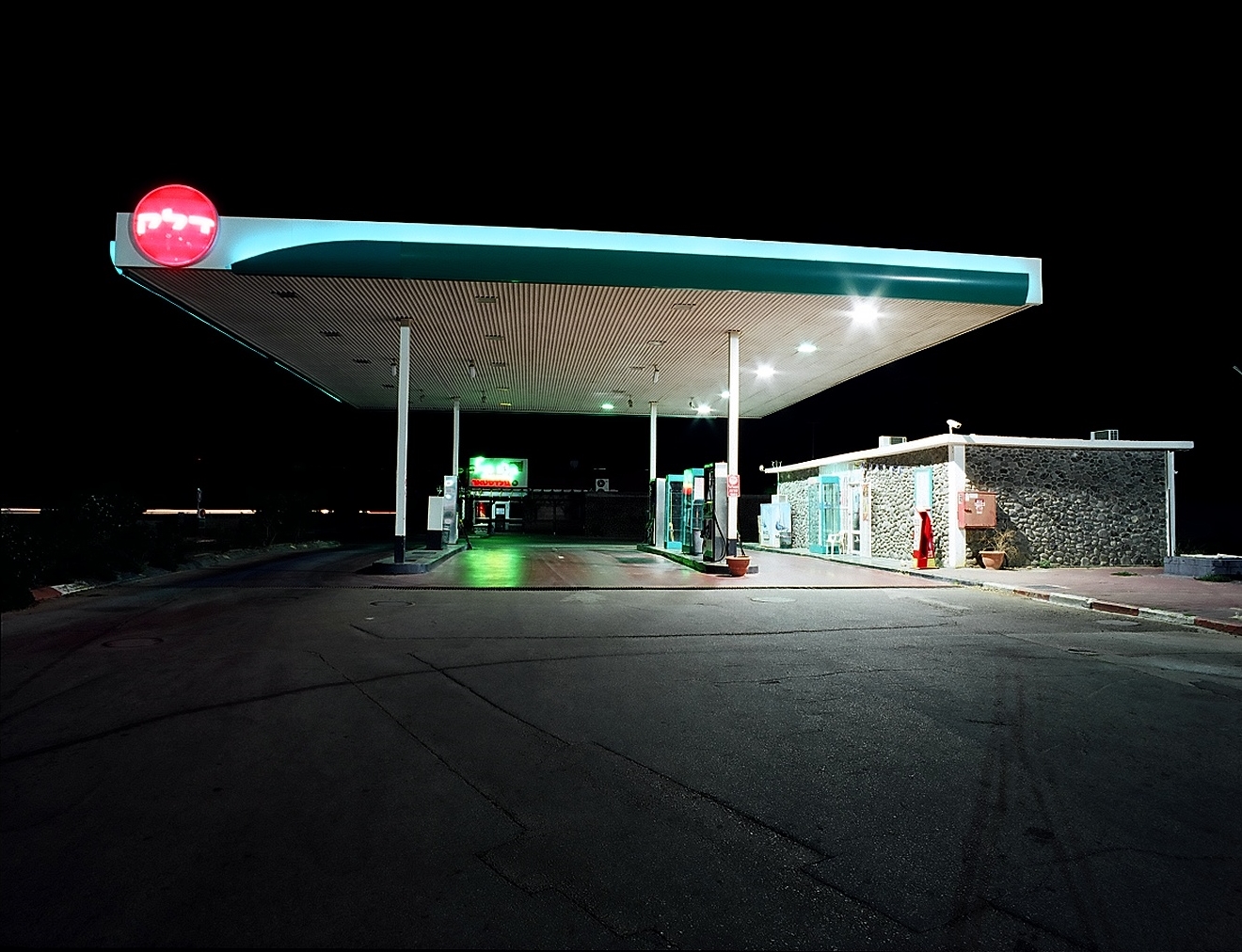
Enlightenment (Gas Stations) Delek Genosar (2012)

Enlightenment (Gas Stations) Delek Genosar (2012)

צרכים בסיסים של משקה מאכל ומנוחה והן מעוצבות כהבטחות בסככות בוהקות, במנורות ככוכבים.

בהקשר הרחב של עבודתו של שאול בשנים האחרונות- צילומי חממות ומרחבי ביניים הנמתחים בין חקלאות וטבע לפרוור, ובאחרונה גם פרויקט העוסק בשוליים של ירושלים – ההארה, הבוהק והסנוור קשורים להרהור באפשרות ההתבוננות והבחינה. מרבית התחנות המצולמות הן כספינות אור שייעלמו ויבלעו בחשכה, כלומר דימוי שנוצר ומת במהירות. שאול מקפיא את הזיכרון, את הרגע הקצר בו מתבונן בהן הנוסע- נווד, אלא אם יעצור בהן.

המסע שנפרש בתצלומים הוא של המקומות אליהם מגיעים לשבור שבר, למלא צפייה. שאול צילם אותן בכל הארץ: אפיקים, גנוסר, עילבון, הנגבותל-אביב הם כמה מהאתרים.

סדרת צילומי תחנות הדלק של אד רושה האמריקאי (1937) שפורסמה בספרו “עשרים ושש תחנות דלק” (Edward Ruscha, Twenty-six Gasoline Stations) יכולה להיקרא כעין תת מודע של התחנות שצילם שאול. ספרו של רושה ראה אור ב-1963, השנים בהן הפופ פרח משני צידי האוקיאנוס האטלנטי ובחן שאלות של צרכנות באופן ביקורתי. רושה צילם תחנות דלק על כביש 66 מלוס אנג’לס לאוקלהומה סיטי, נתיב בו הרבה לנסוע בעת לימודיו בלוס
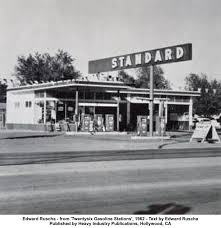
 Edward Ruscha Twentysix Gasoline Stations, 1963 (detail)

Edward Ruscha Twentysix Gasoline Stations, 1963
(detail)

אנגלס.הוא צילם אותן בתמונות חטף שהדגישו את החספוס, את היותן ביטוי מזוקק של תרבות המכוניות האמריקאית. הספר הקטן שהופק באמצעי הדפסה משרדיים פשוטים נחשב למסמן חשוב של הערפול שבין הדוקומנטרי לאמנותי. ב-1963 צייר רושה את Standard Station, Amarillo, Texas, עבודה גדולה, רוחבה מעל 3 מטרים, שהפכה לעבודה איקונית של פופ.רושה הפנה את המבט לתאגידי הענק, לכוחות מרכזים בחברה האמריקאית.

חמישים שנה חלפו בין העבודות של רושה והעבודות של שאול. כמעט מפתיע לגלות כמה מעט השתנה בתרבות המכונית הפרטית, זרם בלתי פוסק של כבישים וזיהום שמזוהים עם קדמה.בישראל, שנחשבה בעבר לחסרת תרבות דרכים בשל גודלה הזעיר,צמחו בעשור האחרון הכבישים הגדולים שיוצרים אשליית מסע ואיתם התחנות.

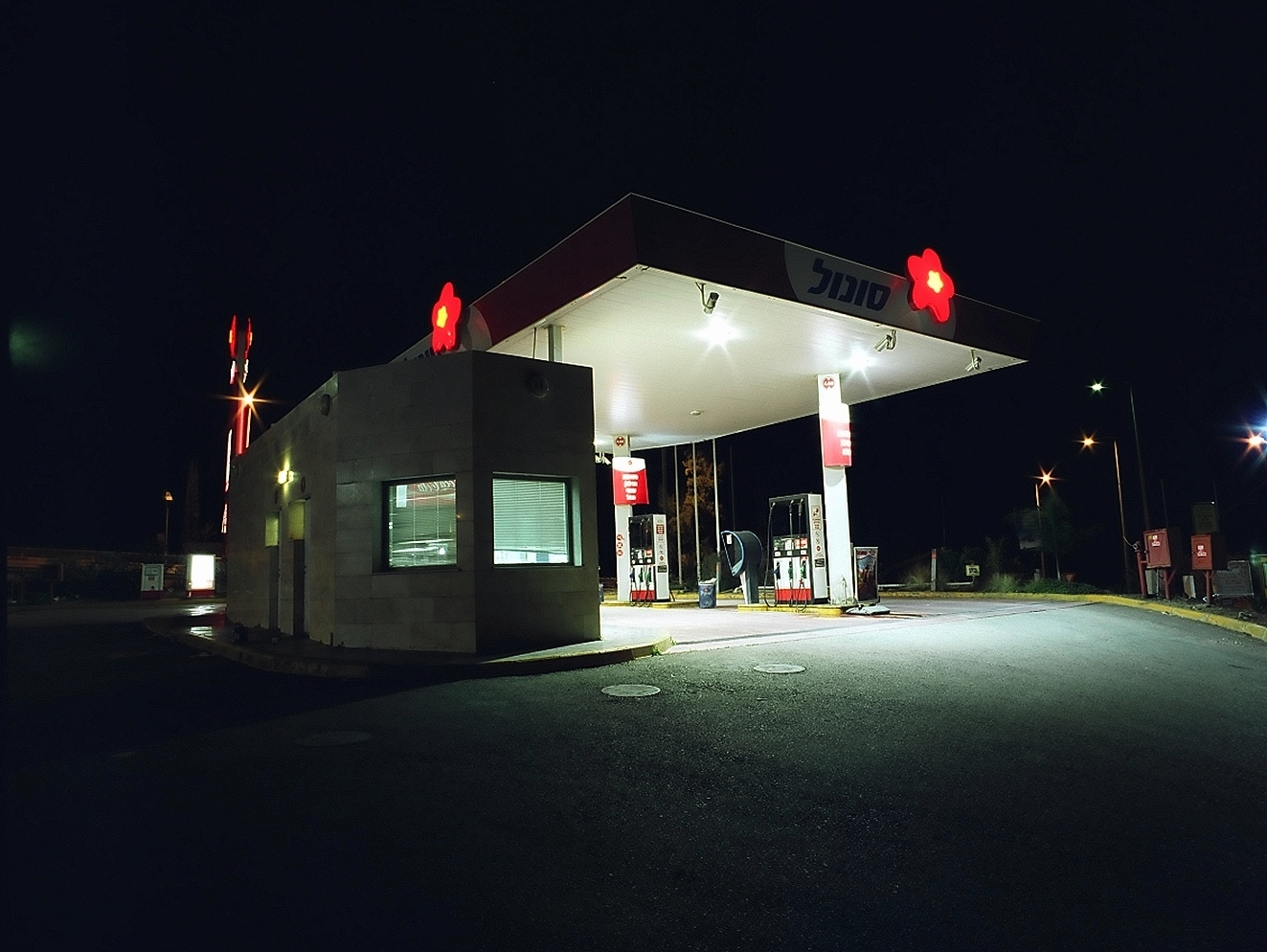
נקודת הראות של שאול היא מהדרך, זו של הנוסע במסע שפעמים רבות כל כך הוא העיקר ולא הנקודה שבסופו. כך, שאול מצלם תחנה של “דלק” ממרחק, מזווית אלכסונית נמוכה כמי שהגיע אליה כמו עולה רגל. הרחבה הבהירה המסמאת היא ניגוד מושלם לשמי הלילה בשחור קטיפה. מזווית דומה צילם גם תחנה של “סונול” שפרח מתקתק מתנוסס מעליה כמו צלב. בתחנה אחרת אור ניאון ירקרק מאיר כמו אור של חסד, מסתורין וישועה. באור הניאון, בעיצוב שמבקש להעלים את היות הדלק גורם לנזק מתמשך לסביבה, התחנות מבטיחות הבטחות שווא.
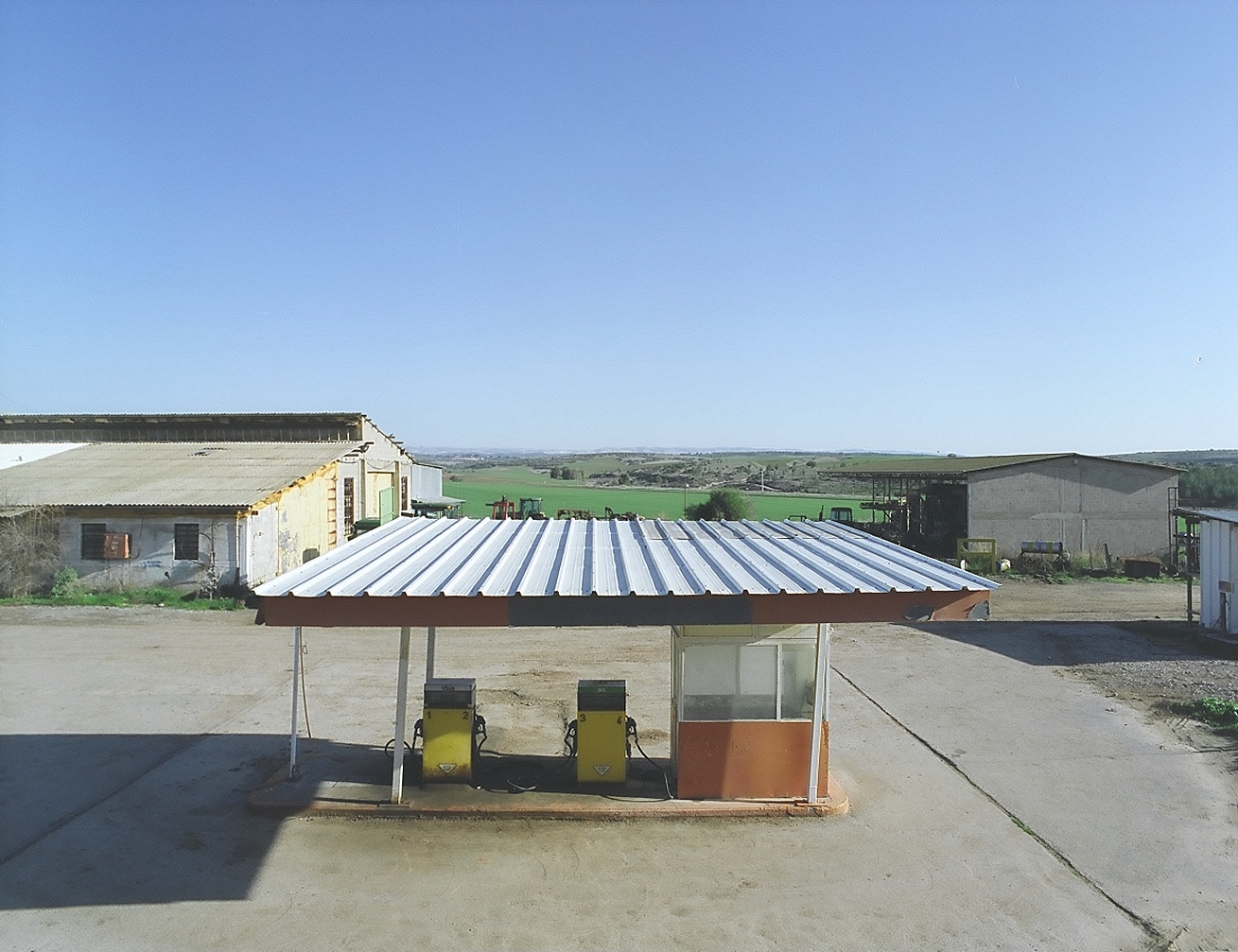
Enlightenment (Gas Stations) Paz Gal-On (2012)

Enlightenment (Gas Stations) Paz Gal-On (2012)

שתי תחנות,בגלאון ובעילבון מצולמות באור מלא. הן הנגדה מושלמת למחלצות הבוהקות של תחנות בלילה.

בגלאון התחנה היא שתי משאבות וסכך, פונקציונאליות מתומצתת לכדי ההכרחי, מעין הסתייגות חזותית מתרבות הרכב שמתחזקת מול נוף פתוח,ירוק,שצפונים בו זיכרונות תקופות אחרות. השנייה בעילבון, היא תחנה בבניה, הקליפה בלבד, ללא המשאבות, תפאורה חלולה.

התחנותבצילומים של שאול מתחנחנות, מבקשות ליצור מצג של קסם ידידותי. הן נקודות ציון בנוף ולמעשה נדמה שהן הנוף, שבלעדיהן אין עוד דבר בסביבה.

התחנה ברחוב קרליבך ממוקמת ברחוב עירוני. על הרקע המרופט שלהעיר המתבוססת באפור, הצבע האדום השולט בתחנה זר ומתפרץ, כמעט אלים. שאול מצלם את כביש האספלט המתפקע,המצולק. שקית ניילון מתגוללת בקדמת
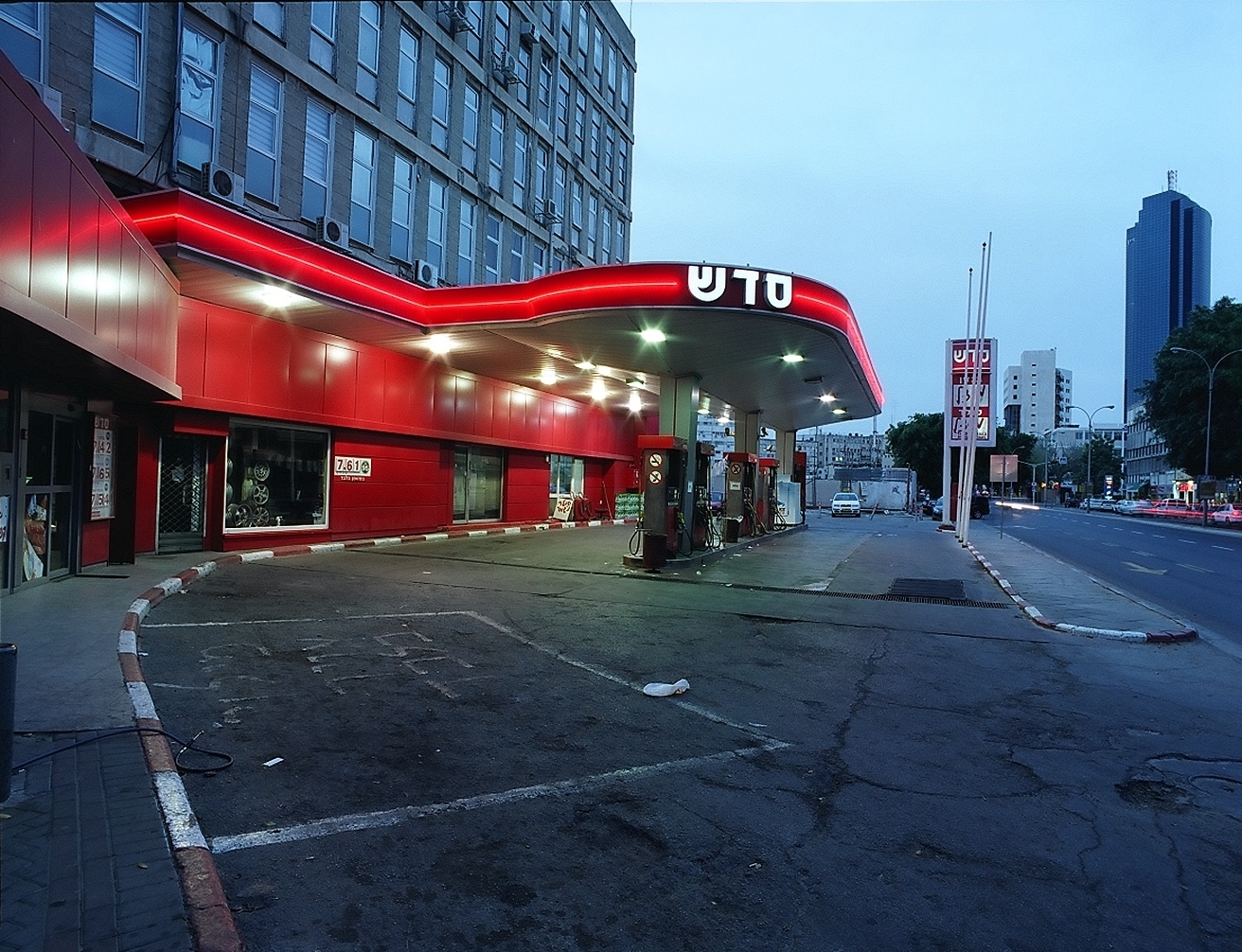
Enlightenment (Gas Stations) Sadash Karlibach Tel Aviv (2012)

Enlightenment (Gas Stations) Sadash Karlibach Tel Aviv (2012)

תחנה, נוצצת בניאון,חושפת את האשליה.

***

מהתחנות של שאול נראית תמיד הדרך הנפתחת, זו שלא תיזנח לטובת התחנה שהיא מקום לא מקום, תפאורה ופונקציה הכרחית, לאודיסאות אינספור.

הטקסט נכתב כטקסט מלווה לתערוכה

 אואזיס- תחנות דלק בישראל גלריה בבית האדריכל צילומים: שי שאול / וידאו: אדריכלית ורד פלוק

אוצרים: מיכל אהרוני, ערן טמיר טאוויל

המגדלור 15, יפו

הניוזלטר החדש של “החלון” יתחיל להופיע בשבועות הקרובים ובו פירסומים על תערוכות ואירועי אמנות . אם  טרם נרשמתם לקבלתו ליחצו כאן

 ENLIGHTENMENT: SHAI SAUL’S GAS STATIONS

Images of eight gas stations, without any human presence and hardly any cars, insinuate political, economic, environmental and cultural dimensions into roads and borders. The title of the series, Enlightenment, refers to the hopes of the Age of Enlightenment and the striving towards a rational society seeking the highest good. Shai Saul’s photographs, meticulously crafted and printed, challenge viewers to contemplate and question promises, illusions and outer shells.
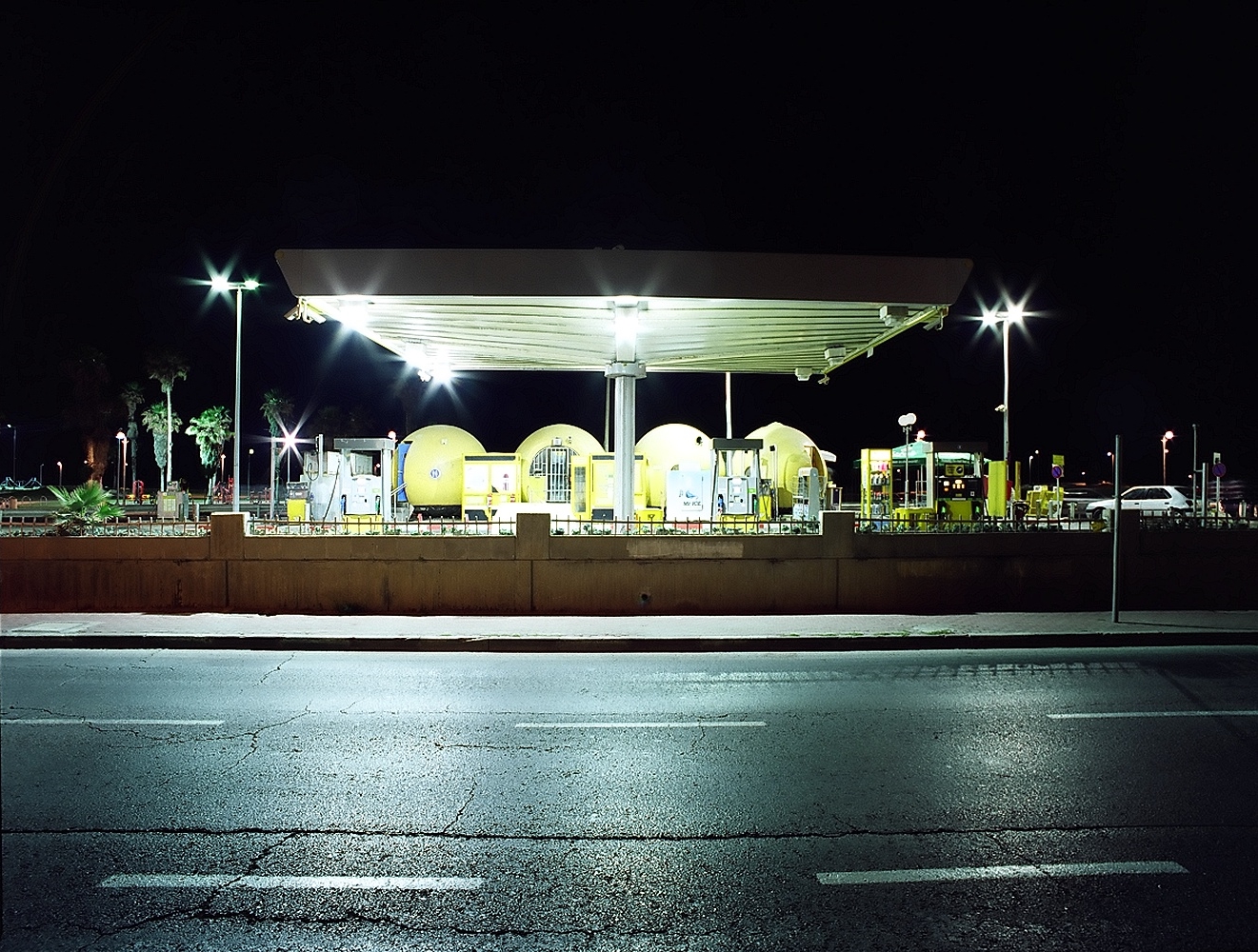
Enlightenment (Gas Stations) Paz Koifman Tel Aviv (2012)

Enlightenment (Gas Stations) Paz Koifman Tel Aviv (2012)

Saul emphasizes the repetitive physical pattern of stations: pumps, overhead shelter from the sun and rain, and parking places -an efficient, modernist paradigm of car culture and movement as the embodiment of freedom. Gas stations, as “pit stops” for refueling and refilling basic human needs for food, drink and rest, are designed as promises with their glimmering shade shelters and star-like lights.

Within the broader context of Saul’s work over recent years (photographs of greenhouses and mediating spaces stretching between nature and farming areas and the suburbs, and a recent project focusing on Jerusalem’s outskirts), the act of enlightenment and the blinding light are associated with revisiting the possibilities of observation and examination. In most of the works the gas stations look like lightships which will disappear to be swallowed up by the darkness, as images quickly formed and quickly dying. Saul freezes memory, stilling the short moment in which the traveler-nomad observes the stations, unless to stop.

Enlightenment (Gas Stations) Delek Genosar (2012)

Enlightenment (Gas Stations) Delek Genosar (2012)

The journey unfolding in the photographs is to places fulfilling a quest and yearning. Traveling around the country, Saul photographed, among other sites, Afikim, Genosar, Eilaboun, the Negev and Tel Aviv.

In an art historical context, Ed Ruscha’s (b. 1937, USA) book Twenty-six Gasoline Stations (1963) can be read as the subtext of Saul’s gas stations. Ruscha published his book during the era when Pop Art, with its critique of consumer culture, flourished on both sides of the Atlantic. Ruscha photographed gasoline stations on Route 66 from Los Angeles to Oklahoma City, a trip he frequently made as a young student. His snapshots emphasized the roughness and distilled reflection of American car culture. The little book produced by a simple office copier became an important signpost of the blurring line between the
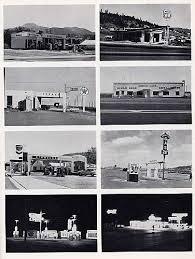
 Edward Ruscha Twentysix Gasoline Stations, 1963 (detail)

Edward Ruscha Twentysix Gasoline Stations, 1963
(detail)

documentary and art. Ruscha’s large canvas (over 3m wide), Standard Station, Amarillo, Texas (1963), is considered an iconic Pop work. Ruscha then turned his gaze on the superpowers of American society – the huge corporations.

Fifty years separate Ruscha’s and Saul’s works. It is surprising to see how very little has changed in the car culture, with the unceasing flow of roads and its concomitant pollution identified with progress. Israel, formerly considered as lacking road culture because of its tiny size, now has superhighways that sprouted over the past decade, creating an illusion of a journey, accompanied by gas stations.

Saul’s viewpoint is from the road, the viewpoint of a nomadic traveler, for whom the journey is the goal and not the final destination. Thus, Saul photographs a Delek station from a distance, in a low diagonal angle, as from a pilgrim’s point of view. The blindingly bright square is the counterpoint to the black velvet of the night skies. A similar angle of shooting can be seen in his photograph of a Sonolstation, with its saccharine flower logo over it, bringing to mind a cross. In another photograph, a greenish neon light illuminates like a note of mercy, mystery and salvation. The neon-lit design of the stations makes false promises attempting to make us forget that gasoline causes continued environmental damage.

Enlightenment (Gas Stations) Sonol Zkharia (2012)

Enlightenment (Gas Stations) Sonol Zkharia (2012)

Two gas stations, at Gal-On and Eilaboun, are photographed in full daylight, in utter opposition to the shining expanses of the nighttime gas stations. Gal-On’s station, consisting of two pumps and a shed, is functionality pared down to the necessary essentials in a visual rejection of car culture reinforced by the open, green landscape facing it, encoded with memories of bygone eras. The Eilaboun gas station is under construction, without the pumps, showing only its outer shell as hollow decor.

Enlightenment (Gas Stations) Sadash Karlibach Tel Aviv (2012)

Enlightenment (Gas Stations) Sadash Karlibach Tel Aviv (2012)

The gas stations in Saul’s photographs try to present a façade of friendly charm. They are map coordinates in the landscape, but actually seem to be the landscape, since there is nothing else around.

The gas station on Carlebach Street in Tel Aviv is located on an urban street. With the shabby greyish city in the background, the glitterydominant red seems alien, intrusive, and almost violent. Saul photographs the cracking, scarred asphalt road; a plastic bag rolls around the sparkling neon station, exposing the illusion.

***

From Saul’s gas stations, the open road always beckons. The gas stations which line the road are not harbors, but form a necessary functional backdrop for infinite odysseys.

(The text was written for the exhibition)

Oasis – Gas Stations in Israel

Photography: Shai Saul / Video: Architect Vered Fluk

Curators: Michal Aharoni, Eran Tamir Tawil

The Architects House Gallery

15 HaMigdalor Street, Yaffo


Posted in Uncategorized, צילום | Comments Off on שי שאול– ENLIGHTENMENT (Gas stations)-SHAI SAUL

הרשמה לניוזלטר

החלון לאירועי תרבות ואמנות הוא ניוזלטר שישלח מידי שבוע עם רשימת אירועים ותערוכות ומידע תמציתי אודותיהם.
הרישום מהווה אישור שלכם לקבלת המידע לכתובת המייל שתמסרו. תוכלו להסיר את שמכם מרשימת התפוצה בכל עת ובאופן מידי.

להרשמה לניוזלטר מלאו את הטופס הבא:

הצטרפות לניוזלטר "החלון"

Posted in Uncategorized | Comments Off on הרשמה לניוזלטר

סשה אוקון – Observationes Sasha Okun

 Please scroll down for English
התערוכה Observationes של סשה אוקון במוזיאון רמת גן כבר נסגרה. האמנות היוצאת דופן שלו שוב הבליחה בשדה הישראלי, אסכולה של איש
אחד. 
שם התערוכה היא המילה “תצפיות” בלטינית, מילה שהפכה לשמו של זאנר כתיבה רפואית למן המחצית השנייה של המאה ה16. במאה ה 18 היה סוג הדיווח הזה לזאנר המרכזי, כמעט בלעדי של כתיבה בתחום הרפואה. בזמנו הדגש על ניסיון כמקור ידע, ולא סמכות טרנסנדנטית זו או אחרת, היה נדיר ביותר. עם השנים התפתחו ה Observationes לכלל מאגר מידע חשוב.
       אוקון מתבונן באנושי במידה רבה ריחוק ואמפטיה, אולי כשל רופא או מדען. הוא אינו חוסך מהדמויות שהוא מצייר דבר מתהליך החזרה לעפר, אינו מתפייט על סבל או מלנכוליה וגם אינו מציע מסקנה או הצעה. אוקון מתבונן.
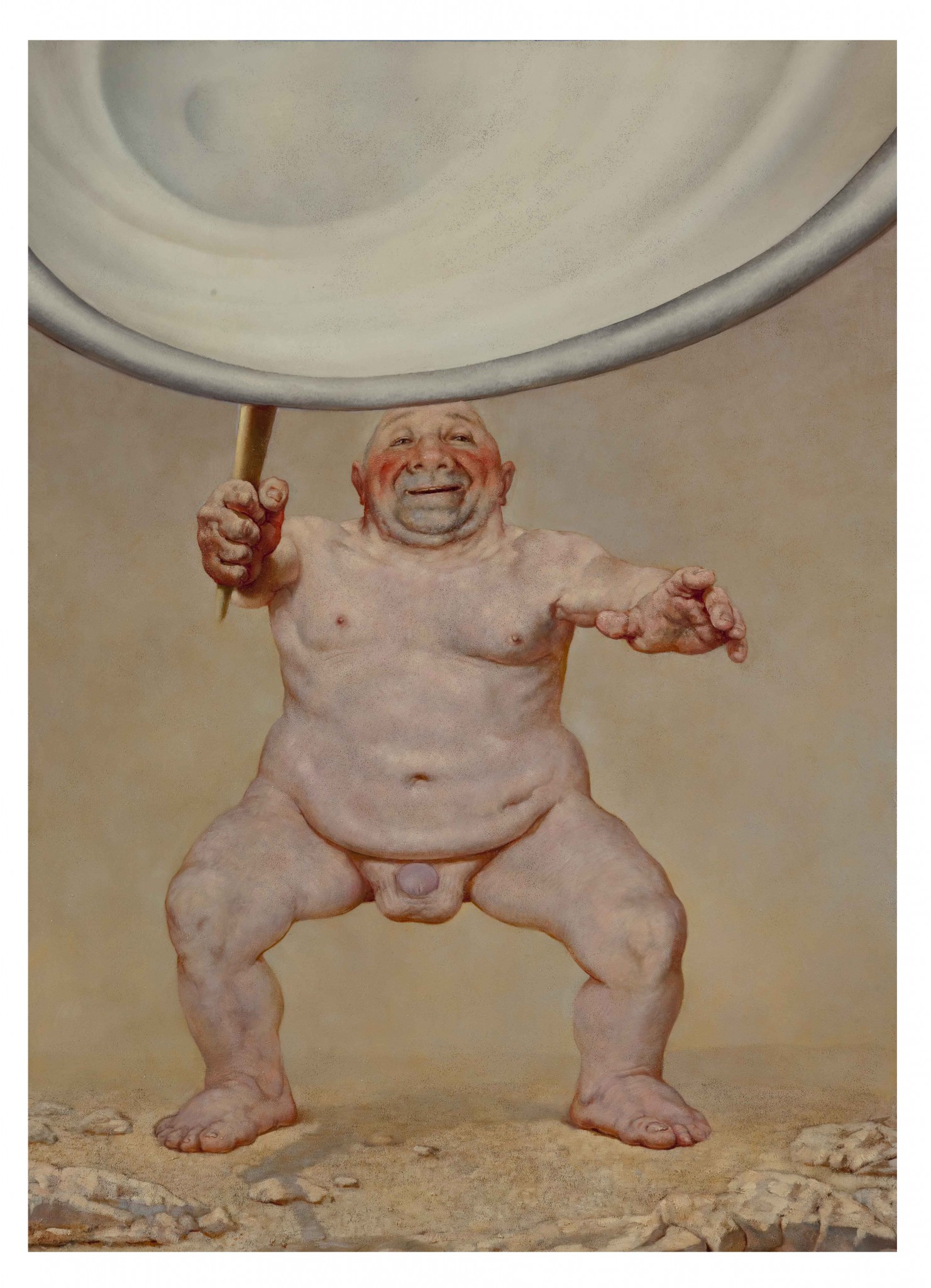
    בשתים עשרה עבודות חדשות שיצר בשנתיים האחרונות שהוא פורש לנגד עיני הצופים דרמה אופראית ממש. העבודות גדולות מאד,חלק ניכר רוחבן כשלושה מטרים, ובכולן דמויות במצבים קיצוניים של קונפליקט ,תאווה, ובחלקן התפרעות, אלימות , עליבות והשפלה. חלק ניכר מהדמויות בקונטרפוסטו קיצוני או זינוקים גדולים, תנועות גרוטסקיות של חיוניות של שמזכירות סצנות יום הדין בכנסיות או את דמויותיו העלובות-  מוכות ולעולם אכזריות של חנוך לוין. 
       מאבקי שליטה,תחרות בלתי פוסקת, כוח ויצריות נואשת הם שמאפיינים את הדמויות של אוקון. הוא מצייר גברים ונשים שנראים בעשור השביעי והשמיני לחייהם, מדוללי שרירים ועבי בשר, בערום חלקי או מלא, היפוך מושלם לדגם היופי האידיאלי שהגדירה האמנות היוונית הקלאסית (גברים שרירים בעשור השלישי לחייהם בתנוחות  אציליות). העבודות נעדרות ארוטיות 
ועם יש זכרון או הד לכזו הרי היא מתורגמת לניסיון פתטי להיאחזות בליבידו.
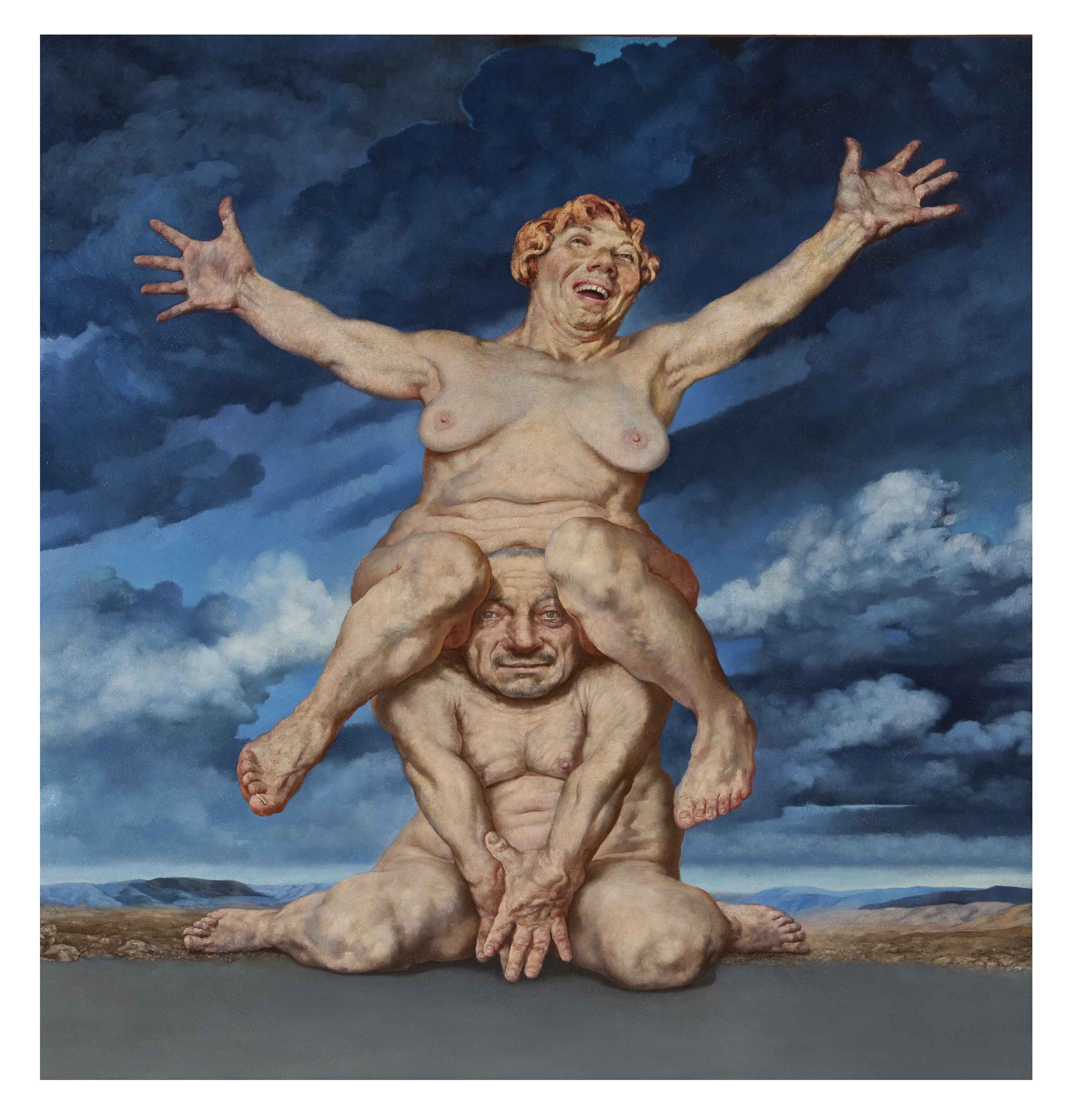
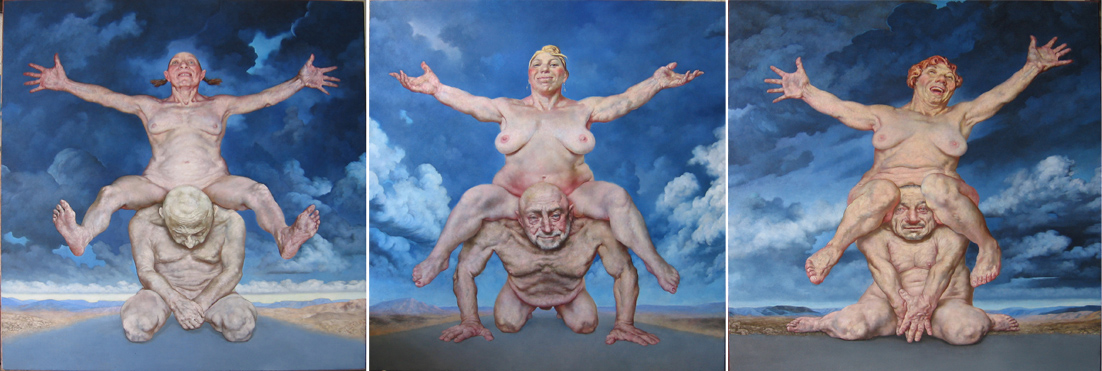
בטריפטיכון “רוכבות”,שרוחבו הכולל כמעט ששה מטרים, אוקון חובט בטאבוים החל משימוש בעצם פורמט הטריפטיכון, על הקשריו הנוצריים, ועד

רוכבות  Women Riders (triptych),

רוכבות
Women Riders (triptych),

לדמויות הנשים האגרסיביות והגסות הרוכבות על גברים עלובים וכנועים, עבדים במשחק שליטה. זיכרון תולדות האמנות שמקופל בעבודה נע מהזאנר הפיסולי של רוכבים על סוסים equestrian statue שמוכר מהפסל של מרקוס אורליוס על גבעת הקפיטול ברומא , דרך הרנסנס עם פסלים מפורסמים של וורוקיו  ודונטלו, ועד הפיסול המודרני של מארינו מריני האיטלקי שמוכר בזכות פיסלי רוכבים שזרועותיהם פרושות לצדדים כמו ידי הנשים של אוקון. מאריני מפסל  גברים גוצים עם זקפה בולטת שתנוחת הרכיבה  היא חלק מהבעה של און ומיניות .

הנשים  של אוקון מתקשרות לדמויות של מאריני, כשבמקום סוסים הן נישאות על ידי הגברים שתחתיהם. הנשים הגדולות, מאין וולקירות, לא נושאות גיבורים מתים משדות קרב כמו אופרות של ואגנר אלא  מחזיקות גברים כנועים תחת רגליהן כשהן שיכורות כוח, חוגגות את ניצחונן באופוריה. משהו בדימוי מעורר גם אסוסיאציה ללידה מעוותת, נשים המולידות גברים מבוגרים, מגוחכים, במה שנראה שיכול לבשר רק רע .
 
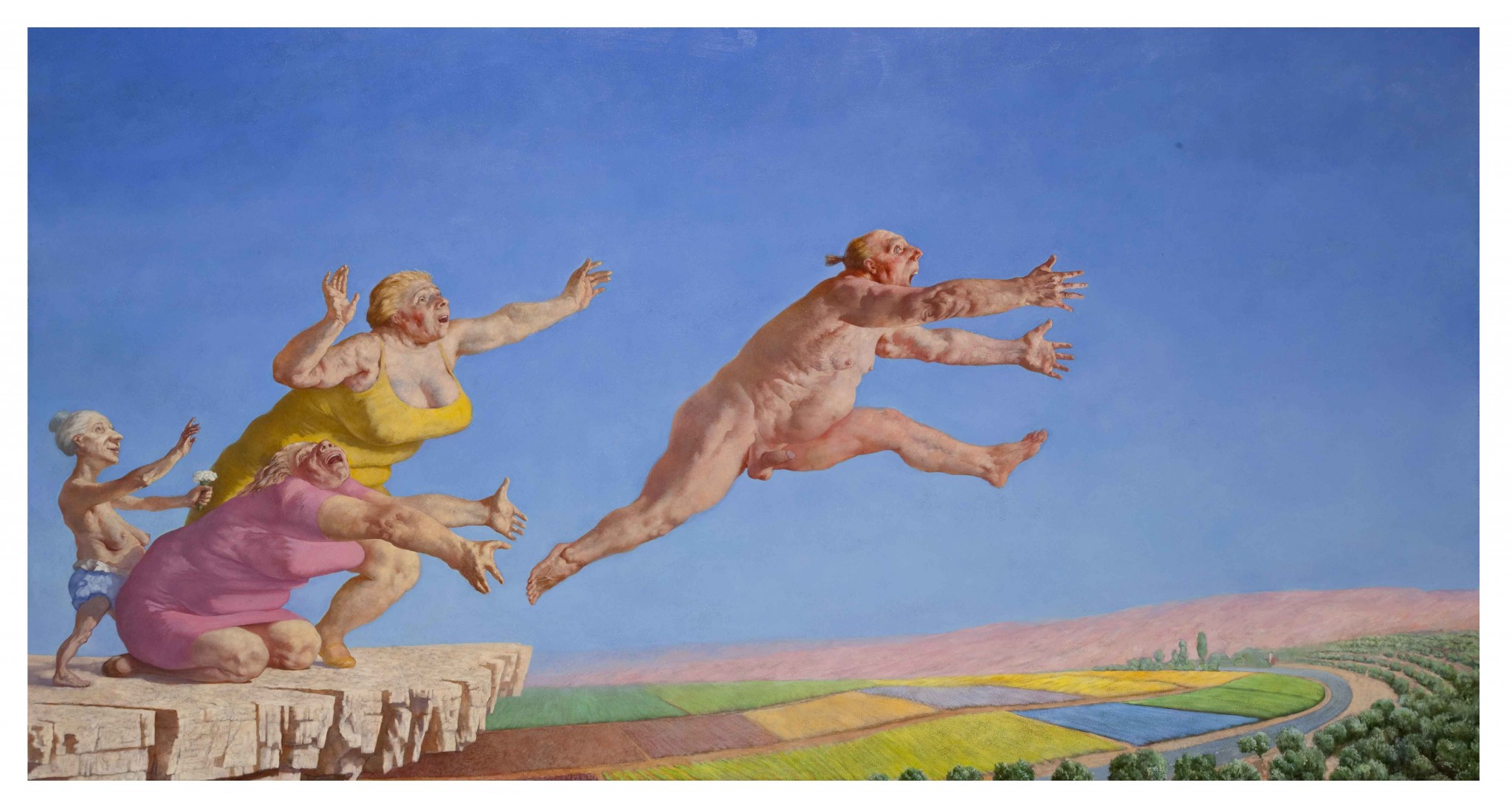
בריחה מוצלחת“, הגדולה, הציבעונית, היא ציור רגע של התאבדות – התעלות, צרוף שמאיים בשל היותו משוחרר מכבלי מוסר או פחד. גבר גדול, הכלאה של מאין דמות גרגנטוא Gargantua (של ראבלה מהמאה ה 16 ) וההיפופוטמיות המרקדות ב”פנטזיה” של דיסני, מזנק לעבר  תהום ועל הצוק מאחוריו

בריחה מוצלחת  Successful Escape

בריחה מוצלחת
Successful Escape

שלוש נשים שהוא בורח מהן. ההתרסקות, המוות, בלתי נמנעת אך לא נוצרת סימפטיה או הזדהות עימו, אפילו לא אדווה של זעזוע.

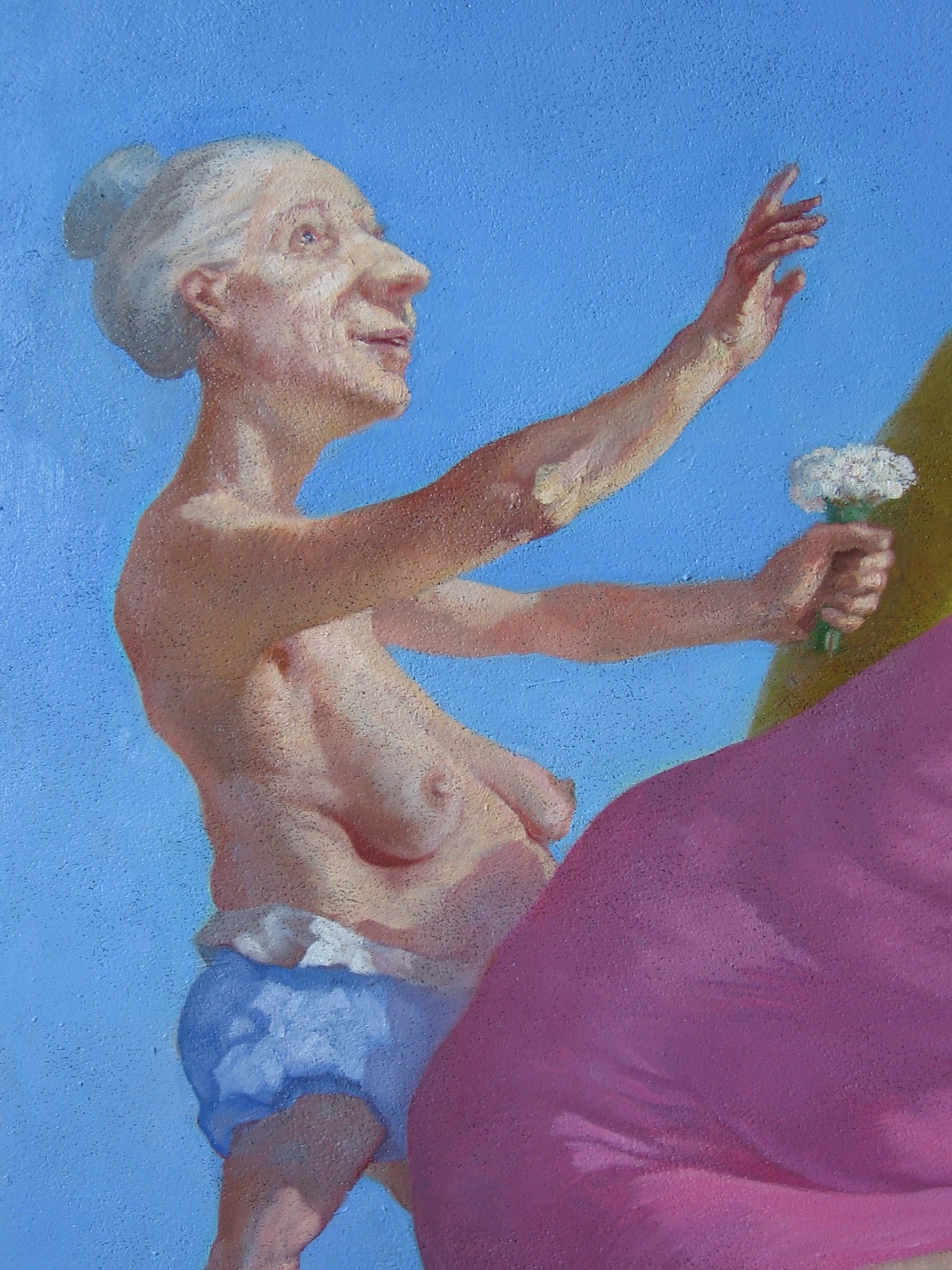
 הנשים על הצוק יוצרות גם הן מערך פארודי ופרדוכסלי – תנועותיהן  התיאטרליות נראות כאלו האופיניות לתלמידי ישו האבלים בסצנות שונות של ההורדה מהצלב, בעיקר מהרנסנס האיטלקי ,אך הן מרוחקות מכל קדושה כשם שהגבר, על משמניו המתדלדלים והזיקפה הבולטת רחוק מדימויי ישו. הנשים לבושות במה שמכונה בתיאורי אופנה כצבעי גלידה: ורוד, צהוב ותכלת וכמו במחזה של חנוך לוין ניסיון נשיאת החן מעורר סלידה. 
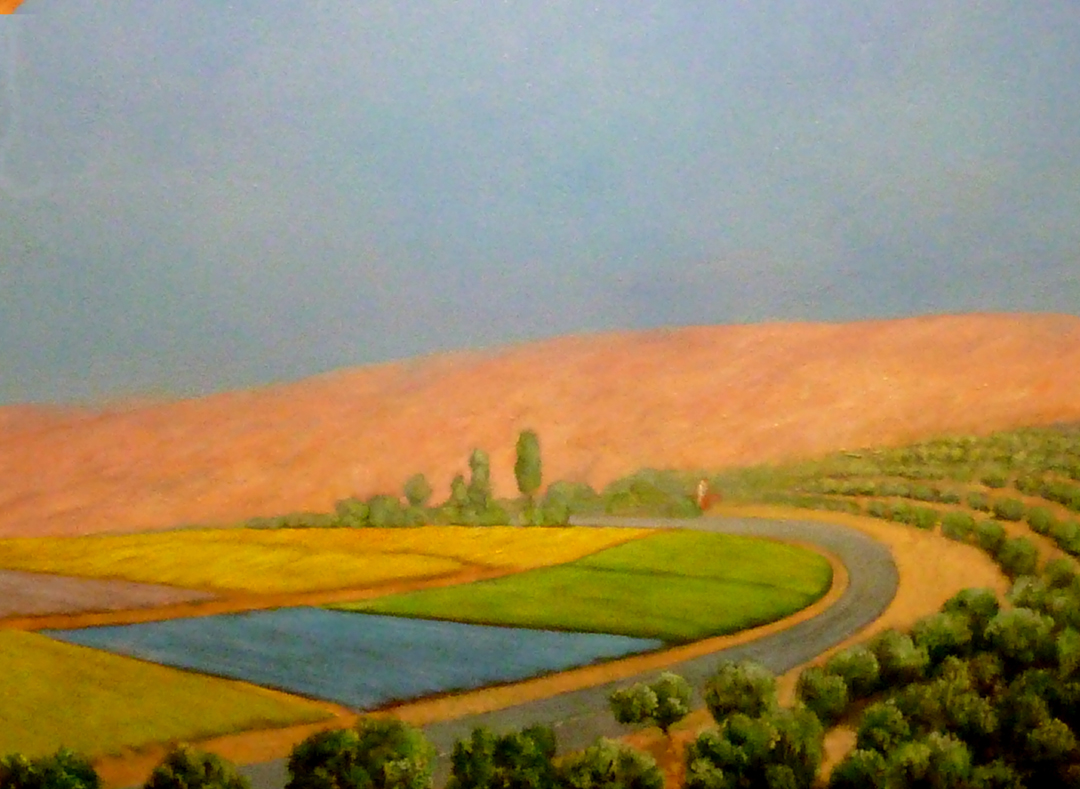
את מחזה האבסורד של הבריחה אוקון שותל  על רקע נוף יפה ושליו, הנראה כנוף עמק יזרעאל ביום בהיר. השמים הם שמי תכלת חלומיים, ללא עב, השדות מלבנים צבעוניים ומרחוק שרשרת הרים בצבעי חול . הנתק של הנוף מהמתרחש בו מדגיש את האינדיפרנטיות של הטבע לדרמה  האנושית, מסמן עד כמה היא טריוויאלית ביחס לתהליכים הארוכים של היקום. היחס הזה בין  רקע להתרחשות אופייני לציור של אוקון הרבה יותר מאשר השמים הסוערים- מתקדרים ב”רוכבות” שמחזקים את הגעש בעבודה. בכל העבודות ,למעט

פרט, בריחה מוצלחת detail, Successful Escape

פרט, בריחה מוצלחת
detail, Successful Escape

רוכבות, אוקון מתאר ימים של מזג אוויר שימשי מושלם.

הדיכוטומיה בין הנוף להתרחשות בו, בין תיאור היופי לבין הלעג המושחז לבני האדם המאכלסים אותו מתקשרת, במידה מסוימת להיותו של אוקון מהגר, מי שהגיע לארץ לאחר שטיפח תפיסה מיתית של המקום.
אוקון, יליד 1949 הגיע לארץ בגיל 30 מלנינגרד, כיום סנט פטרבורג. בברה”מ פעל במקביל באקדמיה ממלכתית ובקבוצת אמנות חוץ ממסדית.  הארץ הצטיירה עבורו באור הדרמטי של עבר תנכ”י והיסטורי מפואר, חלק מערש תרבות המערב. המפגש עם היומיום הישראלי, המחוספס, לעיתים הגס ובוודאי נעדר הדקורום ,העצים נטייה לראיה צינית שאוקון, בשיחות איתו, מתייחס עליה גם כהומור (שלעיתים קרובות נעלם מעיני). 
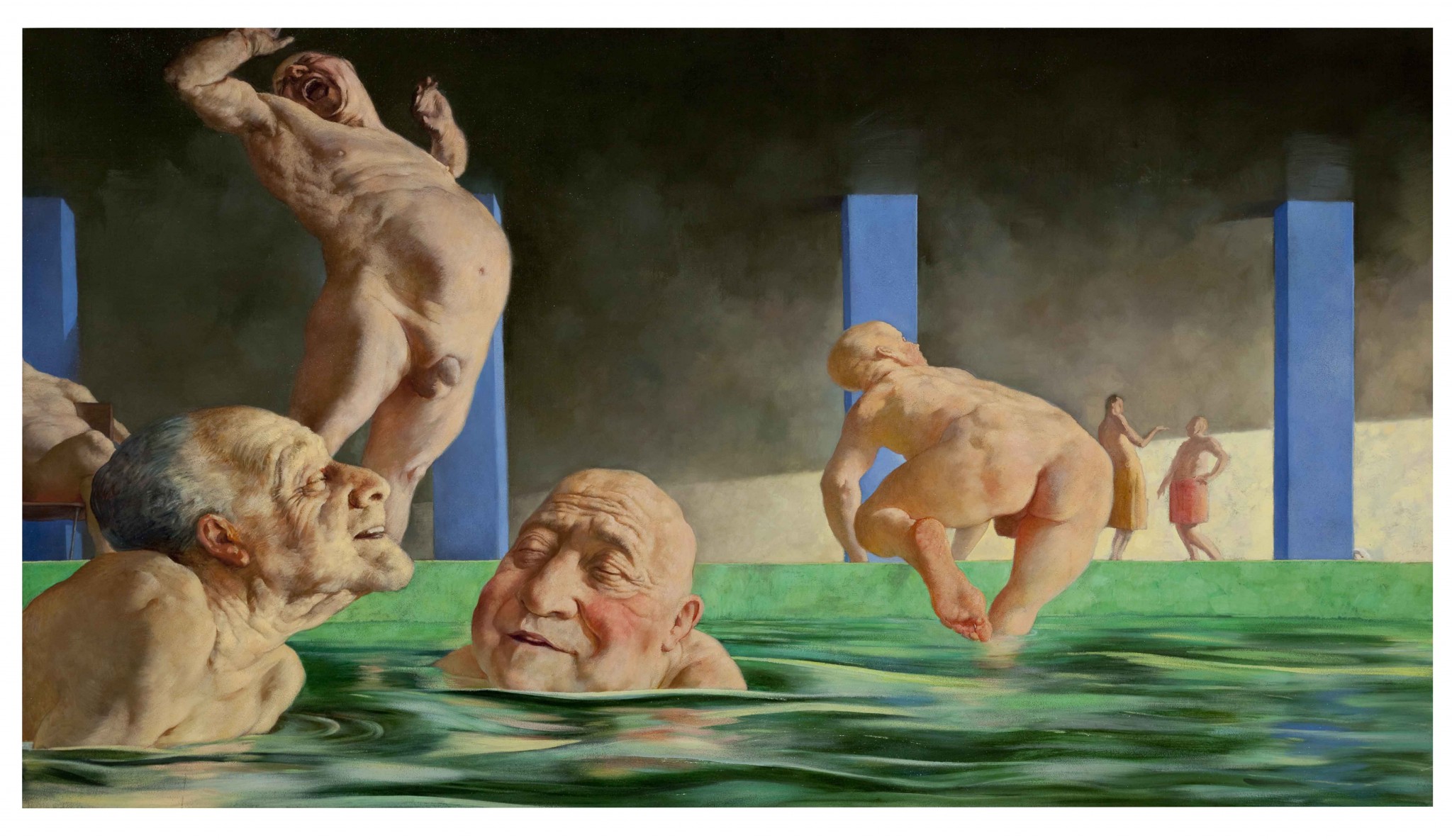
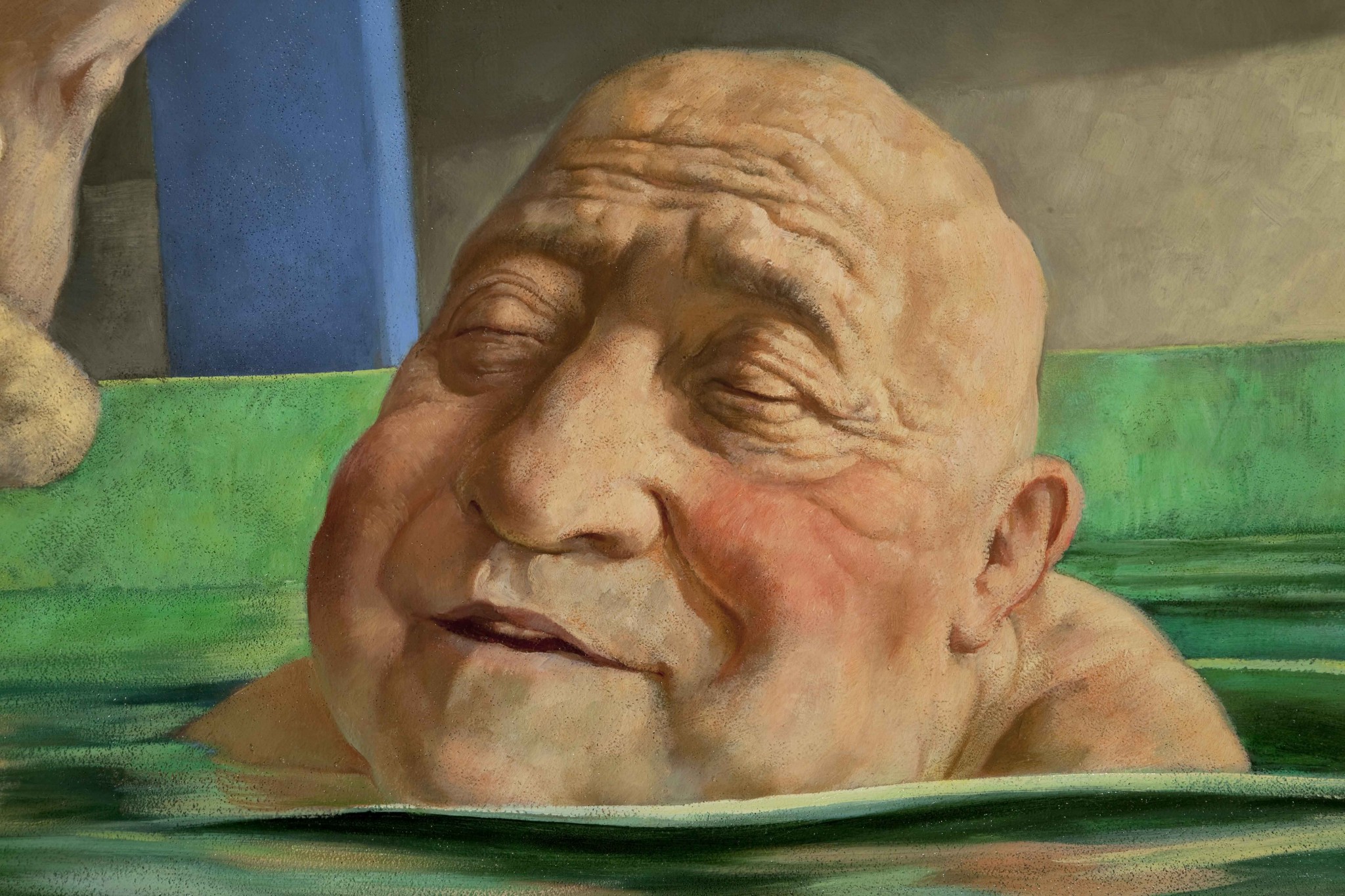
    רחצה בחמת גדר, (138.5×244) היא העבודה היחידה בעבודות החדשות בה סצנה ממוקמת בחלל שאינו חוץ. זהו אמנם חלל אדריכלי במובן שהוא

    רחצה בחמת גדר Bathing at Hamat Gader

רחצה בחמת גדר
Bathing at Hamat Gader

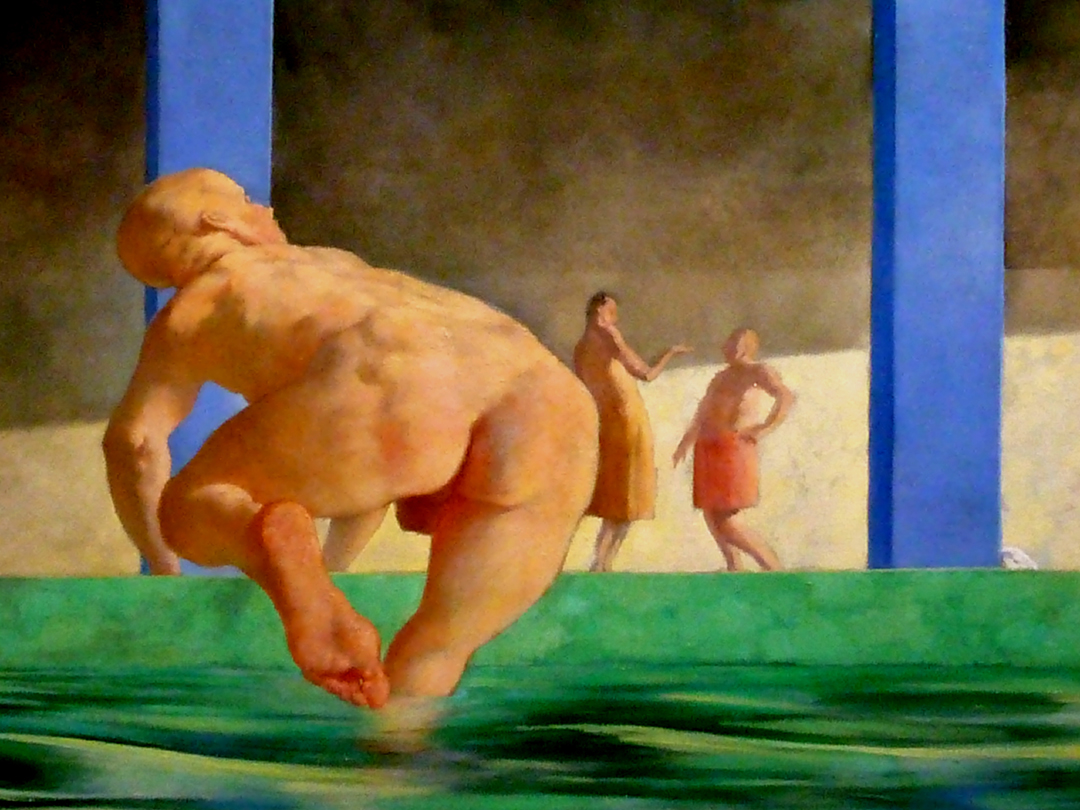
בנוי אך הוא למעשה דיפוזי: ארבע עמודים כחולים מסמנים חלל אך אינם תומכים בדבר,מאחור מה שיכול להיקרא כחומה או קו מתאר של נוף צחיח. מהברכה הירוקה נראה רק קטע קטן בלבד. רחצה ריטואלית, מהטבילה הנוצרית ועד לטבילה במקווה היהודי היא האסוציאציה המידית. העירום מעלה על הדעת בתי מרחץ. גם בסצנה השלווה לכאורה שני גברים מתמוגגים במים, ומאחוריהם מחוץ למים גבר מתמתח ואחר יושב בכסא לא נעלם הטון האירוני.

   רחצה בחמת גדר -פרט Bathing at Hamat Gader- detail

רחצה בחמת גדר -פרט
Bathing at Hamat Gader- detail

הגוף מצויר כבלוי וכעור ומרוקן. יותר משיש סיכוי להיטהרות יש בריחה.

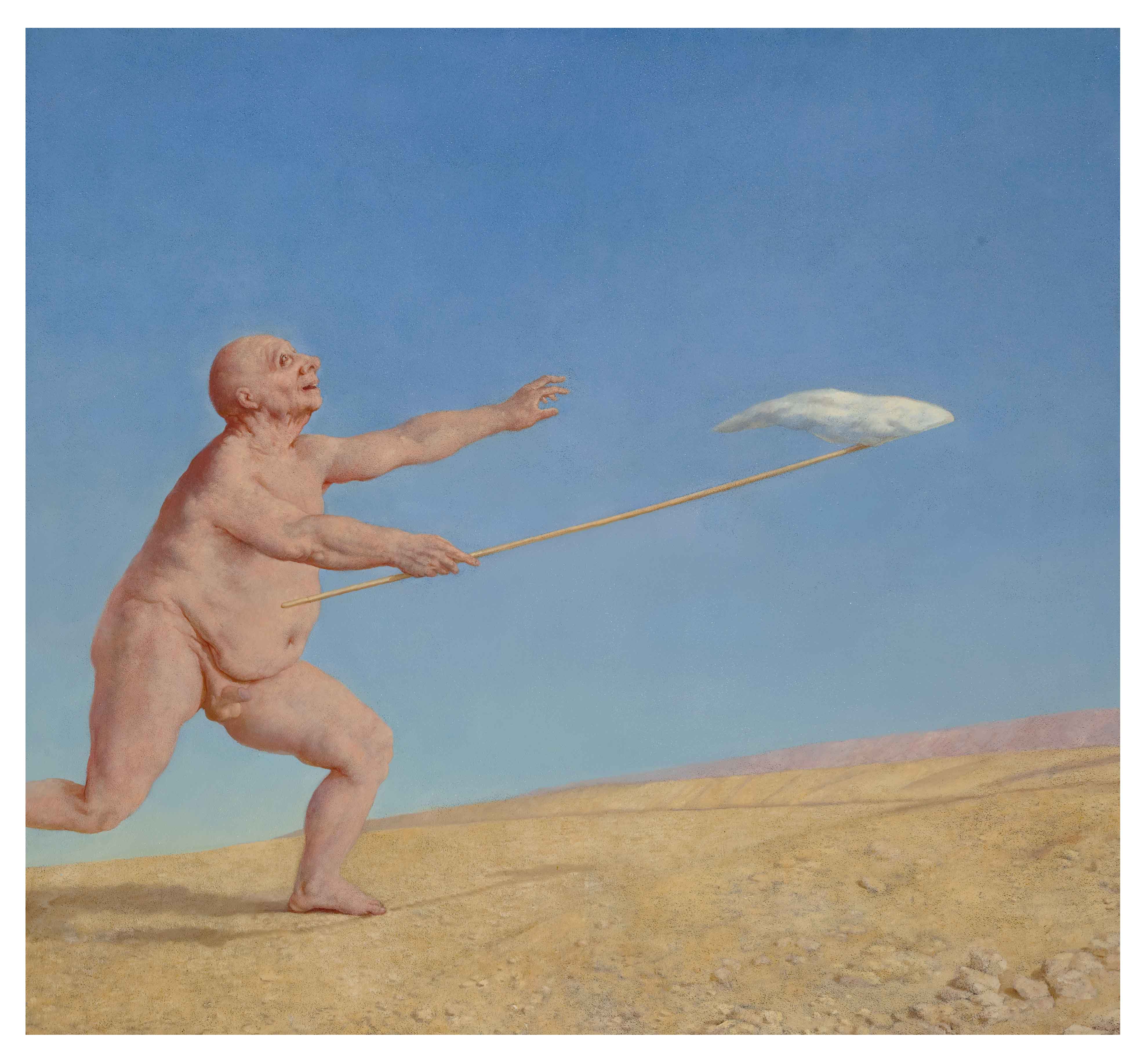
      דורסנות ומשחק כוחות חוזרים גם בשלושה הציורים  של ציידי פרפרים (“צייד עם רשת אדומה”, “צייד פרפרים עם רשת לבנה”, “צייד פרפרים”). גברים עירומים עם רשתות, בנוף מדברי יבש ,סביבה שאין סיכוי רב שיהיו בה פרפרים,מחפשים סיפוק לחדוות הצייד.  אוקון עוסק בדיוקנאות אלו גם בזמן: הדמויות הבלות
צייד פרפרים עם רשת לבנה, Butterfly Catcher with a White Net

צייד פרפרים עם רשת לבנה,
Butterfly Catcher with a White Net

.שלו רודפות ומבקשות לקפד את חייהם של יצורים שגם כך חייהם קצרצרים ולא תהיה להם קמילה.

האיכות הציורית המשובחת של העבודות, מחברת את העבודות למסורת אירופאית ,בעיקר מאז הרנסנס
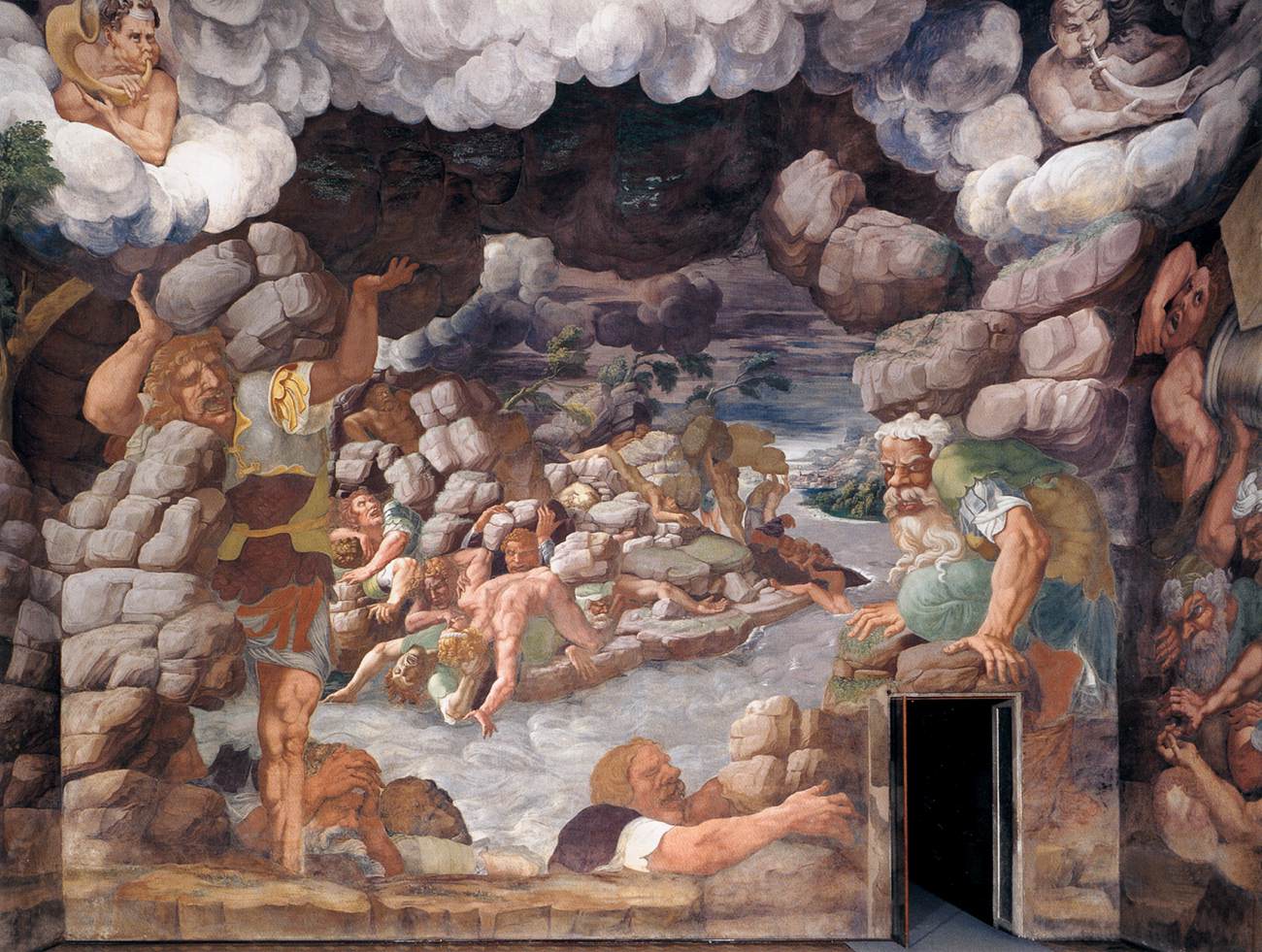
הציור של אוקון אינו משקף ואינו מחקה. הוא מתהלך על גבול הקריקטורה והגרוטסקה, אבל אינו נופל לפחים של גסות. בצדק הושוו העבודות לא אחת לציורי פרסקאות מבחינת

View of the Sala dei Giganti (west wall) 1532-34Fresco Palazzo del Te, Mantua

View of the Sala dei Giganti (west wall)
1532-34Fresco
Palazzo del Te, Mantua

התחושב שהם יוצרים: אפשר לחשוב על חדר הענקים בפלאצו טה  Palazzo del Te במאנטובה שצייר גוליו רומנו במאה ה 16 או על חלק מהדמויות בקפלה של סן אנטוניו דלה פלורידה במדריד שצייר גויה ב 1799, שני מקומות בהם ציורי קיר מושחזים ופנטסטיים. ההתבוננות של אוקון בעולם, חסרת רחמים. תמצית ההתבוננות, לשד הרדוקציה ליסודות שהוא עושה ליחסים אנושיים אולי אינה מראה מול פני החברה אך היא מחודדת ומדויקת ביחס לעליבות התפיסה ההיררכית של בני אדם לצורך שלעולם יהיה בזוי יותר מהם כנגדו יוכלו לחוש עליונות


Observationes by Sasha Okun
Observationes, the exhibition by Sasha Okun at the Chanan Rozen Museum of Israeli Art Ramat Gan is over, but it provided an opportunity to view Okun’s work, which is almost a one-man school of art.
Since the second half of the 16th century, the Latin word observations was used for a genre of medical literature, which by the 18th century became almost the exclusive method of writing about medicine. When it developed, the emphasis on experience as the source of knowledge, rather than transcendental authority or any other authority, was extremely rare. In time, the total observationes became the repository of knowledge.
Okun contemplates humanity with a distant gaze and a certain empathy, similar to a physician or scientist, sparing nothing from the figures he depicts as eventually “to dust returneth.” He does not poeticize suffering or melancholy, nor does he propose any conclusions or suggestions: Okun observes.
The 12 new works created over the past two years present viewers with a truly operatic drama. These large works, many about three meters wide, all contain figures in extreme situations of conflict, lust, riotous behavior, violence, scenes of pathos and humiliation. A substantial portion of the figures are in extreme contrapposto or are taking huge leaps, with grotesque movements of vitality reminiscent of scenes of the Last Judgment in churches or Israeli playwright Hanoch Levin’s pathetic, battered, but always cruel onstage characters.
Power struggles, unceasing competition, and desperate urges characterize Okun’s figures. He paints men and women in their 60s and 70s, with pendulous muscles and thick flesh, partly or fully nude, in perfect opposition to ideal beauty as defined by Classical Greek Art (muscular men in their 30s in noble poses). Any memory or echo of the erotic is translated into a pathetic attempt to hold onto the libido.

רוכבות  Women Riders (triptych),

רוכבות
Women Riders (triptych),

In the triptych “Women Riders,” nearly 6 meters wide, Okun attacks several taboos, beginning with his use of the triptych format, with its Christian associations, through to the crude, aggressive females riding on pathetic, submissive men, slaves in the game of control. The art historical memory enfolded in this work moves from the sculptural genre of the equestrian statue, well known since the famous statue of Marcus Aurelius on the Capitoline Hill in Rome, through the Renaissance with works by Verrocchio and Donatello, to the modern Italian sculptor Marino Marini, known for his riders with arms outstretched to the sides like Okun’s female figures.

רוכבות(פרט) Women Riders (triptych),Details

רוכבות(פרט)
Women Riders (triptych),Details

Marini sculpts dwarfish men with prominent erections whose position astride is part of the expression of potency and sexuality.
Okun’s women give rise to associations with Marini’s figures, but instead of horses, they are riding on the men. The large, Valkyrie-like women are not bearing dead heroes from the battlefield as in Wagner’s operas, but instead are grasping submissive men under their legs;intoxicated with power, they celebrate their victory euphorically. Something about their figures also suggests associations with twisted birth, women giving birth to elderly, ridiculous men, in a scene that can only be bad news.

בריחה מוצלחת  Successful Escape

בריחה מוצלחת
Successful Escape

The large-scale, colorful “Successful Escape” is a painting of a moment of the suicidal and the sublime – a threatening combination, since it is unrestricted by morality or fear. A large man, a hybrid of a Gargantua (Rabelais’s 16th century image) and Disney’s dancing hippopotamus from “Fantasia” leapsover an abyss in flight from three women on a cliff. A crash, followed by death, is inevitable, but no sympathy or identification with the man results, except for a frisson of shock.
The women on the cliff create a parodical and paradoxical situation: their theatrical figures seem characteristic of the Disciples mourning Jesus in various Deposition paintings, especially fromthe Italian Renaissance, but they are far from sacred, in the same way that the man, with his pendulous rolls of flesh and obvious erection is far from the image of Jesus. The women are dressed in the “ice cream colors” of pink, yellow and light blue, and, as in a play by Hanoch Levin, their attempts to please only arouse disgust.
Okun places this absurd drama of escape in a beautiful, peaceful landscape looking

פרט, בריחה מוצלחת detail, Successful Escape

פרט, בריחה מוצלחת
detail, Successful Escape

like the Jezreel Valley on a clear day. The skies are a dreamy, cloudless blue, with colorful rectangular fields, with a chain of sand-colored mountains in the distance. The alienation of the landscape from events taking place within it emphasizes Nature’s indifference to human drama, signifying its triviality in relation to the long processes of the universe. This relation between background and events is much more characteristic of Okun’s work than the stormy, darkening skies in the “Women Riders,” which reinforce the volcanic eruption of the work. In all of the other works in the exhibition, Okun has painted perfect sunny days.
The dichotomy between the landscape and the action, between the description of beauty and the sharp mockery of the figures may be linked to a certain extent with Okun having immigrated to Israel after he nurtured a mythical perception of the Holy Land.
Okun (b. 1949) arrived in Israel from Leningrad (now St. Petersburg) when he was 30. In the USSR, Okun worked at a government academy while simultaneously participating in unofficial artist groups. Israel was seen in the light of the biblical and glorious historical past, as part of the cradle of Western civilization. The encounter with Israeli reality, the rough, sometimes crude, day to day life so lacking in decorum, intensified Okun’s tendency to take a cynical view, which he referred to in our conversations as humor, as well (but which often escaped me).
Bathing at Hamat Gader” (244×138.5cm) is the only interior scene among his

    רחצה בחמת גדר Bathing at Hamat Gader

רחצה בחמת גדר
Bathing at Hamat Gader

new works. Although it is an architectural space in the sense that it is constructed, it is actually diffuse: four blue pillars signify a space but support nothing. To the rear is what may be read as a wall or the contour of an arid landscape. We can see only a small section of the green pool. The immediate association is to a ritual bath, from Christian baptism to the Jewish mikveh. The nudity is reminiscent of the bathhouse. The seemingly peaceful scene features two men melting pleasurably into the water while behind them, outside of the water, one man stretches and another sits in a chair. An ironic tone is present in the depiction of the worn-out bodies with empty skin. The scene is more of an escape than a purification.

  רחצה בחמת גדר -פרט Bathing at Hamat Gader- detail

רחצה בחמת גדר -פרט
Bathing at Hamat Gader- detail

Aggression and power plays return in the three “Butterfly catcher” paintings. Nude men with butterfly nets in a dry wilderness are seeking to satisfy the joy of hunting, but the landscape holds out little hope of butterflies. Okun engages in the theme of Time through these figures who are risking their lives in pursuit of short-lived creatures.

צייד פרפרים, Butterfly Catcher

צייד פרפרים,
Butterfly Catcher

The superb painterly qualities of the paintings link Okun to the European post-Renaissance tradition. Okun’s paintings neither reflect nor imitate. They walk a fine line between caricature and the grotesque, but do not stoop to crudity. His works have been rightly compared to frescoes in terms of the sensation they create. We can think of Giulio Romano’s Hall of the Giants in the Palazzo del Te, Mantua, from the 16th century, or some of the figures in the San Antonio della Florida in Madrid by Goya (1799), both wall paintings full of fantasy and severity.

View of the Sala dei Giganti (west wall) 1532-34Fresco Palazzo del Te, Mantua

View of the Sala dei Giganti (west wall)
1532-34Fresco
Palazzo del Te, Mantua

Okun’s observation of the world is pitiless, striving for the essential, to the fundamental reduction of human relations. It is perhaps not a mirror of society, but is sharpened and precise in relation to the pathetic hierarchical perception people have, forever needing someone to be more miserable than they are so they can feel superior.

צילומים: רן ארדה photography: Ran Erde

(except for Palazzo del Te, Mantua)


Posted in ציור | Comments Off on סשה אוקון – Observationes Sasha Okun

סמדר שפי, החלון, אומנות ישראלית, אמנות ישראלית, Smadar Sheffi, The Window, Israeli Art