English follows Hebrew
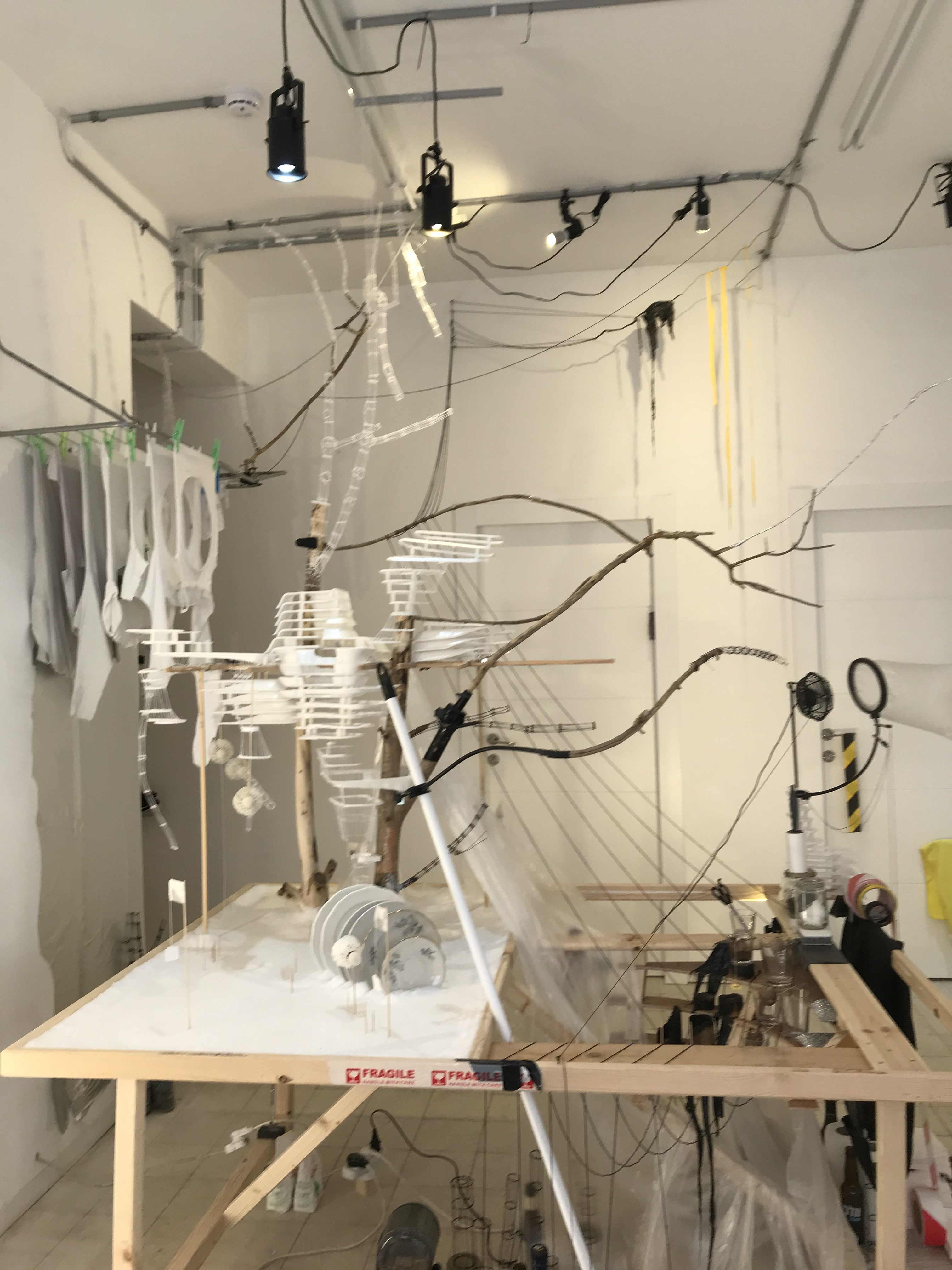
בקומה השלישית, העליונה, של בניין תוכנית התואר השני בצלאל ברחוב הרצל מוצג המיצב המצוין של ענבל הופמן. The Obvious Crisis of Everything כחלק מתערוכת הבוגרים שנפתחה לפני כשבוע . בעבודה אין ספור פרטים שנעים, וצומחים ומוארים ושבורים וגזורים ותלויים ונשענים. הכאוס המאורגן עשוי בצבעים שנראים כמו פלטת צבעים של מעצבי פנים אופנתיים ש”מלבישים” בתים בלבן ירוק צהוב (“כתמי צבע” על רקע מונוכרוני). ההתרחשות מתגלה כקרבי בית מעורער, סדוק ונוירוטי.
בעבודות קודמות וגם כאן הופמן היא חלק מקבוצה נרחבת של אמנים המשתמשים בשפע ריבוי ועודפות של פרטי יום יום באופן החושף בהם צדדים אבסורדיים, סוראליסטים ולעיתים גרוטסקיים. אפשר לחשוב על ישראלים כמו תמר הירשל, במיצב האחרון, החלש, שהציגה בביתן הלנה רובינשטיין, סיגלית לנדאו בעבודות מוקדמות, טמיר ליכטנברג ופרטים מעבודות של אלה ליטביץ (תפוחי האדמה) ובעיקר אמנים בינלאומיים מפישלי וויס , אורס פישר, שרה סז Janet Cardiff and George Bures Miller , טרייסי אמין וגם מוקדמים יותר כמו ראושנברג . כוחה של העבודה צפון ביכולת של הופמן לבנות חלל ששלל ההתייחסויות שבו מדגישים אוניברסליות והפרטיקולריות של הרגע והחוויה שנקרשה בו, כשני קצוות של היאחזות במציאות.
Inbal Hoffman
The Obvious Crisis of Everything
Site-adapted installation
שם העבודה הוא תיאור מדויק שלה – המשבר של הכל: שיבוש של צורות, שימושים, כיוונים וקריסה, התרסקות של קריאת המרחב. כדורי בדמינטון מכוונים לצלחות שניצבות במשטח מלח, חולצות תלויות צלובות ובתוכן פעורים חורי ענק שיוצרים מנהרה, או פצע כאילו כדור תותח עבר במטרות. חוטים שמתוחים משולחן לענפים, למגב למאורר ולמנורות ונקשרים שוב ושוב לשולחן מציעים אופציה של קריאת המערך כולו ככלי נגינה שהושחת, שהושתק, ומיתריו נתלשו מקרבו. האלימות מוסווה במערך הצבעים הבהיר, על ידי הסובלימציה של גוף באובייקטים שמיצגים אותו – החולצות, הצלחות בקבוקי המשקאות. מענין לקרוא את העבודה כמערך איקונוגרפיה יהודית-נוצרית: החולצות הצלובות הפוך כמו פטרוס , היין והמלח, כדורי הבדמינטון כמלאכים נוצתיים ושני תפוחי האדמה שנבטו כעצי גן העדן (עץ חיים ועץ דעת).
***
השקט בתערוכת בוגרי תוכנית ה MFA, באחה”צ של אמצע שבוע ,הדהד את ווליום הפעילות הנמוך שיצרה מגפת הקורונה. בפתיחה, כך סיפרו, רבים שחיכו להיכנס לחלל שהתנהל לפי ההנחיות. ימים אחדים אחר כך מועקת הגל השני הפכה מוחשית וכבדה.
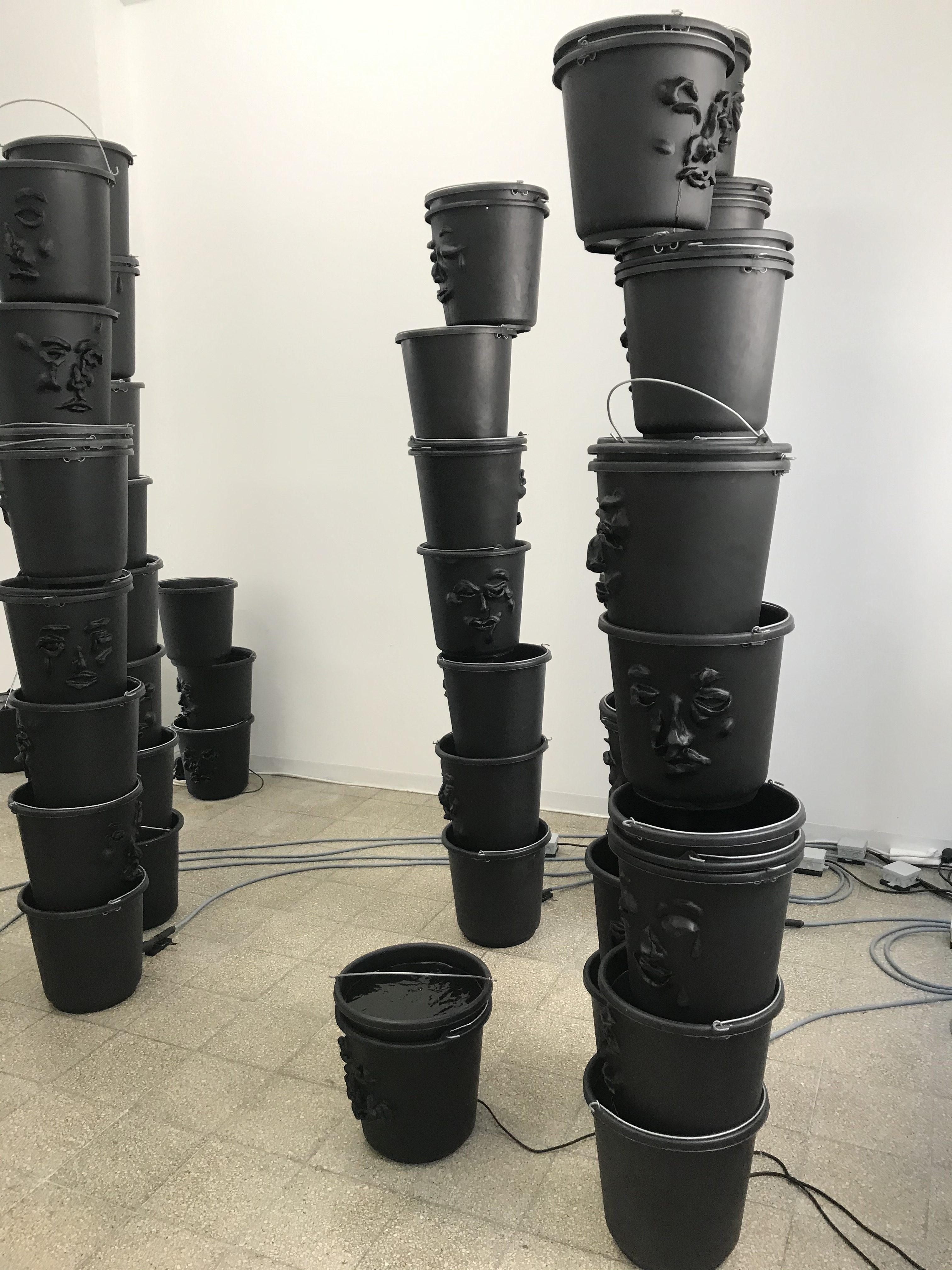
השינויים הגדולים, החששות שהמגפה העולמית ייצרה, המשבר החברתי – כלכלי העמוק מחלחלת לעבודות, כמו The Obvious Crisis of Everything של הופמן ומרחפת גם מעל “בְּשׂוֹרת הַמַקְּהֵלה” , של מעיין שחר, עבודה המעניינת קונספטואלית והצורנית. שחר הפכה דליים שחורים פשוטים, אפילו גסים, למקהלה דומעת של פרצופים מכורכמים.
,News From The Chorus
Installation
על הדליים הוסיפה פנים הניראות כמסכות קומדיה דל ארטא, או פני גורגונות בקצה מרזבים בעולם העתיק, פנים שנראות כמו פני פנטומימאים שמגזימים הבעה ריגשית אך מביעים אמת. הדליים מעורמים זה בזה כמו טוטמים מתגבהים לתקרה ובין הערמות מקשרים חוטים המזרימים כל העת מים למה שהוא למעשה מעין מזרקה. הדליים דומעים תמידית והתחושה היא שעוד רגע, עוד דמעה, יתעוררו לחיים . המקהלה היוונית היתה כלי לתיאור התרחשויות מחוץ לבמה , לקידום הסיפור וגם שימשה כמספר יודע כל . שחר יצרה מקהלה דוממת, דומעת, כלואה בחוסר תנועה כסרט אנימציה שמסרב להפוך מתמונה לתנועה. הצירוף של פנים על הדלי שמתקשר אמנם לניקיון וטוהר אך גם לעבודה פיזית לא מיומנת שמתוגמלת מעט (עבודה”שחורה”) וכך מאזכרת העבודה גזענות והגירה. אגב, חבל שבכל התערוכה נתלו רק שמות המציגים ללא שמות העבודות שברובן משמעותיות לקריאה . הדפדפת המחולקת בכניסה אינה תחליף לכך.
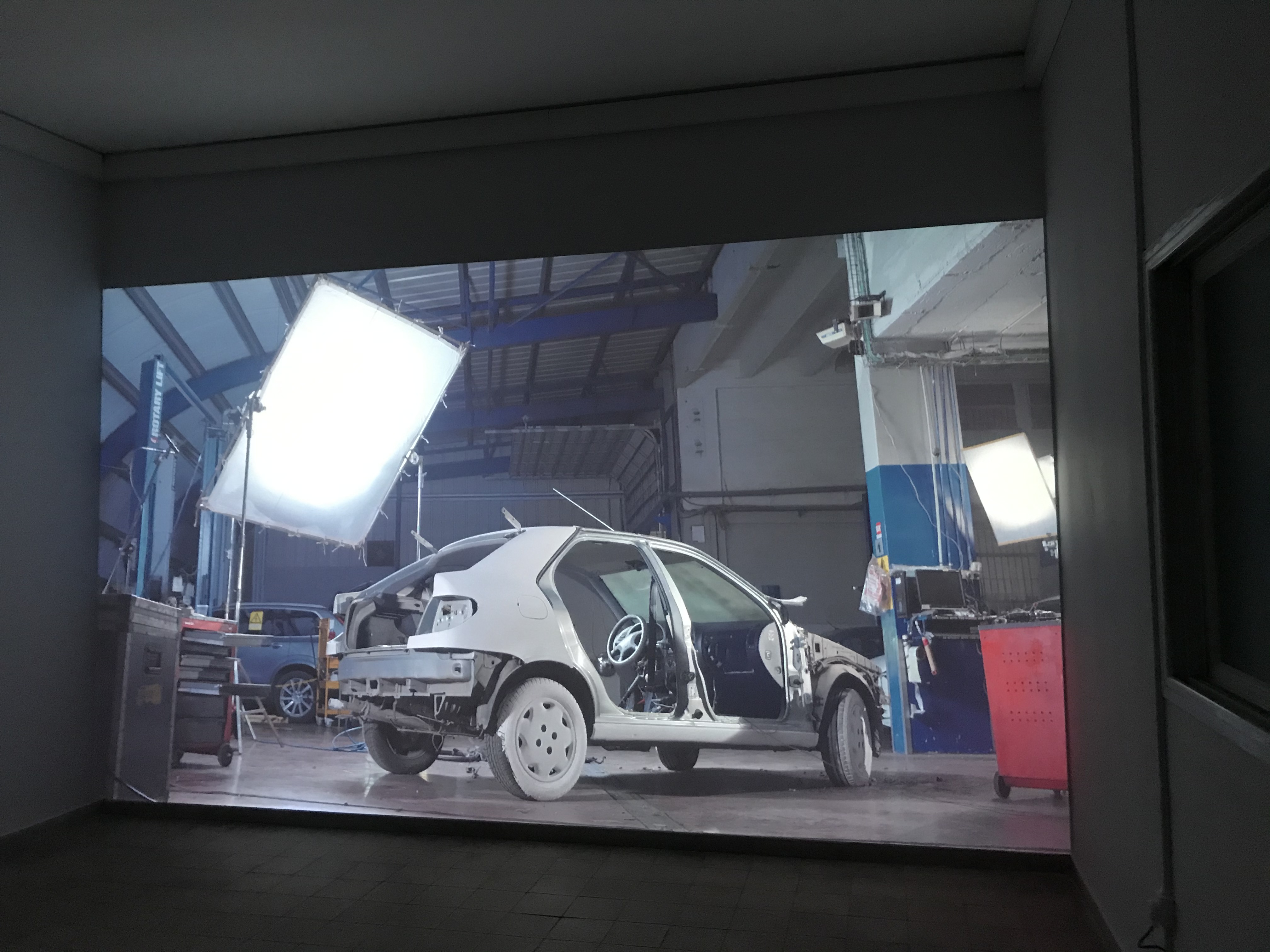
ככלל עבודות הוידיאו מהוקצעות, עם ברק הגימור כשל קליפים ופרסומות. רננה אלדור, יצרה מיצב שבו בחלל שתי כריות אויר מנופחות שיוצאות מהגה, וסרט המתעד פירוק ידני של רכב. העבודה “אדים אחרונים to De-Construct a Citroën (2DCaC, 2020), שער (כריות אוויר, 2020) ” היא הרהור במוות וסופיות וביחס בין אלו וצרכנות. אלדור צבעה את הרכב לבן כך שהוא מאבד ממשות, הופך למעין רוח רפאים. המכונית, כמהות סימבולית שהפכה מאוטופית (חופש תנועה, עצמאות ) לדיסטופית (הרס סביבתי, נזק בריאותי ופרימת רקמות חברתיות) מתגלה בפירוק ידני כחלשה, חלולה, כקליפה שהתרוקנה מתוכן.
Renana Aldor
Running on Fumes
to De-Construct a Citroën (2DCaC, 2020)
Gate (Airbags, 2020)
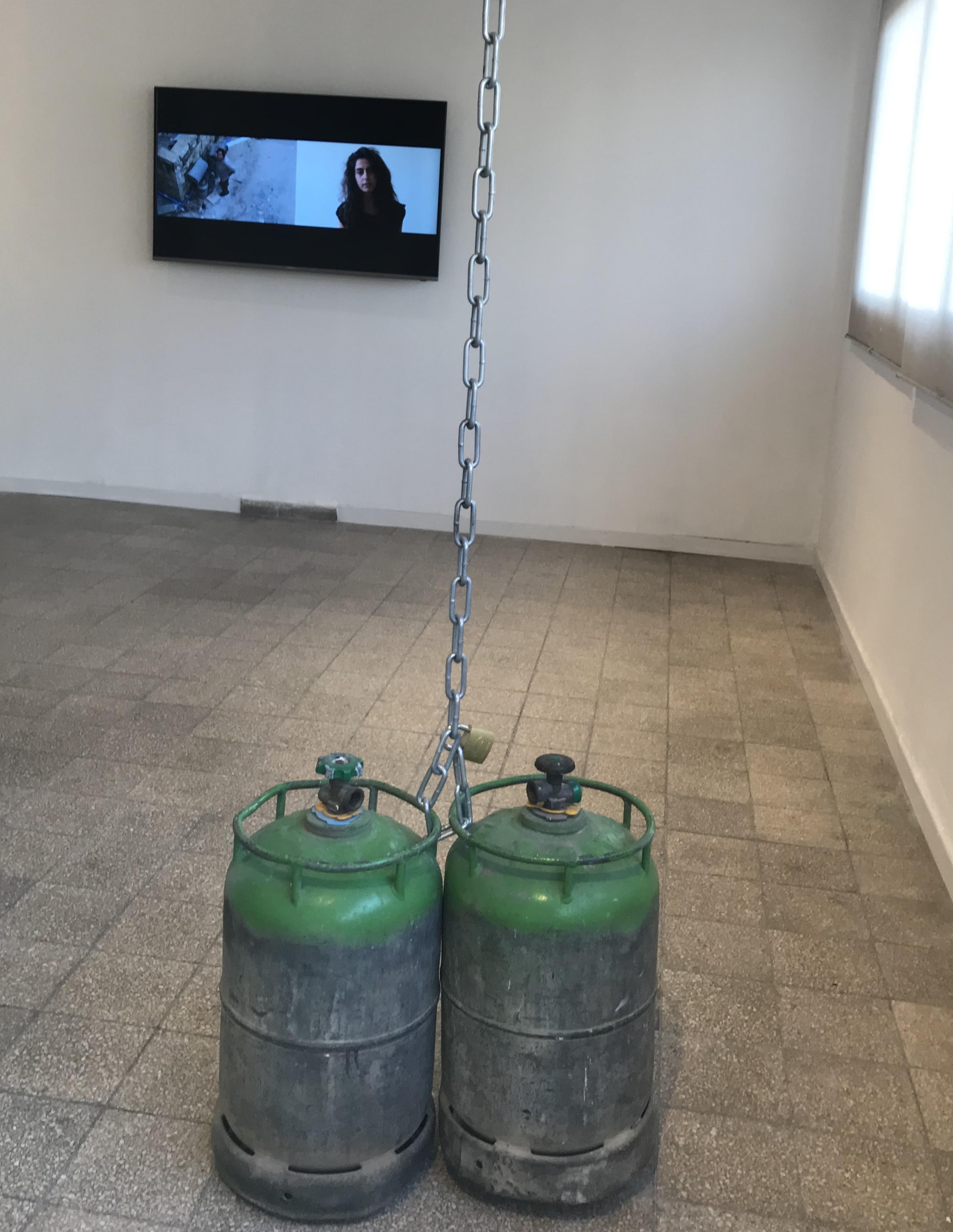
חמודי ג׳נאם העמיד שני בלוני גז קשורים לתקרה בשרשרת ברזל מול עבודת הווידאו העשויה מסך מחולק בו נראים נסיונות לפתוח בלוני גז וקולות ההתדינות על כך. לתחושה של חוסר אונים, סכנה ומודעות להכרח, לצורך בגז מתלוות האסוציאציות של מוות וטרור, של הרגע בו היומיומי הופך רעיל.
תמר כץ מציגה טריפטיך וידיאו עשוי היטב שחסר בו מה שיהפוך אותו ליותר מאריזה למסרים. הדמיון לתקדימים בווידיאו וקולנוע בולטים: מהדהוד לסרט המוקדם והמצוין של יעל ברתנא “מלכי הגבעה” מ 2003 ועד ל”הכל אודות אמא” הנהדר של אלמדובר מ 1999. הדיבור על חיפצון הגוף הנשי דרך המפגש של מכונית כסמן פאלי וגוף אישה נוסחאתי. ובכל זאת, המיומנות של כץ מרשימה ומסקרן לראות כיצד תתפתח.
Roni Landa
Post-Promise
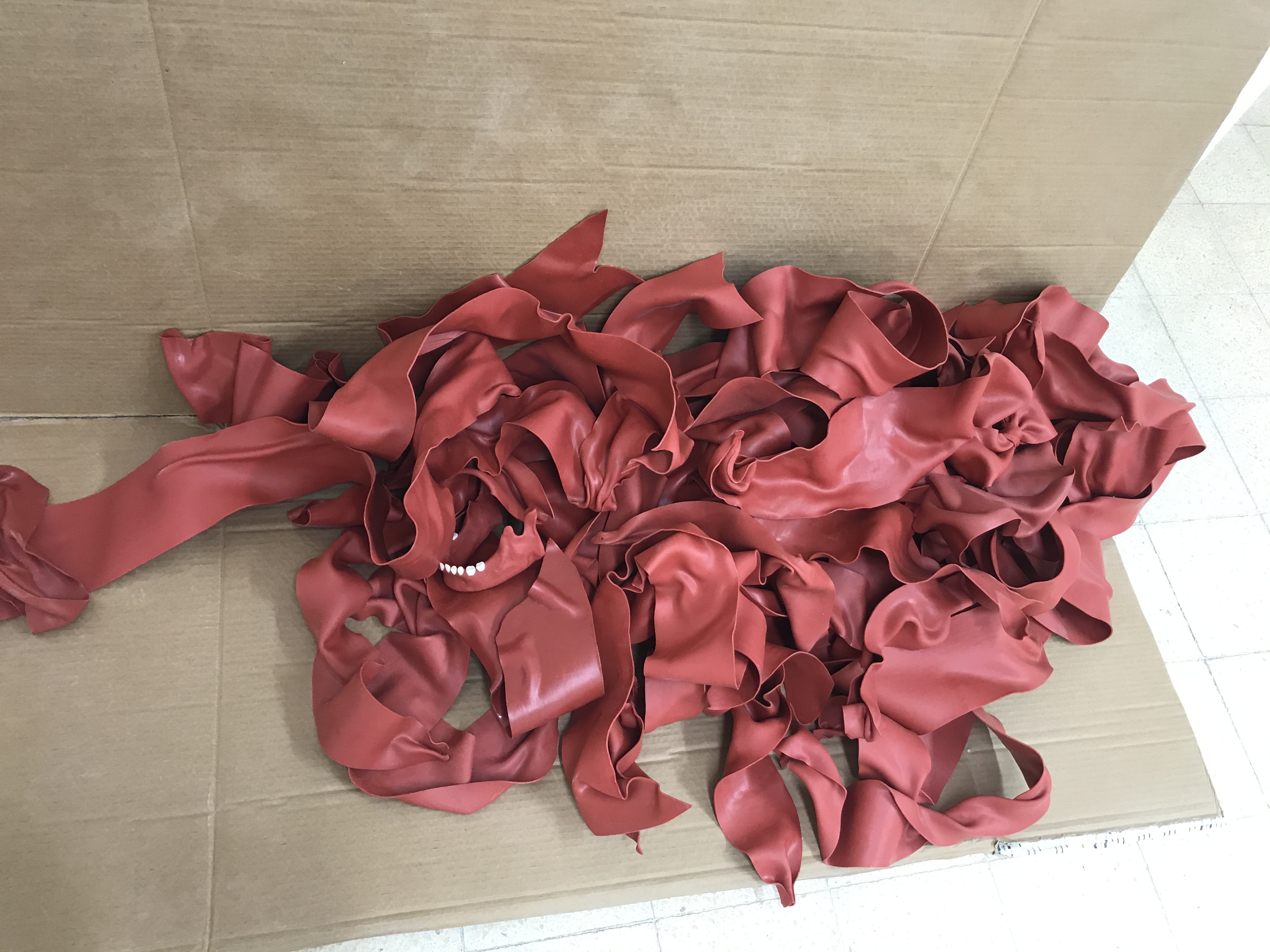
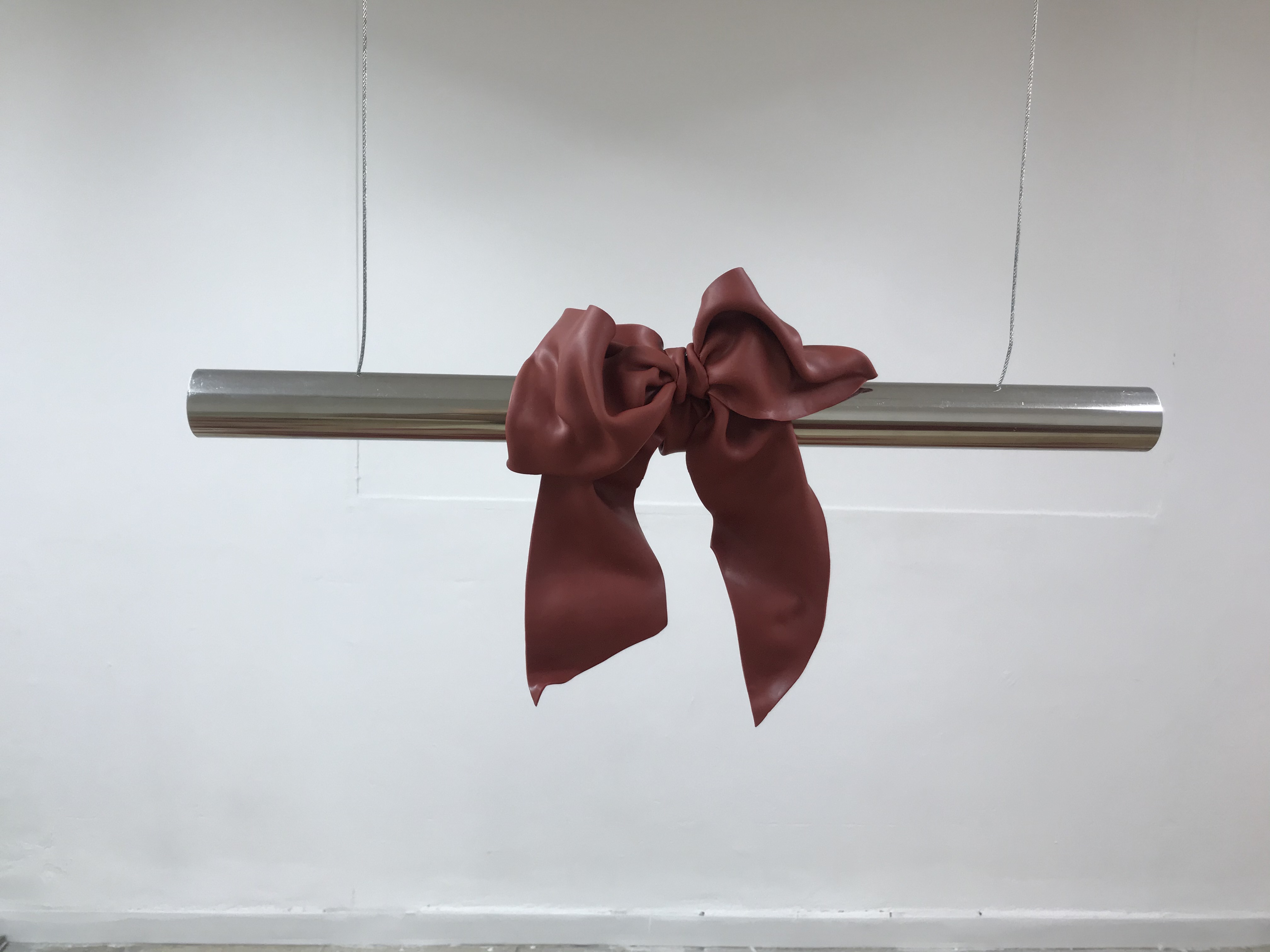
רוני לנדה שהפכה מזוהה עם סדרת פיסול סצנת משתה ופרטי מזון שרובו ככולו מעוצב כבשר (מחומר פולימרי ) שהוצגה פעמים אחדות ובימים אלו מוצג בבית העיר . ב Post-Promise מיצב בו “סרט” אדום מחומר פולימרי מונח, מסובך על קרטונים מקופלים. מבט מקרוב מגלה שינים. במרכז החלל סרט מתנה מתנדנד על נדנדה כמו ייצוג דמות שנעלמה. העולם האפל שיצרה דקדנטי, טורד, ומצמית.
ב”קרונוס ” רישומים שחורים גדולים ממשיך אשחר חנוך קלינגבייל את קו העבודות שהציג בשנים האחרונות. במניפה מאסוציאציות לריבוע השחור של מלביץ ועד חקר חלל ומיתולוגיה, הוא מבסס שפה וסגנון מובחן. השחור הטקטילי שהוא יוצר שואל על מהות החלל הציורי, האשלייתי, עצמו.
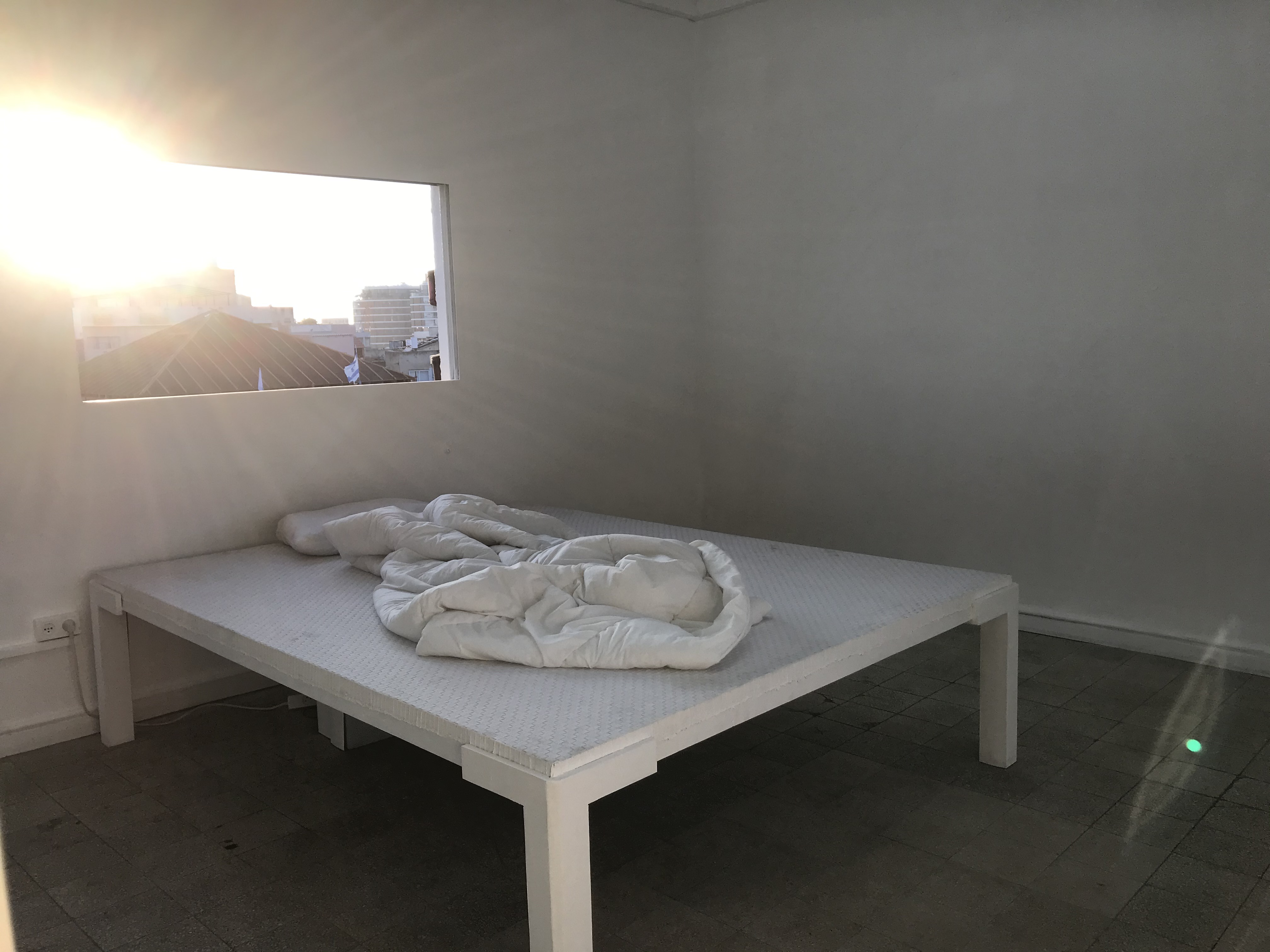
מאיה דיקשטיין ועמרי דנינו מציגים גם כן עבודות בולטות שבשתיהן לא התאפשר ,בשעת ביקורי, לצפות כראוי . במיצב וידיאו וחלל של דיקשטיין הופכים גופים אנושיים לכלי נגינה והיא משתמשת בחוט שינים הנמתח בחלל להכלאה של מחריד, מקאברי ומשחק אידיוסינקרטי בתולדות אמנות. היא מתייחסת למיצב Mile of String, של דושאמפ מ 1942. עיקר העבודה של דיקשטיין הוא פרפורמנס שלא נערך בזמן ביקורי . עבודות מבוססות פרפורמנס, המוצגות בתערוכות ממושכות, ומיוצגות מרבית הזמן על ידי ווידיאו, הן כמעט בעיתיות וספק אם המדיה הזו מתאימה לתערוכת בוגרים. העבודה של דנינו “חדר 313” אמורה להיות עם סאונד שלא עבד. ובכל זאת, החלל הלבן המסמא שיצר בחדר הנפתח לסביבה התעשייתית מחוספסת בה נמצא בצלאל, נראה כסט קולנועי שננטש, ומותיר תחושת תמיהה, כאילו נכנסנו למקום שלא היינו אמורים להיות בו.
נעילה 18.7.20. שעות הפתיחה: ג’-ה’ 12:00-22:00, ו’ 10:00-14:00, שבת 12:00-22:00.
האקדמיה של החלון – הרצאות ד”ר סמדר שפי ב ZOOM
13 יולי , יום שני 20:00
ביאנלות שהיוו סימן דרך – הארמון האנציקלופדי 2013
20 יולי , יום שני 19:30
שירין נשאט Shirin Neshat
תשלום
אורך המפגש שעה ורבע. המחיר להרצאה 75 ₪
תשלום ב PAYPAL , BIT או העברה בנקאית
להרשמה שלחו אישור תשלום עם טלפון וכתובת אימייל שלכם ל Whatsapp 0507431106
Roni Landa
Post-Promise
Bezalel MFA Graduates’ Exhibition, 2020
On the third floor of the building on Herzl Street, site of Bezalel’s MFA program, stands the installation by Inbal Hoffman, The Obvious Crisis of Everything, part of the Graduates’ Exhibition opened a week ago. The work comprises innumerable items that move and grow; they are illuminated, broke, cut out, hanging, and leaning. The organized chaos is in colors that seem to be taken from the palette of a fashionable interior decorator, with white, green, and yellow patches of color on a monochromatic background. What is happening seems to be the innards of a disrupted, cracked, and neurotic home.
In her previous works as well as here, Hoffman shows herself to be part of the broad group of artists using the plentiful multiplicity and overflow of mundane objects in such a way as to expose their absurd, surreal, and often grotesque aspects. Other artists are Israelis such as Tamar Hirschl in her most recent (weak) installation at the Helena Rubenstein Pavilion, Sigalit Landau’s early works, Tamir Lichtenberg, and objects from Ella Littwitz’s works (the potatoes), and especially international artists, from Fischli and Weiss, Urs Fischer, Sarah Sze, Tracy Emin, Janet Cardiff and George Bures Miller, as well as earlier artists such as Rauschenberg. The work’s strength lies in Hoffman’s ability to build a space whose multiple references emphasize universalism as well as the particularism of the moment and the experience solidified in it, like two poles of reality.
The title of the work is a precise description: the forms, uses, and directions are all disrupted, with everything collapsing, as does the reading of the space. Badminton shuttlecocks point to plates installed on a surface of salt, with shirts hanging in the space full of holes, creating a tunnel or a wound as if a cannonball created them. Ropes are strung from the table to branches, to a floor squeegie, fan, lights, then again to the table. The ensemble proposes an option of reading the entire system as a destroyed and silenced musical instrument whose strings were plucked out of it. The violence is camouflaged in the bright colors and sublimation of the body in the object representing it – the shirts, plates, and drink bottles. It is interesting to read it as a Judeo-Christian iconography: the shirts are crucified upside down like St. Peter, the wine and salt, badminton shuttlecocks like feathered angels, and the two potatoes that sprouted standing for the Edenic Tree of Knowledge and Tree of Life.
***
The quiet in the halls during my mid-week visit resonated the low volume of activity due to the Corona pandemic. Many attended the opening but waited outside to enter according to the guidelines, but several days later, the stress of the “second wave” became more concrete and oppressive.
The big changes, fears, and the deep socioeconomic crisis have filtered into the works, such as Hoffman’s installation and hovers over Maayan Shahar’s News from the Chorus, which is both conceptually and formally interesting. Shahar transformed simple, crude black pails into a weeping chorus of pained faces.
She added faces to the pails that look like masks from the Commedia dell’Arte, or gorgons such as found on ancient gutters, looking like pantomimed faces with exaggerated emotions who are conveying the truth. The pails are stacked like totem poles up to the ceiling, with wires causing water to flow to form a kind of fountain. The pails are constantly “weeping,” with a feeling that in another moment, with another tear, they will come alive. The role of the Greek chorus was to describe offstage events, advance the plot, and act as the omniscient narrator. Shahar’s chorus is silent, weeping, imprisoned in stop-motion like an animated film refusing to run. The combination of the faces on pails associated with cleanliness and purity, also are associated with low-paid “black labor” with its associations to racism and immigration.
The lack of name labels near each work was not compensated for by the folder handed out at the entrance. In many cases, the titles add meaning to the reading of the works.
The video works are overall extremely polished, with the sheen of advertising clips. Renana Aldor’s installation depicts a space with airbags emerging from the steering wheel with a film documenting the manual deconstruction of a car. Her works, To De-Construct a Citroën (2DCaC, 2020) and Gate (Airbags, 2020), form a contemplation of death and finality and their relationship with consumerism. She painted the car so white it loses its concreteness to become a ghost. The car, as a symbol that changed from utopian (freedom of movement, independence) to dystopian (environmental damage, danger to one’s health, unraveling of social fabrics) is revealed by its manual deconstruction as something weak and hollow – an empty shell.
.
Roni Landa
Post-Promise
Omri Danino ,Room 313 ,2020
In Hamody Gannam’s Untitled (2020), two domestic gas canisters are chained to the ceiling, facing his split-screen video with filmed attempts to open the canisters and the lively discussion about it. Added to feelings of impotence, danger, and recognition of the necessity for cooking gas are joined by associations to death and terrorism, of the moment in which the mundane becomes toxic.
Tamar Katz is exhibiting a very well executed 3-channel video installation, The Cliff, but it seems to lack something that would make it more than just a packaging for messages. The similarity to video and cinematic artworks is evident, from Yael Bartana’s excellent Kings of the Hill (2003) through Almodovar’s All about my mother (1999). Referring to the objectivization of the female body through the encounter with a car as phallic symbol is formulaic. Nevertheless, Katz’s skills are impressive, and it will be interesting to see how her work develops.
Roni Landa, who has become identified with a series of scenes of feasts and food made of polymer “meat,” exhibited several times and currently in the old Tel Aviv City Hall, here presents Post-Promise, a mixed media installation. A red “ribbon” made of polymer is placed on folded cardboards. A close look reveals teeth. At the center of the space, a gift bow is tied onto a swing, as if representing a body that has disappeared. The dark world she has created is decadent, troubling, and heartrending.
In Cronos, Eshchar Hanoch Kliengbiel’s large black drawings, he continues the works he exhibited in recent years, in a range of associations from Malevitch’s Black Square through space research, he is establishing an evident language and style. The tactile black interrogates the essence of the illusory painterly space.
Maya Dikstein and Omri Danino are also exhibiting outstanding works, but I was unable to view them properly during my visit. In Dikstein’s video installation, human bodies become musical instruments through the dental floss stretched in the space, hybridizing the terrifying, the macabre, and the idiosyncratic game from art history. She is referring to Duchamp’s Mile of String (1942). The main thrust of Dikstein’s work is performance, but there was none when I visited. Performance-based works exhibited in ongoing exhibitions and on video for the most part are almost always problematic, and it is doubtful that this medium is suited to a graduates’ show. The sound in Danino’s work Room 313 did not work. Nevertheless, the blindingly-white space he created in the room opening up into the rough industrial space which is the Bezalel building seems like an abandoned movie set, leaving a sensation of astonishment, as if we entered a prohibited area.
Through July 18, 2020.
Open Tues.-Thurs., 12 noon-10 p.m. Fri, 10 a.m.-2 p.m., Sat. 12 noon-10 p.m.
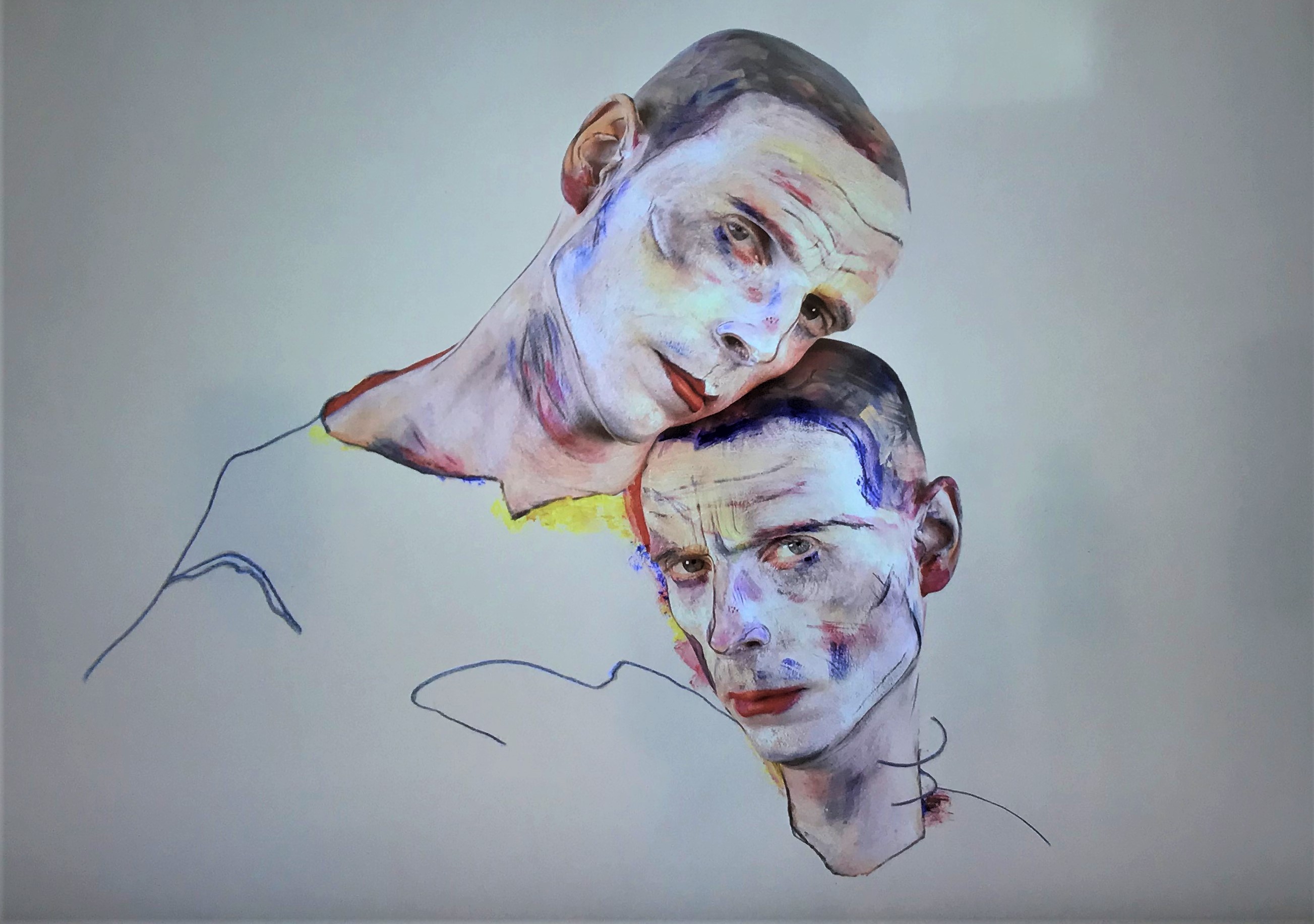
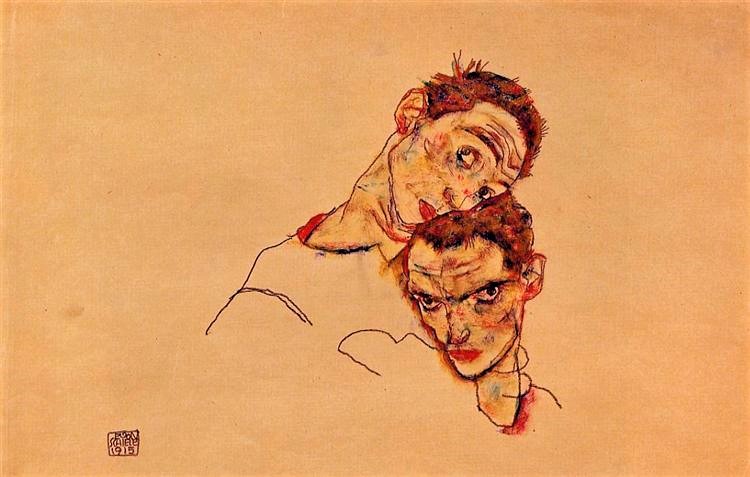 בטכניקה שכוללת שימוש בווידאו וסטילס, ציור, רישום ופרפורמנס, פלטניק “מחייה” עבודות של שילה, מהאמנים המצוינים של תחילת המאה הקודמת, והשאלה למה? נראה שנעדר לכך כל צידוק ממשי.