נייר ומספריים – ספר אמנית של הילה לביב |  Paper and Scissors – Artist’s book by Hila Laviv

 English follows Hebrew

בספרון צנום “נייר ומספרים,” הילה לביב נותנת צורה בחומר לזרם תודעה, געגוע, תמימות וגם עיוורון. הספרון טעון זיכרונות, והתרפקות על “פעם” מעורפל בעודו  מנכיח היסטוריה קונקרטית של חינוך ופוליטיקה, בורגנות יהודית שבעה, ורדיפה.   לביב משלבת בו שני טקסטים שכתבה אנה ורבורג הסבתא רבא מצד אימה.  הטקסט המרכזי הוא פרק מתוך ספר  הפעלות לילדים “מה נעשה היום” שכתבה אנה ורבורג וראה אור  בשבדית ב 1917 . הטקסט השני הוא  ויומן מסע אותו כתבה 17 שנים מאוחר יותר, ב 1934 עבור בתה נוני, שהיא סבתה של לביב.  “לאחרונה נהפכתי לשומרת הזיכרונות שלהן” כותבת לביב  על נשות משפחתה שהלכו לעולמן, וזהו המפתח למסע הסיפורי -חזותי העדין שמתרחש בין הדפים המקופלים והגזורים.
Paper and Scissors
Hila Laviv

בין 1917 ל 1934 השתנה העולם והשתנו עוגני התרבות של משפחתה של לביב. אנה ורבורג, אשת חינוך שהתמחתה בגיל הרך, הייתה בת למשפחת בנקאים ואנשי תרבות ורבורג, ואחייניתו של ההיסטוריון וההוגה אבי ורבורג. היא נולדה וגדלה בשבדיה, ובתחילת שנות העשרים עברה להמבורג, גרמניה. אחרי שנים של פעילות ציבורית בתחום החינוך והנוער היא גורשה, עם עליית הנאצים, מכל עמדותיה הציבוריות. את היומן כתבה שנה אחרי עליית הנאצים ושנים אחדות לפני שהמשפחה נמלטה חזרה לשבדיה.
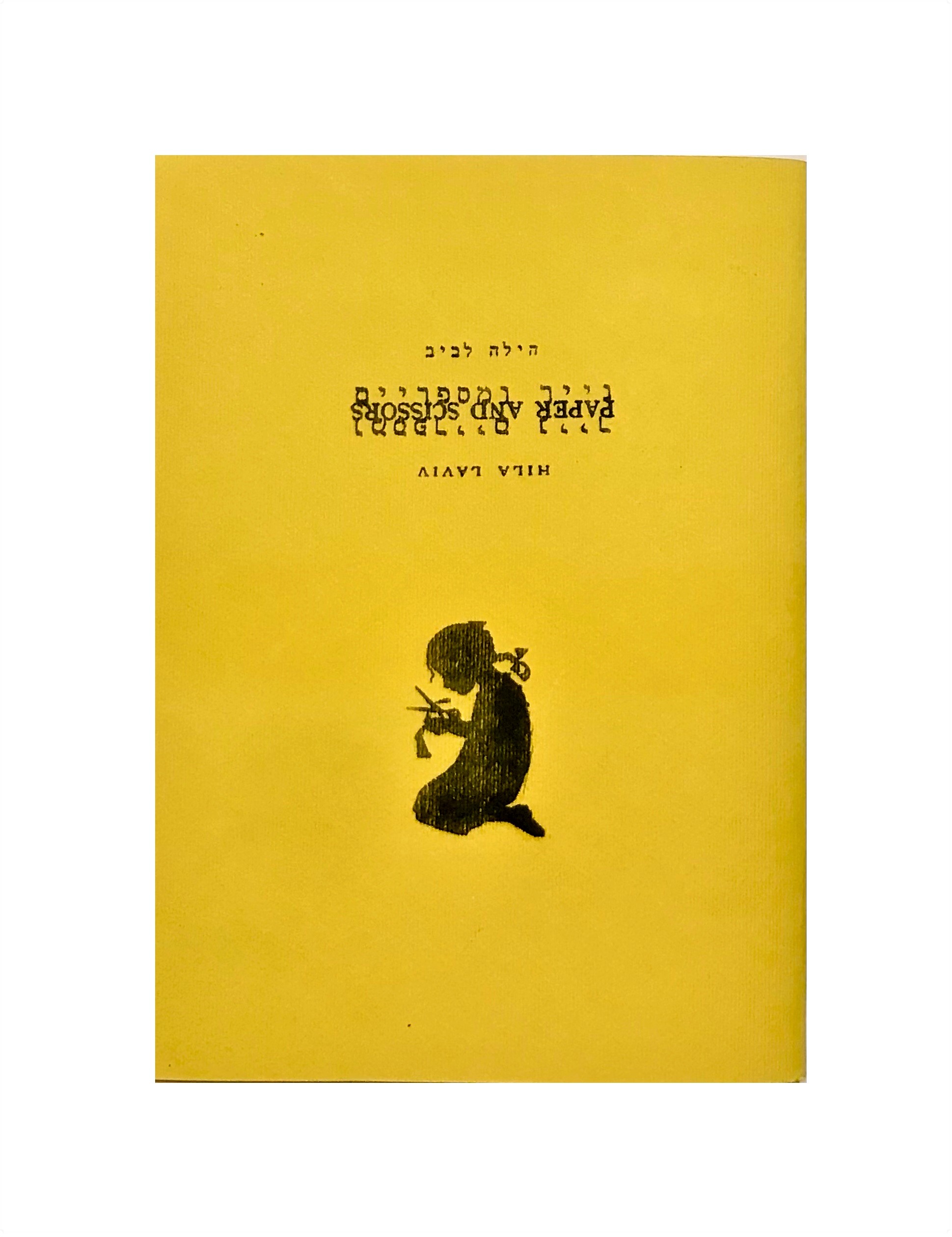
“מה נעשה היום” ספר ההפעלות אויר בידי אלזה בסקוב  מאיירת שבדית מוערכת. לביב משתמשת בפרק השלישי מתוכו “נייר ומספרים” ומכאן כותרת ספרה של לביב.  גודלו של ספר האמנית (שיצא ב”דפוס הבית”) כשל מחברת פשוטה, מאלו שכריכתן נייר חום וכמעט ונעלמו מחנויות כלי הכתיבה.  הוא כרוך בצהוב לימוני וכיתוב הכריכה באנגלית ועברית, הפוך שפה מול שפה, כתמונת מראה מעט מטושטשת.
היכולת של לביב  להמחיש בהירות/חוסר בהירות,  ערפול והיאחזות בפרטים, דיוק  דקדקני לצד תחושה של פרימה, מרשימה.
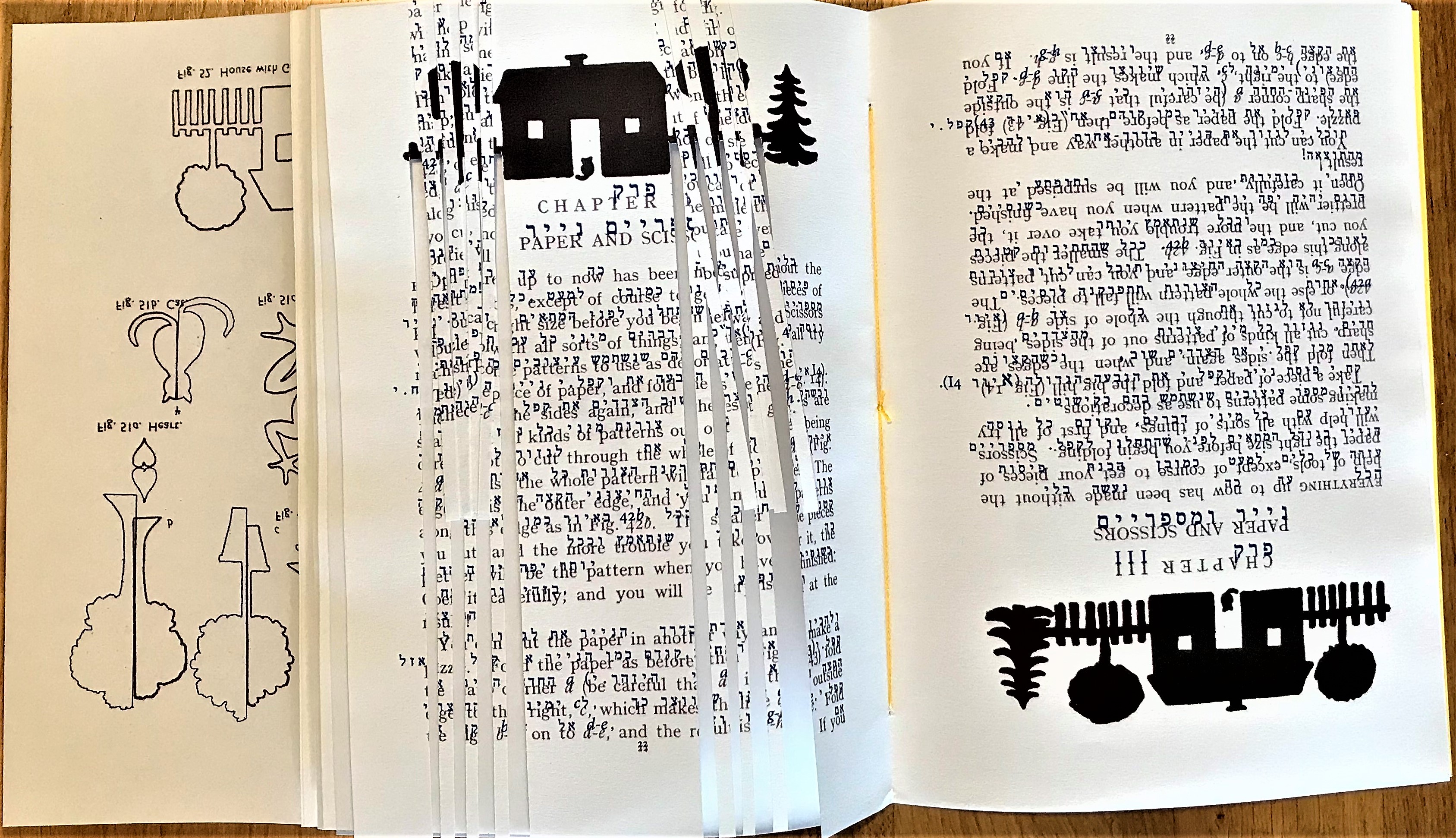
Paper and Scissors
Hila Laviv, 2021

לביב מגשימה את כוונותיה המוצהרות בעמוד הפתיחה “אני רוצה לתרגם ולהשאיר את המקור… הכוונה שלי אינה לערפל משהו ברור, אלא להבהיר את מה שמעורפל”.  הערפל הוא ערפל העבר, הפער הבלתי נתפס בין מראית העין של ביטחון ושאננות למצב הדברים כפי שהיו לאשורם במסגרת הזמנים שהספרון מקיף.
הטקסטים בעברית, אנגלית, גרמנית ושבדית מודפסים בפונטים וצבעים שונים  עולים זה על זה.  במידה של תשומת לב הם ניתנים לפיענוח. נוסף לדפים הצפופים,  דפי פרגמנט שקופים (להעתקה) כחלקי זיכרון שנמחו, ודפים עם שורות אחדות בלבד, כמו טיפות זיכרון כבדות שזולגות לתודעה. לצד הטקסטים דפים מקופלים עליהם דגמים  קטנים, מוכנים לגזירה, של כנסיות ובתים, עצים וילדים, בעל חיים וצמחים. אלו מסומנים וממוספרים לגזירה וקיפול ומזכירים את הגזרות את של עיתוני בורדה שהיו פופולריים  עד שנות ה 80.
עולם העולה ממנו שלו ואידילי כמו שהיה, לכאורה, עולמם של הילדים ברי המזל אליהם כוון. ב 1917 כמחצית הילדים מעל גיל חמש באירופה עבדו כך שהשאלה מה נעשה היום לא הייתה רלבנטית עבורם. הילדים להם יועד הספר היו ילדים שחייהם מרופדים ומוגנים, הרחק מעוני והמלחמה שגעשה סביב. ההוראות בספר הן תערובת של קפדנות ופרטנות, טון מאפשר (הילדים יכולים לבחור צבעים וצורות) וטון חינוכי בוטח כשל מי שסבור שבידו או בידה אבחנות מוסריות תקפות, אמיתות מוחלטות.
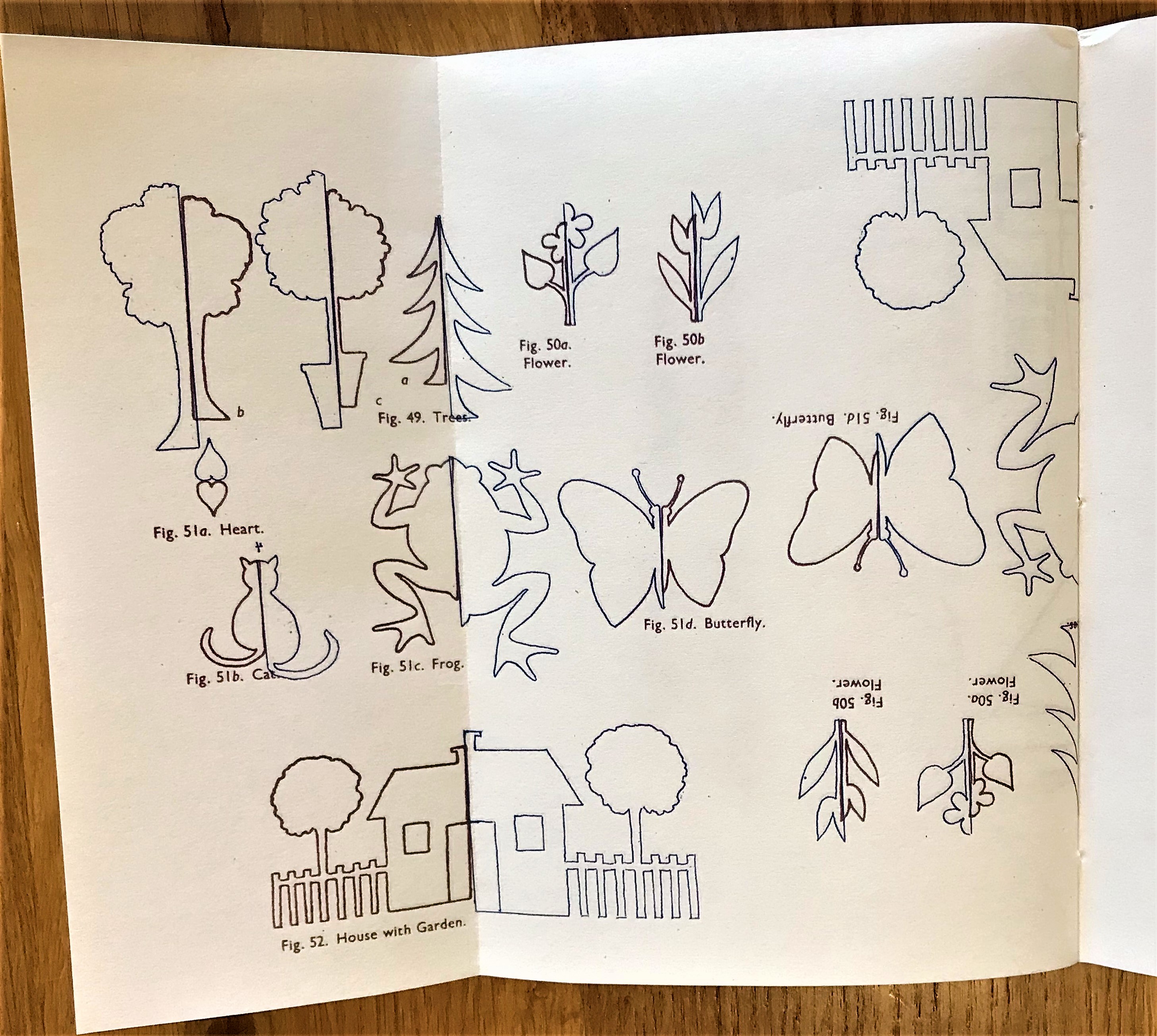
Paper and Scissors
Hila Laviv, 2021

לתוך ההוראות ושרטוטי הגזירות מובא קטע הפותח  יומן נסיעות מ 1933-34, כלומר נסיעה שכבר נעשתה בעולם ששמיו הולכים ומתקדרים עבור הכותבת. ורבורג, הכותבת לבתה, מביאה ציטוט מ”בדקר” Baedeker, (סידרת ספרי הדרכת  הנסיעות  הגרמניים שהיו בבחינת התנ”ך למטיילים באותו שנים)  המדבר על הצורך לנסוע, בשקט, בקצב קבוע, אך גם “להשאיר את הדאגות בבית”, איזון המזכיר את מזיגת הקפדנות והחופש המוגבל שיש בתבניות לגזירה . היומן , שגם לו , כמו לכל דבר ביקום הורבורגי יש סיבה , נכתב  כי “חבל לשכוח דברים יפים… לנסוע זה תמיד טוב”.
לביב שמגדירה עצמה שומרת הזיכרון החדשה של משפחתה  מעבירה היטב את התחושה השובע הבידרמאיירית-מודרנית שהקיפה את המשפחה והכזיבה. “מספרים ונייר” יכולה להיקרא כאלימות המספריים וחולשת הנייר – הנייר כתרבות, כהיסטוריה, כחומר לברוא עולם. (ואיך אפשר לראות צהוב ושחור ולא לחשוב על טלאי?)

                האקדמיה של החלון – הקלטות הרצאות  ד”ר סמדר שפי 
                                          אמנות מודרנית ועכשווית 

 סדרת הרצאות עומק על מבחר נושאים אמניות, אמנים וזרמים. בכל הרצאה מבט מקיף, בחינה לא קונבציונלית של המוכר ולא מעט עידכונים ממחקר וקריאות חדשות  לרשימה מלאה היכנסו לעמודה  –        http://old.smadarsheffi.com/?page_id=13571


 Paper and Scissors – Artist’s book by Hila Laviv

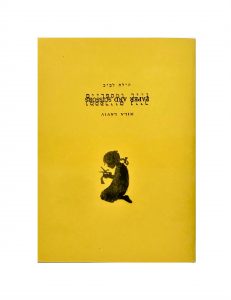
In her slender artist’s book, Paper and Scissors, Hila Laviv gives shape to a stream of consciousness, yearning, innocence, and blind spots. The booklet is laden with memories, leaning on a vague “once upon a time” while making present a concrete history of education and politics, a self-assured Jewish bourgeoisie, and persecution. Laviv integrates two texts in the book, both by her maternal great-grandmother Anna Warburg. The main text is a chapter from My Rainy Day Book (1917) in its English translation from the original Swedish; the second was written for Anna’s daughter Noni in 1934 (Laviv’s grandmother). The Hebrew title by Laviv became What Shall We Do Today?
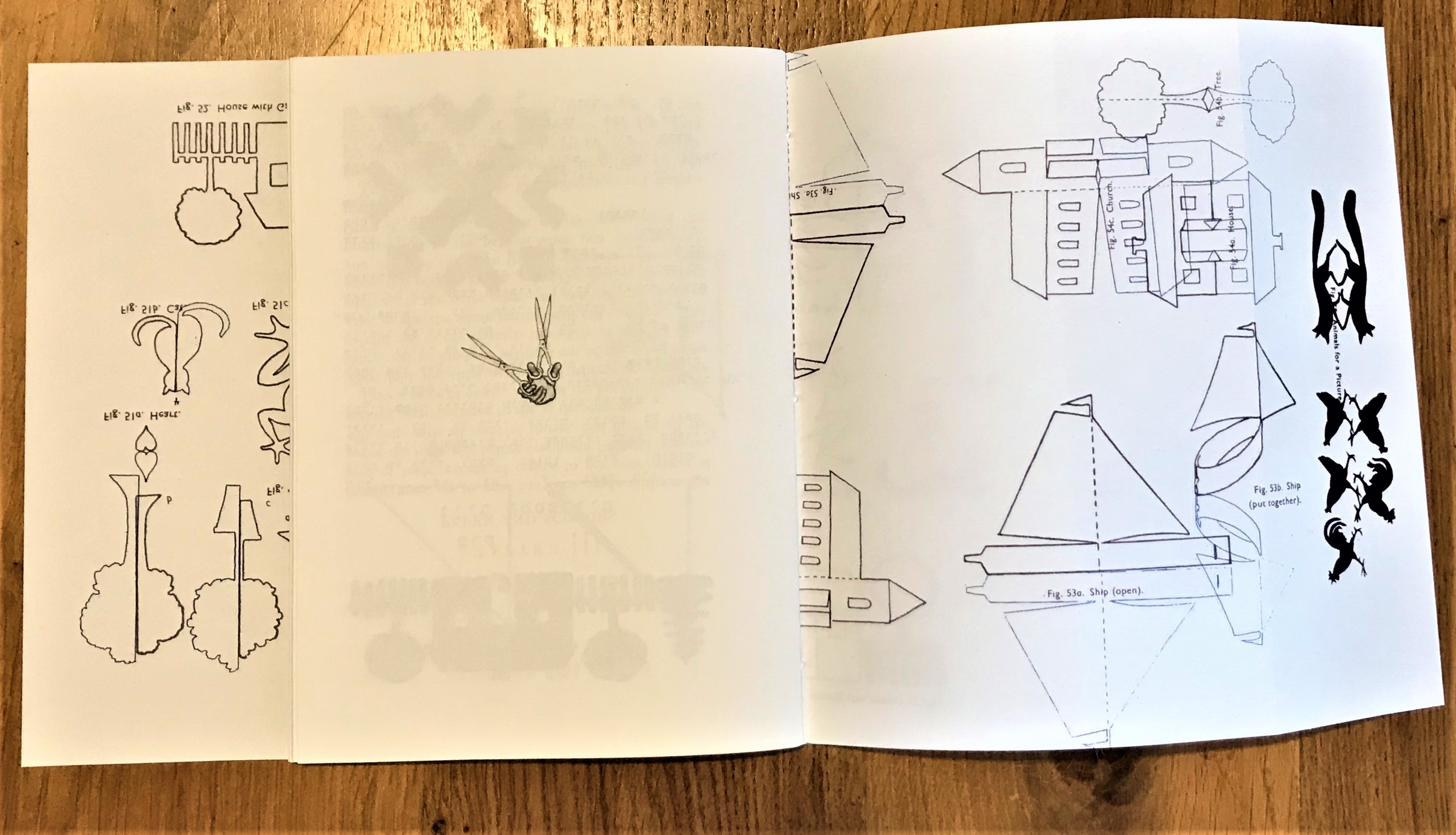
Paper and Scissors
Hila Laviv, 2021

Referring to the women in her family who have passed away, Laviv states, “I have recently become the custodian of their memories.” This is the key to the delicate narrative-visual journey taking place between the folded and cut pages of the booklet.

The cultural anchors of Laviv’s family changed rapidly between 1917 and 1934. Anna Warburg, an educator who specialized in early childhood education, was from the Warburg family of bankers and cultural figures, niece of historian and philosopher Aby Warburg. Raised in Sweden, Anna moved to Hamburg, Germany in the early 1920s where she was active in promoting education and working on behalf of young people until the Nazis removed her from public service. The travel diary was begun a year after the Nazis came to power and a few years before the family escaped to Sweden.
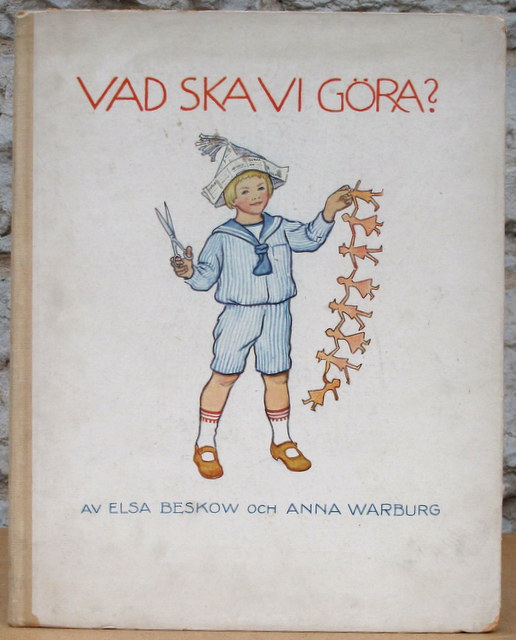
The original My Rainy Day Book in Swedish 1917 . Anna Warburg with drawings by Elsa Beskow

The original My Rainy Day Book was an activity book, with drawings by famous Swedish illustrator Elsa Beskow. Laviv used its third chapter as well as its title. The size of her artist’s book is the size of the Israeli brown-paper covered school notebook (which has nearly disappeared), but Laviv’s sports a lemon-yellow cover. The titles appear in English and Hebrew upside down facing each other like a slightly blurred mirror image. Laviv has the impressive ability to concretize clarity/lack of clarity, vagueness with a grasp of details, precision along with a sensation of unraveling.

Laviv has fulfilled her intention stated on the opening page, to “translate and leave the source…My intention is not to obscure something clear, but to clarify a little what is obscure.” The cloud is of the past, the incomprehensible gap between the surface feeling of safety and what actually happened during the period encompassed by the book. The texts in Hebrew, English, German, and Swedish are printed in different fonts and colors, superimposed upon each other, yet can be deciphered. Tracing paper pages as part of erased memory, and several lined pages are bound with the printed pages, like heavy drops of memory dripping into the consciousness. Along with the texts are folded pages with cut-outs of churches and houses, trees, children, animals, and plants, reminiscent of the Burda dress patterns that were popular until the 1980s.
Paper and Scissors
Hila Laviv

The book evokes an ideal world of children who were lucky to be the target audience of the original book. In 1917, about half of all children in Europe over the age of five had to work. For them the issue of “What shall we do today?” was irrelevant. The book was directed at children living in a protected, cushioned life, far from poverty and the war raging around them. The instructions in the book are a mixture of precise directives with facilitated choice (of colors and forms), the confident tone of an educator who feels that her moral distinctions are valid and absolute truths.

Laviv places the opening section of Anna’s travel diary from 1933-34 within her instructions and drawings of cutouts, travel that took place in a world that was becoming ever more dangerous for the writer. Warburg, who was writing for her daughter, quoted from Baedeker’s travel guide about the need to travel quietly in a regular rhythm, but also “to leave one’s worries at home,” a balance that is reminiscent of the precision mixed with the limited freedom embodied in the cut-outs. The diary, which has its raison d’être like everything in the bourgeois world, states that “it is a pity to forget beautiful things…It’s always good to travel.”

Laviv skillfully conveys the Biedermeier-Modernist comfort that enveloped her family and which was totally shattered by history. Scissors and Paper can be read as the scissors’ violence and the paper’s weakness – paper as culture, history, material that creates a world (with the yellow and black inevitably evoking the Jewish badge).

Paper and Scissors
Hila Laviv, 2021
Posted in Uncategorized | Tagged , , , , , , , | Comments Off on נייר ומספריים – ספר אמנית של הילה לביב |  Paper and Scissors – Artist’s book by Hila Laviv

Elena Ceretti Stein – Habitus – אלנה צ׳רטי שטיין

English follows Hebrew

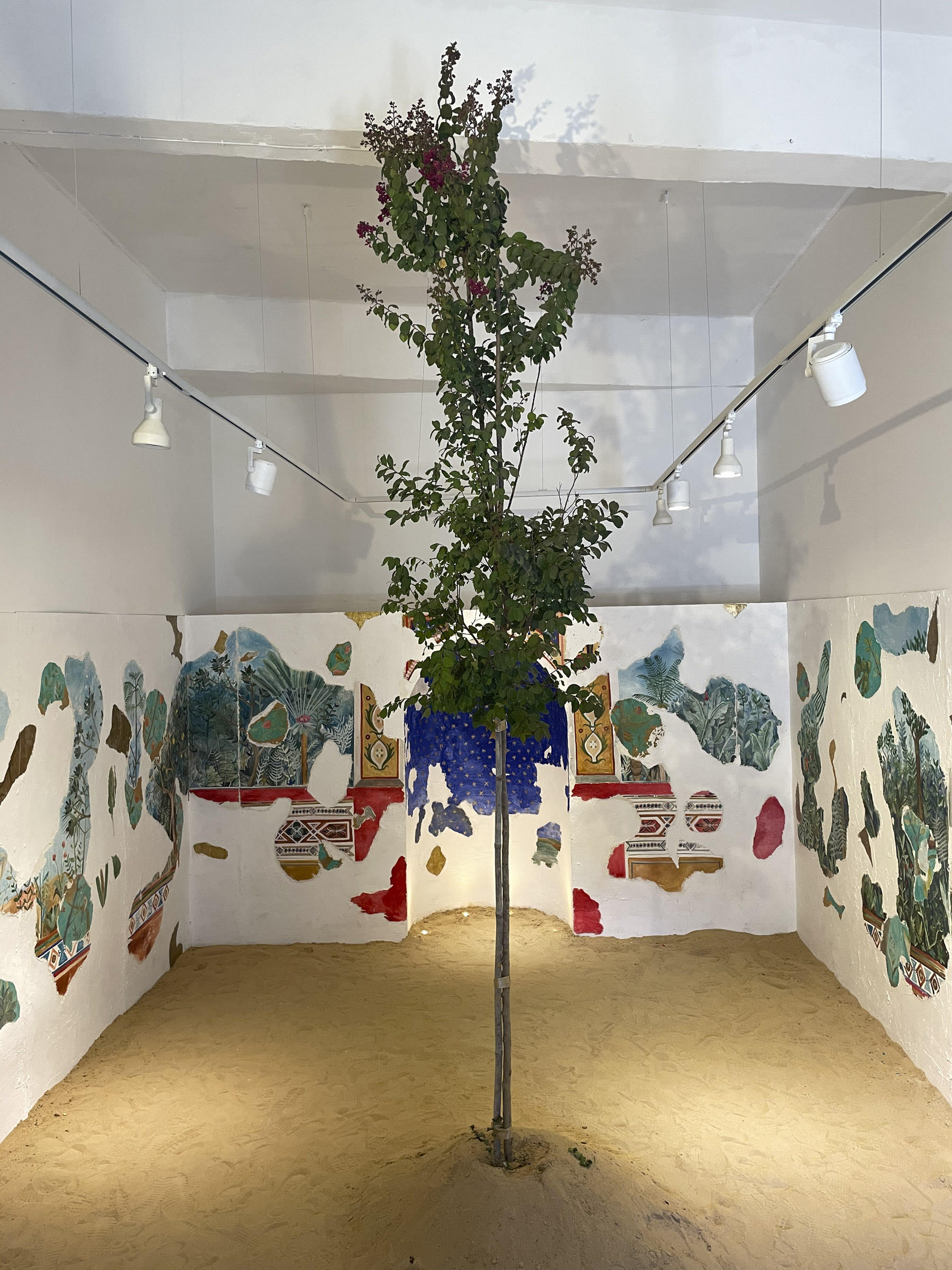
חציית הסף, ממדרגת הבטון המטולאת בכניסה לגלריה P8, לתוך הביטוס (habitus) היא רגע מרהיב. החלל הפשוט מוקף ציורים שנדמים כציורי קיר והחלל הופך, כבקסם, לחצר ודיוואן, קלוייסטר כנסייתי,  ומגרש חול. במרכז רצפת הגלריה המכוסה חול, ועץ לגרסטרמיה הודית  המדגיש את גובה החלל  ויוצר קו ורטיקלי חזק.


Habitus
Elena Ceretti Stein
Photo Natan Dvir

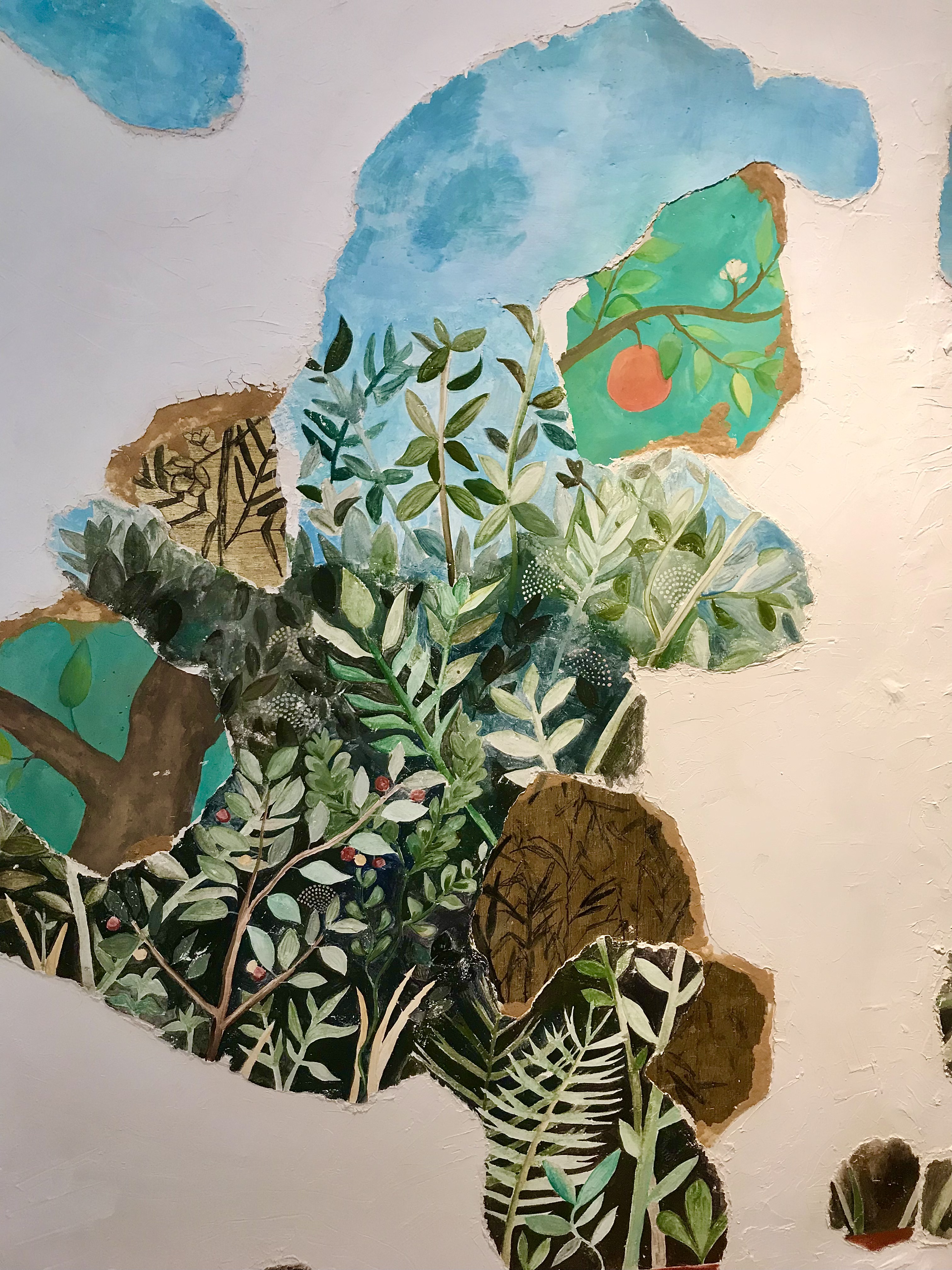
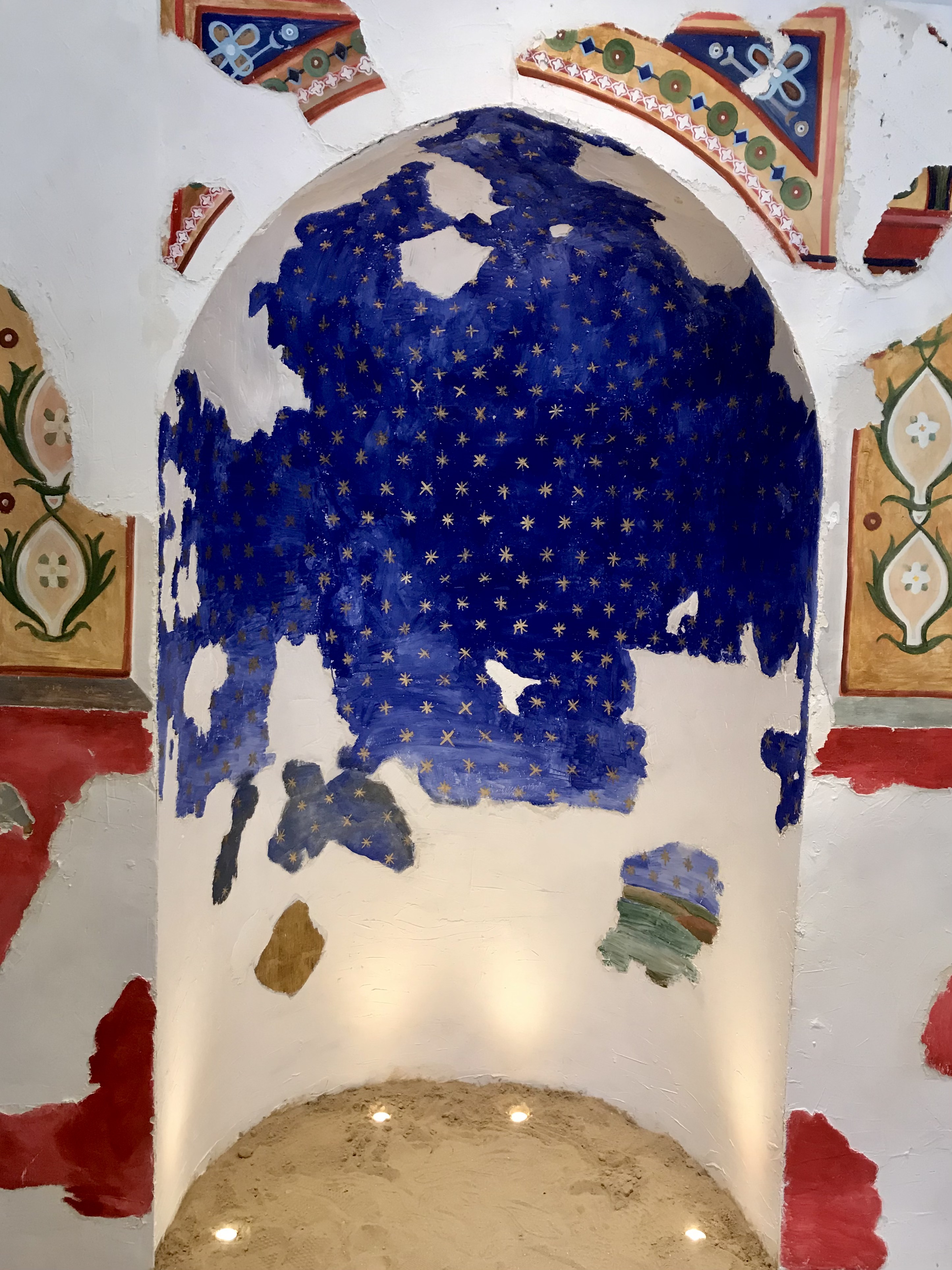
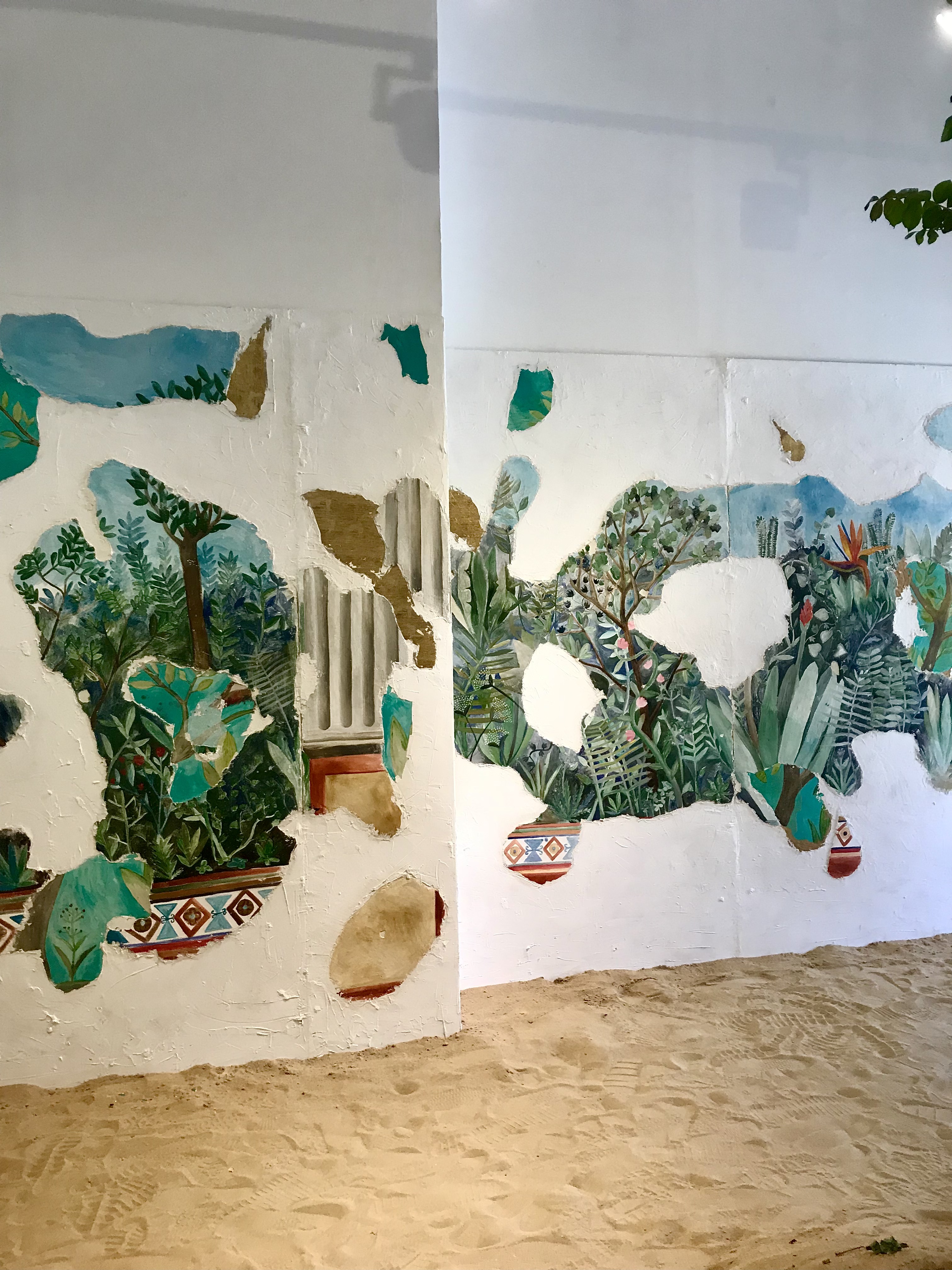
מבט נוסף מגלה שהציורים הם על לוחות דקים  בטכניקת פרסקו איטלקית מסורתית. למעשה לא מדובר על ציור שלם אלא על מה שנראה כפרגמנטים, שכבות שהתגלו, שעלו ומחקו שכבות קודמות בפעולה אלימה של כיסוי והשתברות עד לתוצאה קלידוסקופית. אין בציורים דמויות אלא קטעי נוף וטבע , מעט פרפים וציפור. את האסוציאציה  הדתית מחזקת גומחה מעוגלת, ספק אפסיס כנסייתי מוקטן (גומחה גדולה בקיר מזרחי ולפניה המזבח) ספק מחראב של  מסגד (גומחה בקיר המצביעה על  כיוון התפילה למכה) ובו רקע כחול כוכבי זהב, המעלה מיד על הדעת את התקרה שצייר ג’וטו בקפלה סקרוביני בפדובה (1305).

Habitus
Elena Ceretti Stein
Photo Natan Dvir

  צ׳רטי שטיין  הפכה את החלל הקטן  לקונכייה של מיתוסים הכרוכים זה בזה, דימוי מרובד  שחובק יקומי משמעות רחוקים. המיתוס  של תל אביב ,כעיר שצמחה מהחול, ללא היסטוריית הגלות כעול על צווארה, מהותי לזהות  העיר. תל אביב מתרחקת מזיכרון הכפרים הפלשתינאים שקדמו לה ולא פחות מכך מסיוטי המהגרים שהגיעו לחופיה להימלט ממוראות פרעות ואפליה באירופה . הגלריה מכוסה בחול בהיר, בתולי ,כשכל מבקר מטביע בו, פיזית, את עקבותיו.

שטיין צרוטי מדגישה את התפאורתיות, את היות הלוחות קירות מודולריים וניתנים להזזה, להחלפה ושנוי.  הזמניות נוכחת ביחסי השכבות בציורים  -מה שמזכיר את פומפי מתחלף עם ציור שמזכיר את  הציור בהשפעת סין Chinoiserie שהפך פופולרי באירופה במאות ה 17 וה 18 , לצד ציורים שמזכירים נופי נילוס הלניסטים ורומים של  אותם אפשר לראות גם באזור שלנו (הרודיון). בשיח  בין מודעות מוחלטת לאשליה, שהרי הגלריה ברחוב הפטיש התעשיתי אינה יכולה יותר מאשר להדהד חללים מפוארים, לבין רצון להילכד בקסמיה, צרוטי שטיין מדברת על מהות האמנות.

מבחינות רבות העבודה, העמוסה התייחסויות לתולדות האמנות היא אישית, ביוגרפית. צרטי שטיין היגרה מאיטליה לישראל לפני מספר שנים וב habitus היא מחברת את זיכרונות התרבות בה גדלה, תרבות שהעושר וההשפעה שלה הם גורמים מעצבים מרכזיים בתרבות שלנו היום (ללא קשר למעמד הרופף של סצנת האמנות האיטלקית העכשווית) לבין הארץ בה נותרו יותר מיתוסים מאתרים אבל מקומה המיוחד, כאתר קונקרטי ומיתולוגי בקאנון התרבות המערבית לעיתים משתכח מאיתנו. העבודה בנויה כשכבות זיכרון מתערבבות, הציורים מרחפים בשדה לובן מודרניסטי, מקום בו קלישאות של מודרניות – התל אביבית של עיר לבנה , וזו של שדה האמנות, “הקובייה הלבנה” נפגשות. צרוטי שטיין נוגעת בזיכרון ובהווה בזהירות, בונה חיבורים, מתבוננת בסדקים. עבורי, עבודתה מגלמת בצבע וצורה, בחומר וכמיצב, את האופן בו מחוזות חפץ תרבותיים, זיכרונות מסעות במקום וזמן,  נוכחים בהווה, צצים כמו שכבות ציור בקירות פצועים.

אוצרת: הדסה כהן

                  האקדמיה של החלון – הקלטות הרצאות  ד”ר סמדר שפי 
                                          אמנות מודרנית ועכשווית 

 סדרת הרצאות עומק על מבחר נושאים אמניות, אמנים וזרמים. בכל הרצאה מבט מקיף, בחינה לא קונבציונלית של המוכר ולא מעט עידכונים ממחקר וקריאות חדשות  לרשימה מלאה היכנסו לעמודה  –        http://old.smadarsheffi.com/?page_id=13571

Habitus – Elena Ceretti Stein

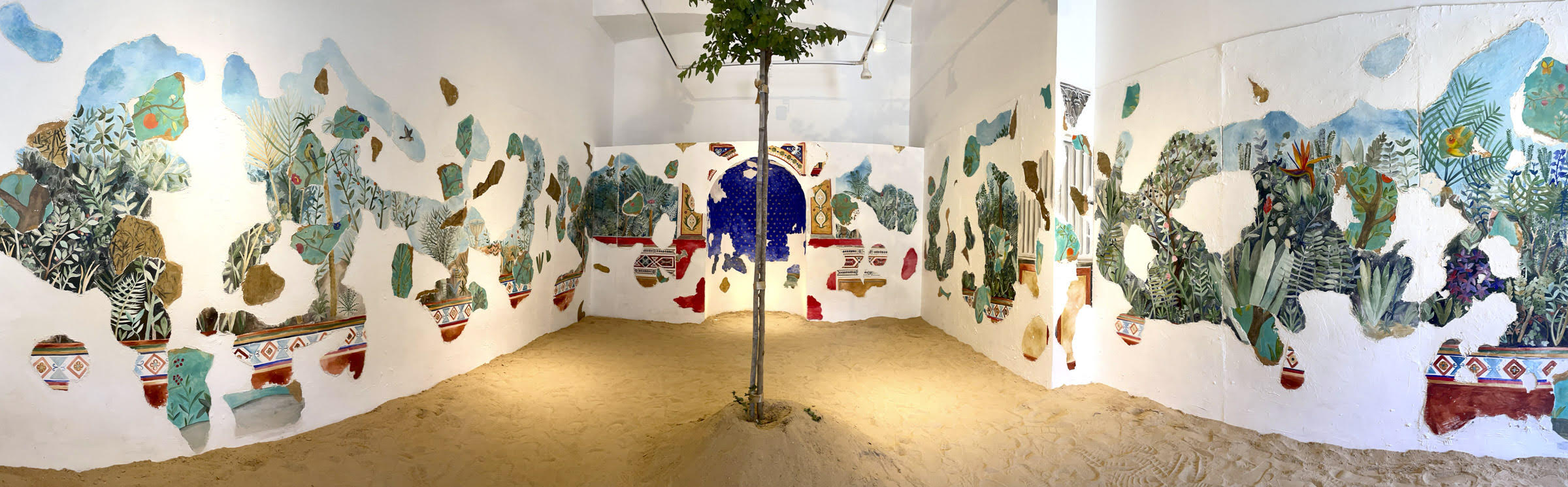
Entering Gallery P8, crossing the threshold of patched concrete steps to enter into the Habitus created by Elena Ceretti Stein is a breathtaking moment. The small industrial space surrounded by paintings that seem like murals, is magically transformed into a courtyard and a diwan, a cloister, and sandbox. At the center of the sand-covered gallery floor is an Indian lagerstroemia tree creating a strong vertical that emphasizes the height of the interior.

Habitus
Elena Ceretti Stein

A closer look reveals that the paintings have not been painted directly on the wall, but were made in the Italian fresco tradition on thin boards. Images as fragments, revealed layers that rose up and erased prior strata in a violent action of covering and breaking, result in a kaleidoscopic effect. The walls are devoid of figures, but include fragments of landscapes and nature, a few butterflies and birds. A circular niche reinforces the possibility of a religious interpretation, evoking an apsis of a miniaturized church (a large niche in an eastern wall in the back of an altar) 0r perhaps a mihrab of a mosque (a niche in the wall indicating the direction of prayers toward Mecca ), it blue background with gold stars immediately calling to mind Giotto’s Scrovegni Chapel in Padua (1305).
Ceretti Stein has transformed the small space into a conch shell of intertwined myths, a multilayered image embracing distant universes of meanings. The myth of Tel Aviv as the city that was built on the sands, without the yoke of diasporic history, is fundamental to the identity of the city. Tel Aviv distances itself from the memory of the Palestinian villages that preceded it, and no less from the nightmares of the immigrants arriving at its shores, escaping the terrors of pogroms and discrimination in Europe. The gallery is covered with light colored, virginal sand; visitors literally leave their traces.
Ceretti Stein emphasizes the scenic nature of the paintings, the modular panels which can be moved, replaced, and changed as in a theatre. The non-linear temporality in the layers, reminiscent of pieces from the Pompeii wall paintings alternating with the painting that looks like Chinoiserie, a style popular in Europe in the 17th and 18th centuries, alongside a painting similar to the Hellenistic and Roman images of the Nile, which we can also see locally (in Herodion). In the dialogue that Ceretti Stein creates between an acute awareness of illusion, the gallery on the nondescript Hapatish Street that can only resonate sumptuous spaces and the desire to be enchanted by its charms, the artist is speaking about the essence of art.

Habitus
Elena Ceretti Stein

In many aspects, this work of art is replete with art historical references, personal and biographical. Ceretti Stein immigrated to Israel from Italy several years ago: Habitus connects memories of the culture in which she was raised, a culture whose richness has shaped our culture today (unlike the questionable status of contemporary Italian art), with Israel, in which there are more myths than sites, but whose unique place as a concrete and mythological site in the canon of western civilization is frequently overlooked by Israeli. The work is constructed as layers of memory which mix and merge; the paintings hover in a modernist white field embedded with the clichés of the White City (Tel Aviv),  and of the “white cube” of art, which is considered neutral although it holds ideological implications.
Ceretti Stein cautiously touches upon memory and the present, constructs connections, observes the cracks. Her work embodies for me the way color and form in material and installation evoke cultural realms of desire. Memories of journeys through time and space are present in the here and now, rise up and peer out of the layered paintings on wounded walls.

Curator: Hadassa Cohen

Habitus
Elena Ceretti Stein

Posted in פיסול ומיצב, ציור | Tagged , , , , , | Comments Off on Elena Ceretti Stein – Habitus – אלנה צ׳רטי שטיין

תערוכות בוגרי MFA באמנות באוניברסיטת חיפה ובבצלאל 2021|MFA graduates’ exhibitions: Haifa University and Bezalel, Tel Aviv

English follows Hebrew

תערוכות בוגרי התואר השני באמנות באוניברסיטת חיפה ובבצלאל בתל אביב נפתחו כמעט במקביל ושתיהן מעניינות. בשתי האקדמיות מדובר במחזורים קטנים יחסית כשחלק מהמציגים/ות הם כבר אמנים פעילים. מספר עבודות בולטות, כמה מבטיחות וכמעט ללא רגעים מביכים. הישג לא רע, במיוחד אחרי השנה האחרונה.

בחיפה בולטות העבודות של ספא קדח, וחיימי פניכל.
עבודתה של ספא קדח מרשימה באופן בו היא עוסקת ביחסי גוף ומרחב, מחברת את האישי והפוליטי ומשמיעה אמירה ברורה מבלי ליפול לקלישאות. בעבודת הווידאו “מלוחיה” צילמה חממה משפחתית בעת קטיף מלוחיה כשבמרכזה אביה, חקלאי וגם חייט מודד בעזרת סרט מדידה את מידות גופה, ומכריז על המידות כמי שמתאר את הנפח, המקום שהיא תופסת

Safa Kadah “Molokheya” 2021

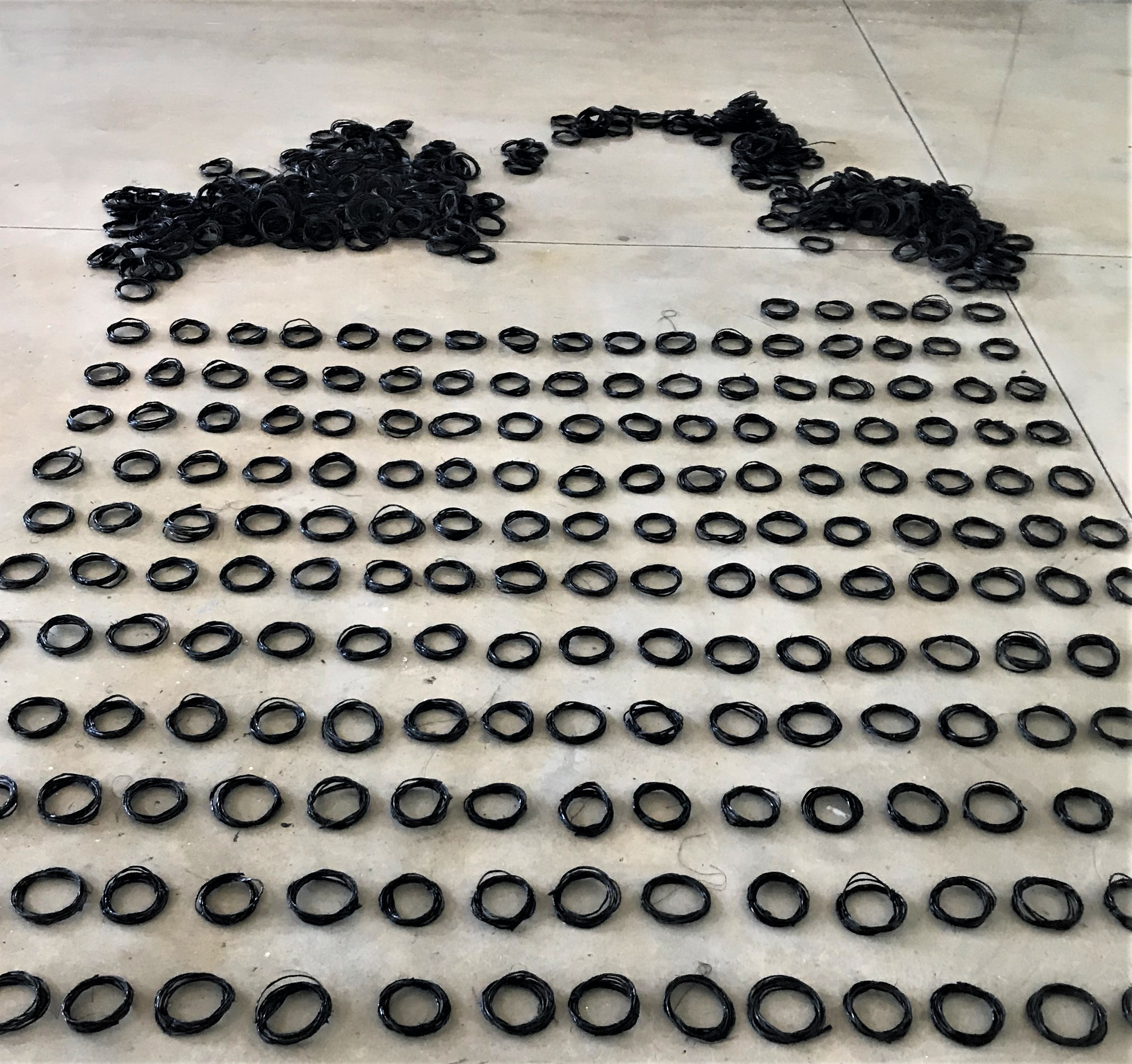
בעולם. בהמשך נראית היא עצמה כשהיא תופרת מחוט שחור עיגולים המשמשים להדליית הצמחים כך שנוצר דיבור על מידות, גובה ושאיפה לצמיחה בתוך החממה העוברת שינוי ממלאת צמחים לצחיחה. שורות שורות של עיגולים, כמו תלמים, כמו קברים, כמו עיגולים על חשבונית זמן נסתרת, מסודרות  על הרצפה לפני הווידיאו, יוצרות מרחב. בחדר סמוך מוקרנות משני צידי מסך עבודות וידיאו נוספות האחת מורכבת מצילומי שחור לבן מראשית שנות ה 60  בעת שהכפר היה תחת שלטון צבאי, וסרט בו חקלאי מדבר על גידול זעתר ועל האזור של כפר סנדלה בעמק יזרעאל, בו חיה משפחתה של קדח , ונמצא ממש על קו הגבול עם השטחים, לא רחוק מג’נין. קדח משרטטת מעגל זמן של צמיחה וקמילה, מעגל בין דורי בינה לבין אביה, נשי וגברי ומדברת על משמעות הווית היצירה – גידול חקלאי, או תפירה – במרחב משתנה.                                     השפה הפואטית קונצפטואלית של קדח, עיגולי החוט או מכונת התפירה בחממה מכילים צער, משרטטים התקה ( displacement ), מנכיחים שיבוש.

         המיצב של קדח הוא העבודה הפוליטית ביותר בשתי התערוכות ולמעשה כמעט היחידה, למעט שתי עבודות בבצלאל: עבודה של איראדה ג’ומעה בה כתבה באופן כנסתר את שמות הכפרים שהיו באזור תל אביב וזכרם נמחה ובאופן מסוים גם מחווה זיכרון של המחלקה לסטודנט מוחמד ג’וליאני. ההימנעות מהעיסוק בפוליטי, על היבטיו הלאומיים, הכלכליים והחברתיים בתקופה טעונה כל כך דורש עיון. השאלה אם המדובר בצנזורה עצמית, אדישות או ניתוק, מעוררת מחשבה .


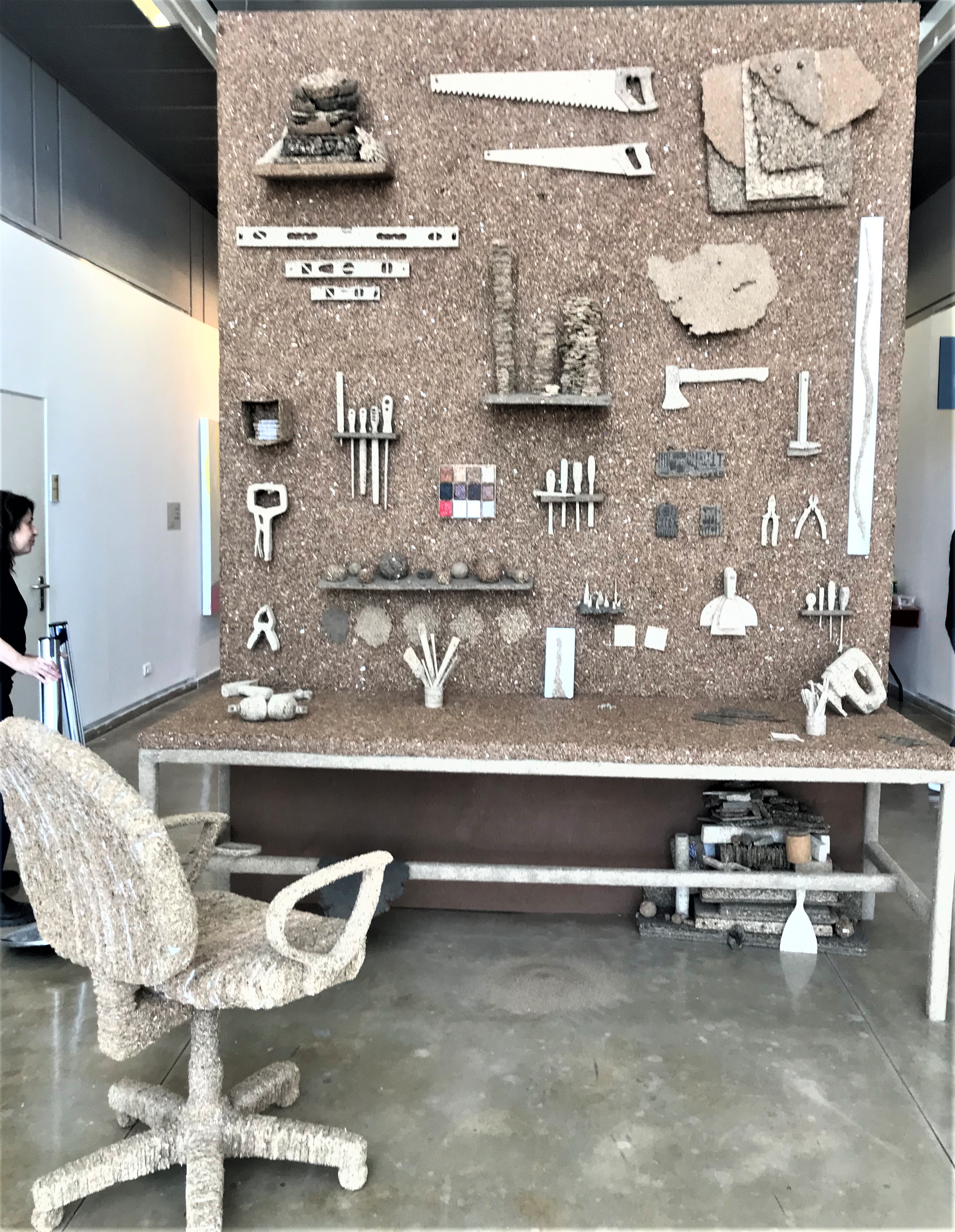
Reverse Engineering עבודתו של חיימי פניכל ארס פואטית במובהק. פניכל בנה משבבית חדר עבודה על כל פרטיו. התחושה שנוצרת היא כמו זו כשמתבוננים ברישום אנטומי – היקסמות ורתיעה, מודעות מחודדת לניואנסים וניסיון לגשר על הייצוג הדומה- שונה של המוכר .  פניכל משחק באופן אלגנטי בין מסורת הפופ נוסח ג’ורג סיגל למסורת הארוכה של אמנים העוסקים בחלל העבודה שלהם. ההפיכה של החלל לכמעט אחיד מבחינה ציבעונית מעלה על הדעת את “הסטודיו האדום” של מאטיס מ  1911, אחד הייצוגים המפורסמים ביותר של חלל עבודה ההופך למקום – חלום  שם

Haimi Fenichel, Reverse Engineering, 2021

העבודה   Reverse Engineering, שם תהליך שמתאר פיצוח מנגנונים על ידי חשיבה דדוקטיבית  מתייחס לאופן עשייתה של העבודה כולה בגריעה. פניכל יצר מגושי שבבית את האובייקטים בתהליך גריעה, משחזר בחומר מודרני,

Ruth Or, 2021

שאינו נחשב גבוה את מה שהפך לאמירה השחוקה ביותר אודות פיסול כרצייה של החומר, כגילוי שהפסל מגלה בתוכו.

עבודות הסיליקון של רות אור, והרישומים- ציורים  של אלינה ספשילוב יפים ומסקרן גם לראות לאן תתפתח יארא מחאג’נה  שמציגה מיצב מורכב, שהתחושה היא שלא מוקד דיו וחבל.

בבצלאל שתי עבודות טובות במיוחד הן עבודות שבמרכזן סאונד.

Jonathan Ron , You Were Missed, 2021.
(Photo Natan Dvir)

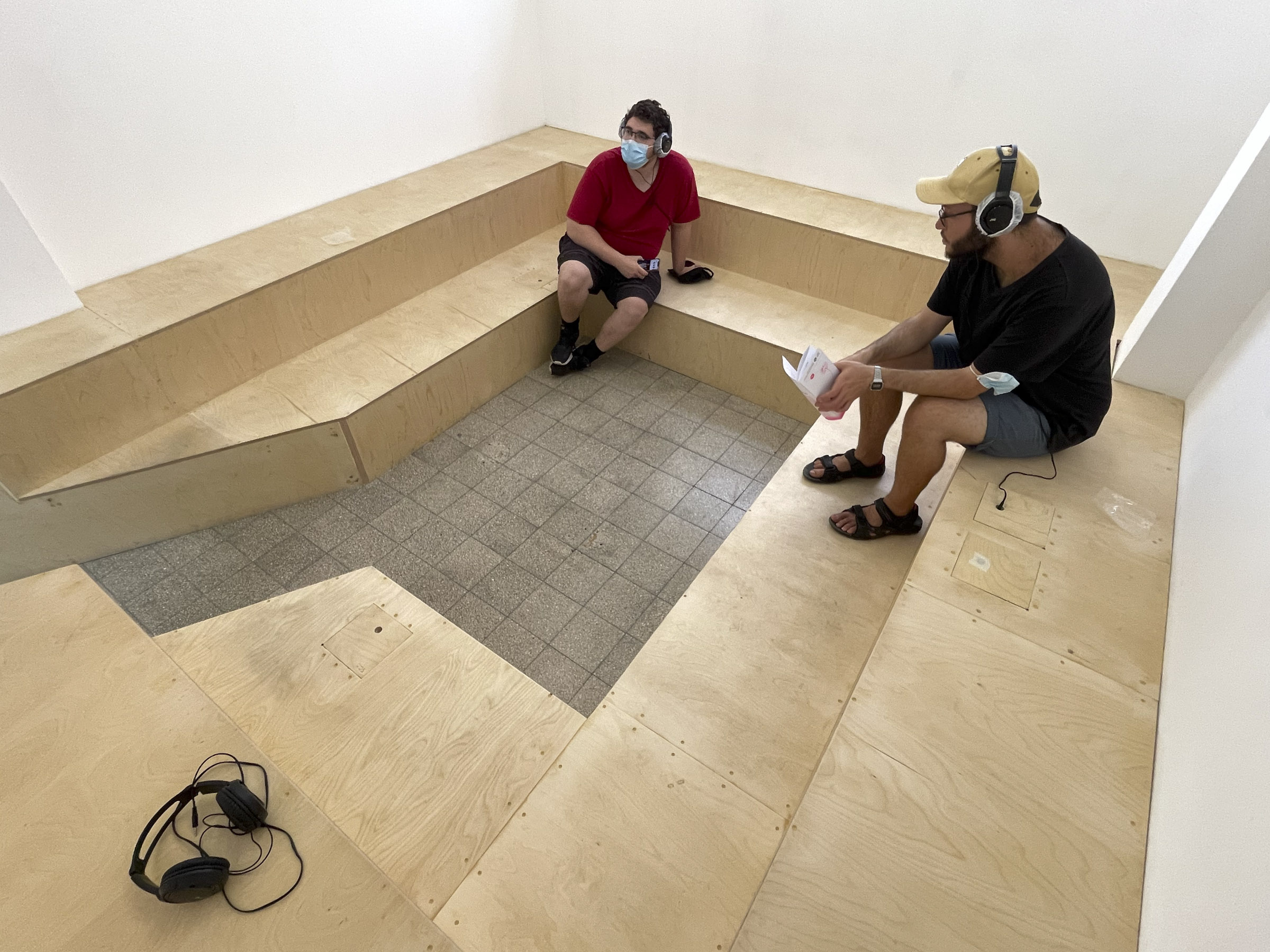
  You Were Missed של יהונתן רון היא עבודה מקסימה שההשפעה של סופי קאל  הצרפתיה ושל  Janet Cardiff and George Bures Miller ג’נט קרדיף וג’ורג ברס מילר הקנדים, ניכרת בה היטב. רון פיזר שלטים עם הכיתוב You Were Missed ברחבי תלאביב כשלצידם פתקים לתלישה עם מספר הטלפון שלו. העבודה מורכבת משיחות טלפון שהקליט עם אנשים שהתקשרו אליו. חלקן משעשעות ועל כולן משוך חוט דק של עצבות, שקוף כמו הכמיהה לקשר שעצם קיומן מגלה.  המיצב שנבנה להאזנה עשוי כמעין אמפיתיאטרון המקיף את החלל ומתכנס פנימה . אזניות המחולקות במקום מתחברות להקלטות מוטמנות בתוך מדרגות העץ הרחבות המרכיבות את המבנה וליד כל אחת מצוין אורכה. הצופים מכונסים, מרוחקים אלו מאלו, כלומר משחזרים את אותו מצב בידוד שהטלפון לאדם זר, בלתי ידוע מבקש לסדוק. הצרוף של אימפרוביזציה ושליטה הופכים את העבודה למקסימה. כדאי להקדיש לה זמן ממושך יחסית ולשמוע את מנעד הסיפורים האנושיים המקופלים בה.
“אדם דרך מיתר” עבודה אלגנטית של מיכאל בק, מרוסנת ומרגשת. בק בנה בית מרומז עם חלונות ודלתות שכל אחד הוא למעשה רמקול אלגנטי ושטוח  צלילי עוד וגיטרות מושמעות מידי פעם מייצוגי דלתות וקירות  שונים בחוקיות שאינה ברורה לחלוטין . סודות מהדהדים ברחבי הבית מחברים מזרח ומערב למקום לא מקום.

Michael Beck, 2021 ( in the background self portrait by Mohamed Giuliani) 
(Photo Natan Dvir)

התייחסויות מעניינות לחברת הצריכה ולגל הרוחניות הממוסחרת עד זרא ה Wellness,  יש בעבודות הפיסוליות המוצלחות של רומי פור בהיקבץ עבודות Under the Yoke  שפועל היטב כתערוכה קטנה. מענין הוא גם המיצב “מעגלי סחר עליונים” של נגה רוזמן בו מנגנון מכני מפעיל מעין נשימה חוזרת בפסלים קרמיים המה שנראה כסצנה מסרט אימה או מדע בדיוני. ב”קונסטלציה”  של אניעם לאה דרעי סרט ווידיאו בו דמותה מתמזגת בדימוי מטרונום.  לצד הווידאו, מפה אסטרולוגית מסומנת על הרצפה בעזרת חפצים ביתיים שעברו מטמורפוזות שונות.  העבודה יפה אך חסרה נשארת בלתי שלמה, חסרה מידה של לכידות סיפורית.
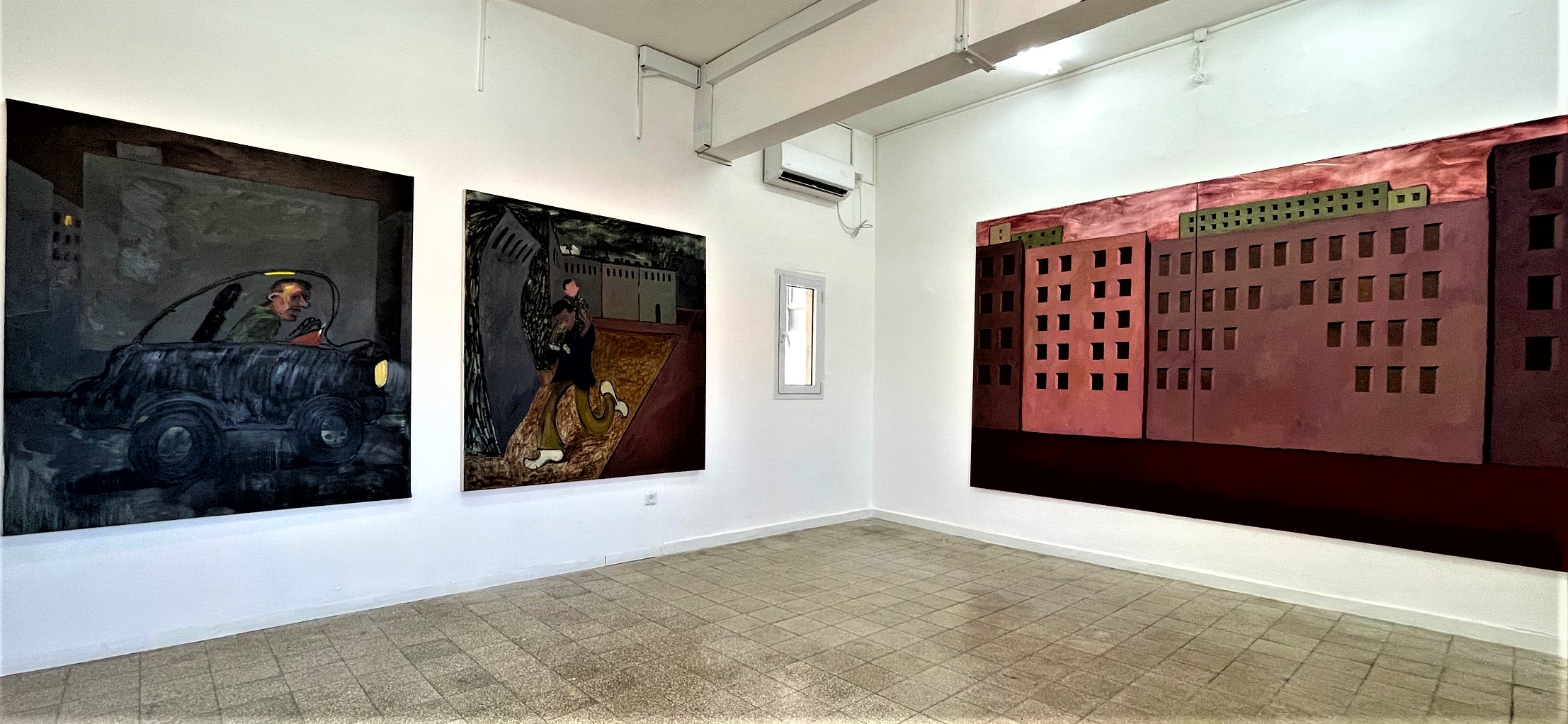
הציורים של אלסנדרה אצ’רנו, מפגש השפעות של ציור מטאפיזי של גו’רג דה קיריקו עם אקספרסיוניזם גרמני של בין המלחמות  מצוין ומעניין יהיה לעקוב אחריו. גם הציורים לפי סיורי מוזיאונים וירטואליים של יונתן רון (לא לבלבל עם יהונתן רון המציג בחלל לידו) טובים.

Alessandra Acierno, 2021
(Photo Natan Dvir)

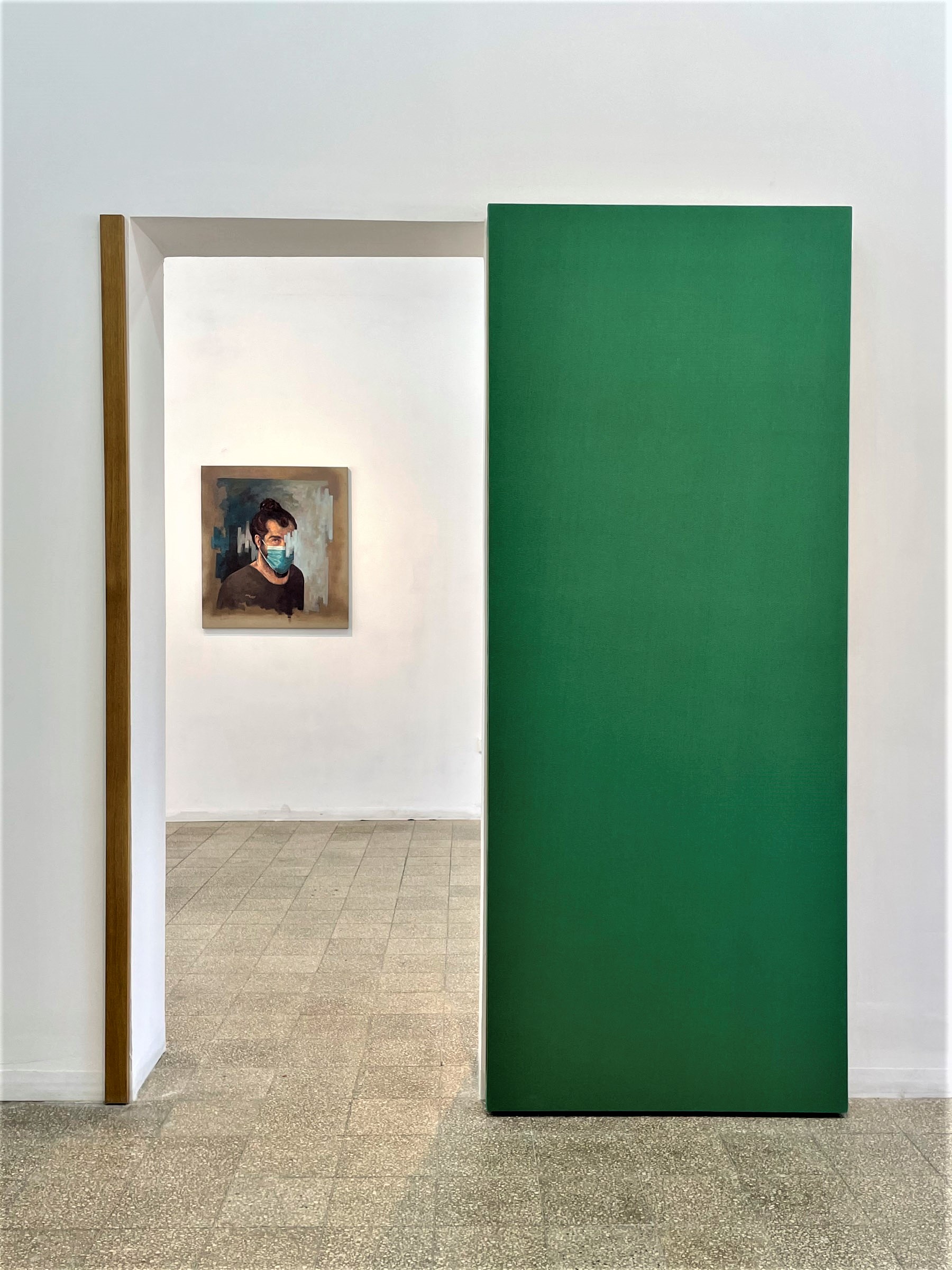
בתערוכה שני דיוקנאות עצמיים של מוחמד ג’וליאני, שהצגתם היא  מחווה של בצלאל לסטודנט שהלך לעולמו תוך כידי לימודיו בתוכנית. ההסבר הנלווה, שנמנע ממנו טיפול רפואי  בזמן קריטי משום שהתגורר ברמאללה, סיפור חוזר בקרב האוכלוסייה הפלשתינית,  מקבל את פני דיוקנו העצמי של ג’וליאני במסכה.

 NAN GOLDIN
האקדמיה של החלון – הרצאות ד”ר סמדר שפי ב zoom
יום  ב,  14 יוני 2021, ב 20:00
לינק לרישום ותשלום
https://forms.gle/TTLvxPTxrwk5cJPh9

נאן גולדין היא מהאמניות החשובות הפועלות מאז שנות ה 70 של המאה הקודמת. תרומתה לנזילות בין צילום דוקומנטרי ואמנותי, עצומה. התמונה שלנו של קהילות להט”ב, זנות, צרכני סמים, פאנק, אלימות במשפחה וגם עולם המוזיקה והזוהר עוצבה במידה רבה דרך מבטה. גולדין הייתה חלק מקהילות דראג וסבלה מאלימות ומשורת התמכרויות.
מאז 2017 היא מובילה מלחמה חסרת פשרות במוסדות אמנות המוכנים לקבל תרומה ממשפחת סאקלר שאחראית ליצירת מאות אלפי מכורים  לתרופות שמכרה  והיא כבר יצרה שינוי רדיקלי בהתנהלות הלובר , TATE בלונדון וה MOMA.
גולדין היא בחזית הניסיון ליצור חיבור בין התנהלות מוסדות אמנות ומוסר, ומה שנראה בלתי אפשרי בעבר מתחיל להצטייר כאפשרי.

Nan Goldinת Misty and Jimmy Paulette in a taxi, NYC 1991

Two MFA graduates’ exhibitions: Haifa University and Bezalel, Tel Aviv

The two MFA programs showing their graduates’ works have opened almost simultaneously. Both are interesting, both have relatively small graduating classes, with some of the graduates already known as active artists.

In Haifa, the works that stood out from the rest are those by Safa Kadah and by Haimi Fenichel. Safa Kadah’s works are impressive in the way she engages in body/spatial relations, linking the personal and the political, making a clear statement without descending into cliché. In the video Molokheya, she filmed a family greenhouse during the molokheya harvest (the vegetable nalta jute, or jute mallow), with her farmer father in the center. Her father is also a tailor, and in the film he uses a tape measure to measure her body, calling out the numbers, describing the volume that the artist takes up in space. As the film continues, the artist herself is seen sewing circles from black string for the trellises to support the plants. Thus she speaks about dimensions, height, striving to flourish within the greenhouse that undergoes change from being full of plants to become dry and bare. Rows upon rows of circles look like channels or graves, like circles on the accounts of hidden time, arranged on the floor in front of the video screen, creating space.

Safa Kadah “Molokheya” 2021


In the next room, additional video works are screened on both sides of the screen, one composed of black and white photos from the early 1960s, when the village was under military rule, and another film in which a farmer talks about growing za’atar and the area of Sandala Village in the Jezreel Valley where Kadah’s family lives, right on the border with the West Bank, not far from Jenin. Kadah delineates a circle of time, of growth and withering, an intergenerational circle between herself and her father, the feminine and masculine, speaking about the meaning of the creative act – whether it be agricultural crops or sewing – in a changing space. Kadah’s poetic, conceptual language, the circles of thread or a sewing machine in the greenhouse contain sorrow, drafting displacement and making disruption present.

This is the most political work in the two exhibitions, except for two works at Bezalel, Tel Aviv: Erada Juma’a’s work in which she wrote half-concealed names of the villages in the Tel Aviv area whose memory was erased, and in a certain sense the department’s homage in memory of its student Mohamed Giuliani. The avoidance of engagement in politics, with its nationalistic, economic, and social aspects in such a charged era, requires a closer look. The question remains as to whether this is self-censorship, apathy, or detachment.  Something to think about.

Haimi Fenichel’s Reverse Engineering is pure ars poetica. He constructed an entire workshop in full detail from particle board. The resulting sensation is like looking at an anatomical drawing – charm and repulsion, sharpened awareness of the nuances, and an attempt to bridge the representation of the similarities and differences of the familiar. This is an elegant game between the Pop tradition à la George Segal and the long tradition of artists engaged in their own studio. Transforming the space into a near uniform color brings to mind Matisse’s Red Studio (1911), one of the most well-known representations of a workspace that becomes a place/a dream.

Haimi Fenichel, Reverse Engineering, 2021


The name of the installation, Reverse Engineering, the concept referring to the process of decoding mechanisms and systems through deductive reasoning, refers to the way the entire piece is made through reduction. Fenichel used blocs of particle board to create the objects in the sculptural process of removing material, thus using modern material to recreate the process. Particle board is not thought of as “fine” art material, chosen here as the most overused statement about sculpture as revealing what is inside the stone.

Ruth Or, 2021

Ruth Or’s silicon works, and Alina Spashilov’s drawings/paintings are lovely, and it is also intriguing to see how Yara Mahajana will develop. She is showing a complex installation, but the feeling is that it is not sufficiently focused, which is a pity.

Jonathan Ron , You Were Missed, 2021.
(Photo Natan Dvir)

Jonathan Ron’s You Were Missed is a magical work impacted by French artist Sophie Calle and highly influenced by Canadian artists Janet Cardiff and George Bures Miller. Ron distributed signs reading “You Were Missed” throughout Tel Aviv accompanied by his telephone number on strips that could be pulled off by passers-by. The installation is comprised of recordings of the phone conversations with people who called up the artist, some amusing, but all with a thin veil of sadness, like the longing for a connection revealed by their action. The structure invites people inside; the recordings are hidden in the broad wooden steps making up the structure. Near each earphone is a label stating the length. Visitors, isolated by the earphones, at some distance from each other – essentially recreate the loneliness in which a phone call to an unknown stranger seeks to alleviate. The combination of improvisation and control creates a wonderful work which deserves an extended visit to listen to the wide range of human stories it comprises.

Michael Beck, 2021
(Photo Natan Dvir)

Michael Beck’s elegant work, Man through a String (2021) is restrained and moving. Beck hinted at a house with windows and doors, each element actually a flat, streamlined amplifier. Sounds of an oud and guitars are heard intermittently from the various representations of doors and walls with a logic that is not entirely clear. Secrets echoing throughout the “house” connect East and West to a place that is noplace.

Romy Fur is showing an interesting take on the consumer society and the commercialization of the wave of spirituality and the wellness industry. Her successful group of sculptural works in the cluster Under the Yoke works very well as a small one-person exhibition. Noga Rozman’s piece in which a mechanical system operates a kind of regular breathing in the ceramic sculptures looks like a scene from a horror movie or a science fiction film. Aniam Leah Dery’s Constellation is a video film in which her figure merges with a metronome. Adjacent to the video is an astrological map on the floor marked out by household objects that underwent various metamorphoses. The work is beautiful but missing something. It remains incomplete as it lacks narrative coherence.

In Alessandra Acierno’s paintings, influences from Giorgio de Chirico’s metaphysical paintings encounter German Expressionism of the interwar period. She is someone to watch. Works by Yonatan Ron (not to be confused with Jonathan Ron who is showing in the space next to his) are good paintings, inspired by virtual museum tours.

Alessandra Acierno, 2021
(Photo Natan Dvir)

The exhibition includes two self-portraits by Mohamed Giuliani, Bezale’s homage to a student who passed away during his studies in the MFA program. The text, explaining that he was tragically denied access to medical treatment at a critical time since he resided in Ramallah. The all too common occurrence takes on the face of Giuliani, Self-portrait in a mask.

Posted in Evants, Video, פיסול ומיצב, ציור, צילום | Tagged , , , , , , , , , , , | Comments Off on תערוכות בוגרי MFA באמנות באוניברסיטת חיפה ובבצלאל 2021|MFA graduates’ exhibitions: Haifa University and Bezalel, Tel Aviv

סמדר שפי, החלון, אומנות ישראלית, אמנות ישראלית, Smadar Sheffi, The Window, Israeli Art